Jurassic Dinos editorial · Updated · Source-based review
What is Rebbachisaurus?
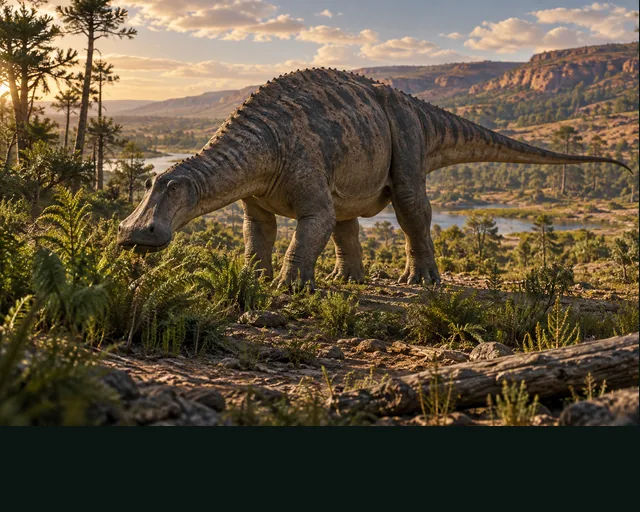
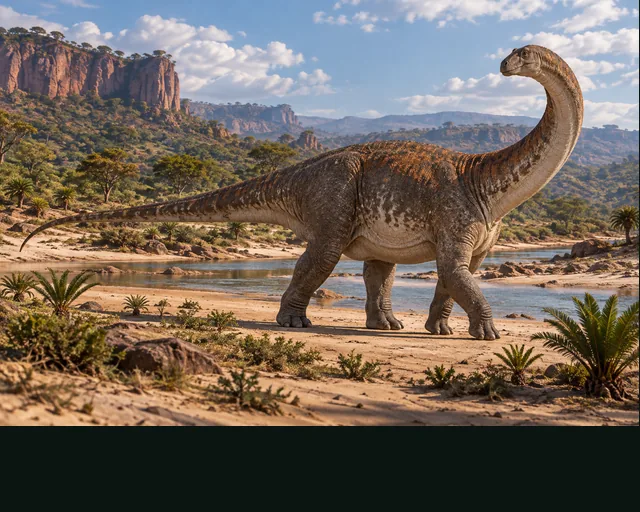
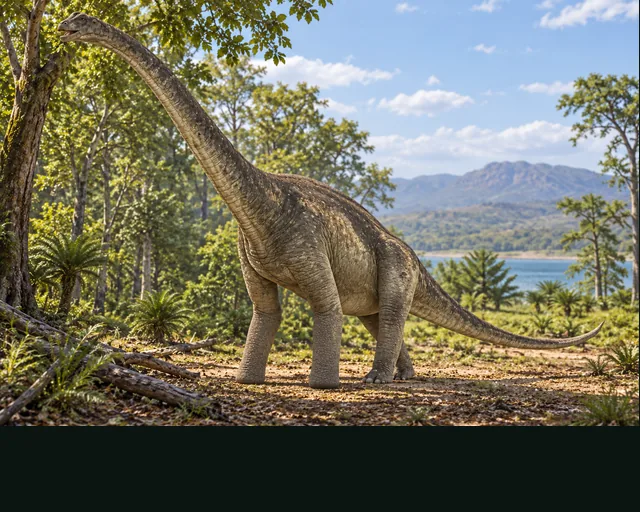
Rebbachisaurus was a Cretaceous Moroccan sauropod known from an incomplete Kem Kem skeleton.
Distinctive features and evidence
Rebbachisaurus garasbae is the valid species in the overview. Material formerly named Rebbachisaurus tessonei is now Limaysaurus, so the genus should not inherit every older species’ distribution and measurements.
Genus overview and research references.
Rebbachisaurus fossil discoveries
The fossils of Rebbachisaurus were found by the French palaeontologist René Lavocat in southeastern Morocco between late 1948 and spring 1949, near the site of Gara Sbaa. Several expeditions were needed to recover the bones, and the skeleton ended up in the natural history museum in Paris. Lavocat described it in 1954 under the name Rebbachisaurus garasbae, where the species name points to the Gara Sbaa locality.
What survives is only part of one animal: a tall back vertebra, pieces of other back and hip spines, a shoulder blade, an upper arm bone, part of a pelvic bone and many spine fragments. Some bones recorded when it was first collected have since gone missing. Even so, it counts as unusual: only one other partly articulated vertebrate skeleton, that of the theropod Deltadromeus, is known from the entire Kem Kem region.
How big was Rebbachisaurus?
Size estimates for Rebbachisaurus have shrunk over time. Older reconstructions suggested a length near 20 metres, a figure still given by the Natural History Museum’s Dino Directory. More recent estimates put it at roughly 14 metres long and about 7 to 12 tonnes, which would still make it one of the larger rebbachisaurids. Because so much of the skeleton is missing, every figure is an estimate scaled from relatives.
The back vertebra is the best clue to its build. Its spine stood about 1.5 metres tall, far taller than the roughly 50 centimetres seen in rebbachisaurids from South America. Large hollows in the sides of the vertebral body held air sacs, a feature of many sauropods that made the skeleton lighter. The tall spines gave the museum its remark that they might have supported a sail, but that is only a possibility.
Is Rebbachisaurus a rebbachisaurid?
Yes. Rebbachisaurus is the genus that gave the family Rebbachisauridae its name, and it was the first member of that family to be recognised. Rebbachisaurids are diplodocoids, the sauropod branch that also includes Diplodocus. A close relative with a famous skull is Nigersaurus, which has a wide, square-shaped muzzle.
How Rebbachisaurus fits among its relatives is still debated, since many rebbachisaurids are known from incomplete bones and different analyses arrange them differently. The genus once had other species attached to it. The Argentine species Rebbachisaurus tessonei was moved in 2004 to its own genus, Limaysaurus, and a Niger species named in 1960 is now regarded as a doubtful name based on mixed remains.
Where and when Rebbachisaurus lived
Rebbachisaurus came from the Kem Kem Beds, a river-and-wetland system in North Africa. Sources give slightly different ages: one account places it between 99 and 97 million years ago, the museum lists 112 to 99 million years ago, and the fossil database records the genus within the Albian and Cenomanian ages. The safe summary is the middle of the Cretaceous, roughly 100 million years ago.
No other sauropod from the Kem Kem Beds has been given a name, although other long-necked remains are known there. Its neighbours included huge predators such as Spinosaurus and Carcharodontosaurus, as well as giant fish, crocodile relatives and pterosaurs. The unusually high number of meat-eaters compared with plant-eaters in this region is a long-running puzzle, nicknamed Stromer’s Riddle.
Classification and fossil record
The Paleobiology Database taxonomic record catalogues Rebbachisaurus under Rebbachisaurinae. This is the immediate parent in that catalogue, rather than a complete list of evolutionary relationships.
Discovery and naming history
The principal skeleton was discovered in Morocco in 1948 in Kem Kem deposits. Its sauropod anatomy broadens a regional fossil story often dominated in popular accounts by large theropod predators. Historical overview.
The corroborated occurrence sample includes Morocco; those are modern discovery locations, not a complete ancient geographic range.
Research starting point
The catalogue links Rebbachisaurus to Lavocat, 1954, published in Congrés Géologique International, Comptes Rendus de la Dix-Neuvième Session, Section 13. This identifies a research starting point; the catalogue’s citation alone does not verify every later reconstruction or species assignment.
For the meaning of taxonomic terms and how evidence is checked, see the glossary and editorial policy.
Quick answers
- Is Rebbachisaurus a dinosaur?
- Yes. Rebbachisaurus was a sauropod dinosaur, a long-necked plant eater, and it is the genus that gave the family Rebbachisauridae its name.
- When did Rebbachisaurus live?
- Sources vary slightly, but it lived in the middle of the Cretaceous, around 100 million years ago, in the Albian to Cenomanian ages.
- How big was Rebbachisaurus?
- Older estimates reached about 20 metres, while more recent ones suggest roughly 14 metres and 7 to 12 tonnes. These are estimates, since the skeleton is incomplete.
- Is Rebbachisaurus a diplodocoid?
- Yes. Rebbachisaurids belong to Diplodocoidea, the sauropod branch that includes Diplodocus, though their exact relationships to one another are still debated.
- Where was Rebbachisaurus found?
- It was found in the Kem Kem Beds near Gara Sbaa in southeastern Morocco by René Lavocat in 1948 and 1949, and it was named in 1954.