Jurassic Dinos editorial · Updated · Source-based review
What is Majungasaurus?
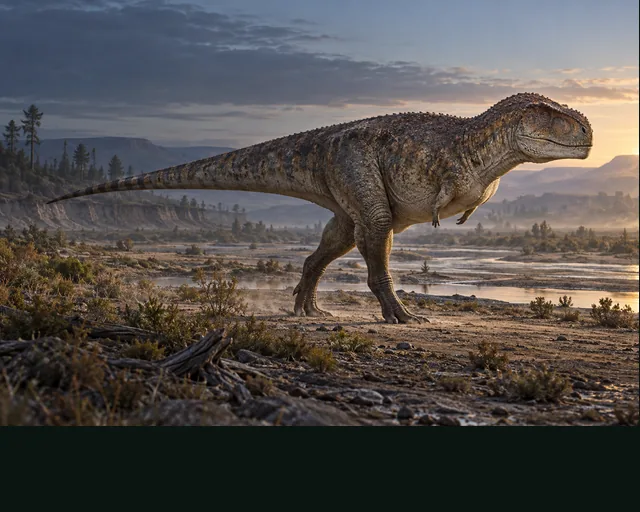
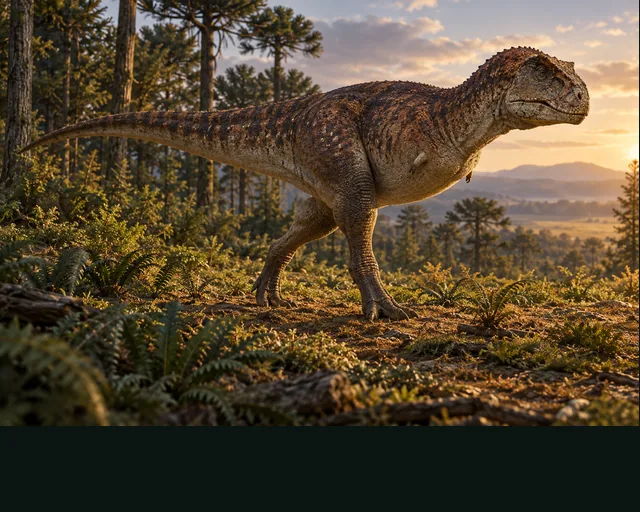
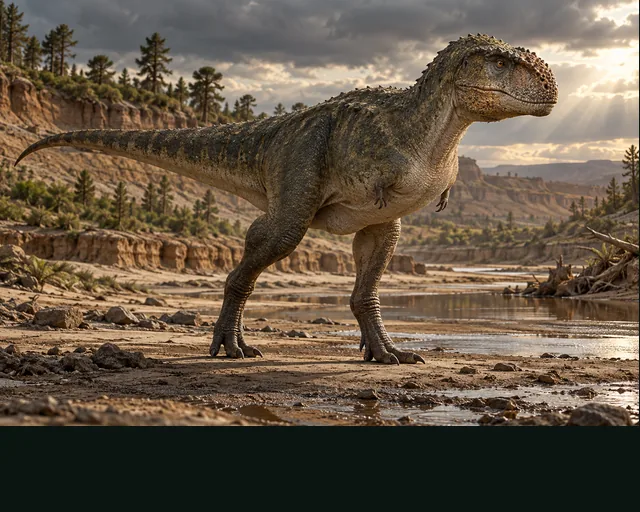
Majungasaurus was a Late Cretaceous Madagascan abelisaurid with a short snout and strongly reduced arms.
Distinctive features and evidence
Majungatholus is treated as a junior synonym in the overview. That naming history and its island setting are useful context, while specific feeding or social behavior requires evidence beyond its resemblance to other abelisaurids.
Genus overview and research references.
Majungasaurus fossil discoveries
Majungasaurus has one of the more tangled discovery stories among meat-eating dinosaurs. In 1896 the French palaeontologist Charles Depéret described a few teeth, a claw and some backbones from north-western Madagascar and filed them under the European genus Megalosaurus, at that time a catch-all name for large theropods. In 1955 René Lavocat studied a curved lower jaw with teeth from the same region and gave the animal its own genus name, Majungasaurus.
Meanwhile, a dome-shaped piece of skull found in the same area was described in 1979 as Majungatholus, a dome-headed plant-eater, the first of its kind reported from the southern hemisphere. Expeditions that began in 1993 changed that. Fieldwork in 1996 uncovered a very complete skull with the same dome on top, and by 1998 the dome had been reinterpreted as a bony horn belonging to a meat-eating abelisaurid. Later seasons added more skulls and dozens of partial skeletons, from juveniles to adults, making Majungasaurus one of the best-known southern-hemisphere theropods.
How big was Majungasaurus?
Typical adults are estimated at about 5.6 to 7 metres long. One published estimate puts their weight at roughly 750 to 1,100 kilograms. The largest skulls measure about 60 to 70 centimetres, and scraps of bone from a few bigger individuals hint that some adults may have exceeded 8 metres, although those fragments are too incomplete to be sure.
The skeleton follows the abelisaurid pattern: a stocky, bipedal body, a long tail for balance and tiny forelimbs with very reduced, probably stiff fingers.
What did Majungasaurus eat?
Majungasaurus was a meat-eater, and it is unusually well documented. Tooth marks with the same spacing, size and fine notches as its own teeth have been found on bones of the sauropod Rapetosaurus, so it certainly fed on these long-necked plant-eaters, though the bones cannot show whether it killed them or scavenged them.
A 2007 study reported matching tooth marks on Majungasaurus bones too. No other large theropod is known from those sites, so the likeliest explanation is that individuals fed on their own species. Researchers do not know whether it hunted its own kind or only fed on bodies.
Some scientists have suggested that the broad, strong skull, the muscular neck and the short, low-crowned teeth were suited to biting and holding on, a little like a cat, rather than delivering many bites like a long-snouted predator. This is a hypothesis drawn from anatomy.
Is Majungasaurus an abelisaurid?
Yes. Majungasaurus belongs to the family Abelisauridae, a group of Gondwanan predators with tall, blunt skulls, rough surface texture on the facial bones and very short arms. The more famous Carnotaurus is in the same family, as is Abelisaurus, the animal that gave the group its name.
Exactly where Majungasaurus sits inside the family has been debated. Some studies placed it close to Carnotaurus from South America. A more recent analysis using the most complete material linked it instead with Rajasaurus and Indosaurus from India, which is plausible because Madagascar had split from India less than 20 million years before.
Where and when Majungasaurus lived
All known Majungasaurus fossils come from the Maevarano Formation in Mahajanga Province, north-western Madagascar, and date to the Maastrichtian, the final stage of the Cretaceous. Teeth turn up right up to the end of that stage, which makes it one of the last non-bird dinosaurs known.
Madagascar was already an island, and the climate was semi-arid with marked wet and dry seasons. Majungasaurus lived on a coastal floodplain crossed by sandy rivers, where seasonal debris flows buried carcasses and preserved them well. Neighbours included the sauropod Rapetosaurus, the small theropod Masiakasaurus and crocodile relatives; Majungasaurus was the largest land predator found there.
Classification and fossil record
The Paleobiology Database taxonomic record catalogues Majungasaurus under Majungasaurini. This is the immediate parent in that catalogue, rather than a complete list of evolutionary relationships.
The corroborated occurrence sample includes Madagascar; those are modern discovery locations, not a complete ancient geographic range.
The sourced length estimate for Majungasaurus is 5.6–7 metres. This is an estimate for the reconstructed animal, not a measurement shared by every individual. See the body-size discussion and linked evidence for context.
Research starting point
The catalogue links Majungasaurus to Lavocat, 1955, published in Bulletin du Muséum National d’Histoire Naturelle, Paris, 2e série. This identifies a research starting point; the catalogue’s citation alone does not verify every later reconstruction or species assignment.
For the meaning of taxonomic terms and how evidence is checked, see the glossary and editorial policy.
Quick answers
- Is Majungasaurus a dinosaur?
- Yes. Majungasaurus was a theropod dinosaur in the family Abelisauridae, known from Late Cretaceous rocks in Madagascar.
- When did Majungasaurus live?
- It lived in the Maastrichtian, the last stage of the Cretaceous, in the final few million years before the extinction about 66 million years ago.
- How big was Majungasaurus?
- Typical adults are estimated at about 5.6 to 7 metres long, with a few fragments hinting at larger individuals above 8 metres.
- Did Majungasaurus really eat its own kind?
- Bite marks matching Majungasaurus teeth have been found on Majungasaurus bones, which suggests cannibalism. It is not known whether it killed its own species or fed on bodies.
- Where was Majungasaurus found?
- All fossils come from the Maevarano Formation in Mahajanga Province, north-western Madagascar.