Jurassic Dinos editorial · Updated · Source-based review
What is Gorgosaurus?
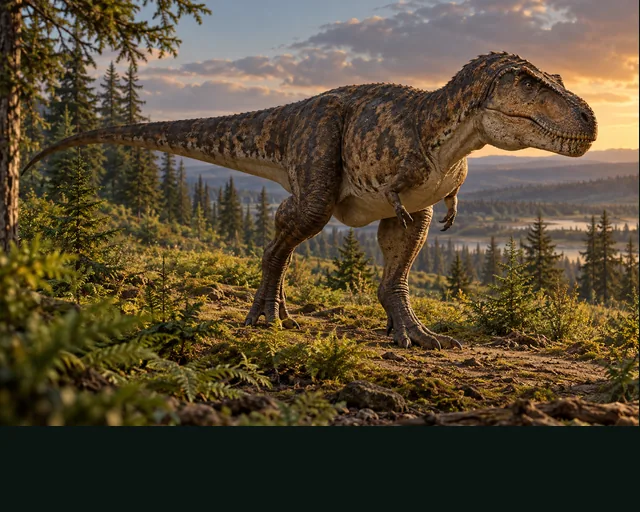
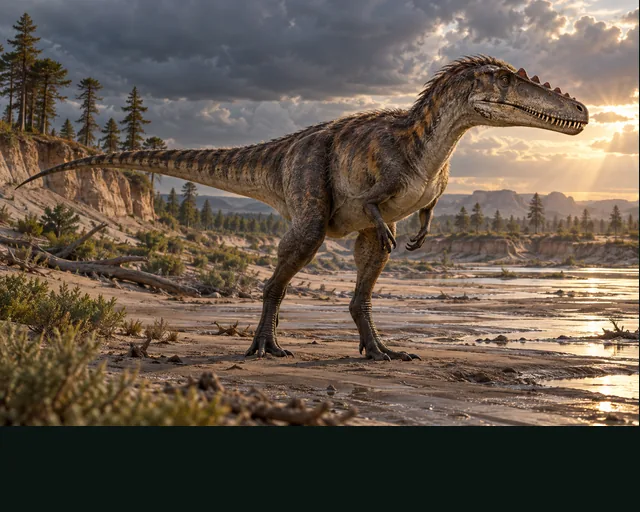
Gorgosaurus was a Late Cretaceous western North American tyrannosaurid closely related to Albertosaurus.
Distinctive features and evidence
Gorgosaurus libratus is the recognized type species. Its two-fingered forelimbs and predatory skull fit the tyrannosaurid pattern, while historical assignments to other genera require care when comparing collections.
Genus overview and research references.
Gorgosaurus fossil discoveries
Gorgosaurus is one of the best-known tyrannosaurids because so many skeletons have been found. Lawrence Lambe described it in 1914 from a nearly complete skeleton and skull that Charles M. Sternberg discovered in 1913 in the Dinosaur Park Formation of Alberta. That skeleton was the first tyrannosaurid known with a complete hand. American Museum of Natural History crews working along the Red Deer River at about the same time collected several more skulls and skeletons, and dozens of specimens now sit in museums in Canada and the United States. The Natural History Museum lists at least 12 complete or almost complete skulls.
The record includes a nearly full growth series, from juveniles to large adults. A smaller skeleton with a lighter skull and unfused bones was named as a separate species by Matthew and Brown, but it is now regarded as a young Gorgosaurus libratus. Some tyrannosaurid fossils from Montana probably belong to the genus too, though it is unclear whether they are G. libratus or a different species.
How big was Gorgosaurus?
Adults are estimated at 8 to 9 metres long and 2 to 3 tonnes, similar in size to Albertosaurus and well below Tyrannosaurus. The largest known skull is about 99 centimetres long, and the largest thigh bone is about 105 centimetres. The skull was long and low compared with that of Daspletosaurus, and the tooth count was high: eight small, D-shaped teeth at the snout tip, then roughly 26 to 30 further upper teeth and 30 to 34 lower teeth, with oval rather than blade-like cross-sections.
Skin impressions reported in 2001 showed small, scattered or fine scales rather than feathers in the patches that were preserved, but they cannot be tied to a particular part of the body, so they say little about the whole animal.
How did Gorgosaurus grow up?
Bone-growth studies led by Gregory Erickson suggest Gorgosaurus spent a long juvenile phase and then grew very fast for about four years, reaching a maximum of around 50 kilograms a year. A later study of two well-preserved juvenile skulls suggested the change from slender young to heavy-skulled adult took place at about 5 to 7 years old.
A juvenile specimen found with stomach contents shows what young Gorgosaurus ate. Reported in 2023, it was about 4 metres long and 5 to 7 years old, and its stomach area held the legs and tail bones of two young Citipes, small oviraptorosaurs about a year old. Scientists read this as direct support for the idea that tyrannosaurids changed their diet as they grew, though it is a single specimen.
Is Gorgosaurus the same as Albertosaurus?
Some experts think so. Gorgosaurus and Albertosaurus are very close relatives, both in the subfamily Albertosaurinae, and they differ mostly in details of the teeth and skull bones. William Matthew and Barnum Brown doubted the difference as early as 1922, and Dale Russell moved G. libratus into Albertosaurus in 1970. Albertosaurus was named first, so under the naming rules it would take priority, making Gorgosaurus a junior synonym.
Phil Currie argues that the two differ as much as Daspletosaurus and Tyrannosaurus, which are nearly always kept apart, so this page and many recent works treat Gorgosaurus as its own genus. Several species once placed in Gorgosaurus, including small specimens from Mongolia and Montana, were later moved elsewhere.
Where and when Gorgosaurus lived
Most Gorgosaurus fossils come from the lower to middle part of the Dinosaur Park Formation, which was laid down in the middle of the Campanian. The region was a subtropical coastal plain beside the Western Interior Seaway, with rivers, floodplains and conifer forests. The formation preserves ceratopsids and hadrosaurs in great numbers, as well as many smaller animals. A jaw of the small predator Saurornitholestes from the same formation carries tooth marks from a young tyrannosaur, possibly Gorgosaurus. Published age ranges for Gorgosaurus differ, from about 76.5 to 73 million years ago in one source to 80 to 73 million years ago in another, so no single date is given here.
For a time Gorgosaurus shared its landscape with Daspletosaurus. How the two divided up prey is not well understood, since a Daspletosaurus from Montana had hadrosaur remains in its gut, which argues against an older suggestion that it left hadrosaurs to Gorgosaurus.
Classification and fossil record
The Paleobiology Database taxonomic record catalogues Gorgosaurus under Albertosaurinae. This is the immediate parent in that catalogue, rather than a complete list of evolutionary relationships.
The corroborated occurrence sample includes Canada, United States; those are modern discovery locations, not a complete ancient geographic range.
The sourced length estimate for Gorgosaurus is 8–9 metres. This is an estimate for the reconstructed animal, not a measurement shared by every individual. See the body-size discussion and linked evidence for context.
Research starting point
The catalogue links Gorgosaurus to Lambe, 1914, published in The Ottawa Naturalist. This identifies a research starting point; the catalogue’s citation alone does not verify every later reconstruction or species assignment.
For the meaning of taxonomic terms and how evidence is checked, see the glossary and editorial policy.
Quick answers
- Is Gorgosaurus a dinosaur?
- Yes. Gorgosaurus was a large predatory theropod in the tyrannosaurid family, from the Late Cretaceous of western North America.
- How big was Gorgosaurus?
- Adults reached about 8 to 9 metres in length and are estimated at 2 to 3 tonnes. The biggest known skull is roughly 99 centimetres long.
- Is Gorgosaurus the same as Albertosaurus?
- Many scientists keep them separate, but they are extremely similar and some treat Gorgosaurus as a synonym of Albertosaurus. The question is still debated.
- What did Gorgosaurus eat?
- It was a predator. A juvenile fossil preserved the remains of two young Citipes in its stomach area, and adults are thought to have hunted larger prey such as hadrosaurs and ceratopsids.
- Where was Gorgosaurus found?
- Mainly in the Dinosaur Park Formation of Alberta, Canada, with other fossils from British Columbia and Montana, USA.