Jurassic Dinos editorial · Updated · Source-based review
What is Troodon?
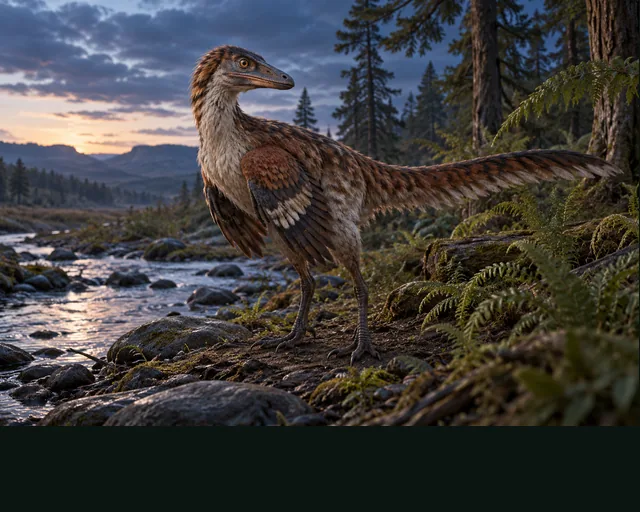
Troodon is a disputed Late Cretaceous theropod name whose type material does not securely define the familiar composite animal.
Distinctive features and evidence
Specimens historically assigned to Troodon have been separated or reassessed, including material discussed as Stenonychosaurus. Claims about exceptional intelligence, adult size or a single settled reconstruction need to identify the actual fossil and taxonomic interpretation.
Genus overview and research references.
Troodon fossil discoveries
The genus rests on a single tooth. It was found in October 1855 in the Judith River Formation of Montana and named by Joseph Leidy in 1856. Leidy took it for the tooth of a large aquatic lizard, and it was not recognised as a dinosaur until 1877. That makes it one of the earliest dinosaur finds in North America.
Its classification then wandered. In 1901 the Hungarian palaeontologist Franz Nopcsa suggested it belonged to a megalosaurid, a group that was then a catch-all for meat-eating dinosaurs. In 1924 Charles Gilmore argued it was a dome-headed plant-eater, and for years the dome-headed family was even called Troodontidae. In 1945 Charles Sternberg showed that the tooth resembled those of carnivorous dinosaurs, and the dome-headed family got a new name.
The skeletons that people picture when they imagine Troodon were found separately in Alberta. Sternberg described a foot, hand fragments and tail bones in 1932 as Stenonychosaurus, noting an enlarged claw on the second toe.
Is Troodon still a valid dinosaur name?
This is the central argument about Troodon. A name belongs to its type specimen, and the type specimen here is one tooth. In 1987 Philip Currie argued that Stenonychosaurus and other fossils were the same animal as the tooth, and for about thirty years most researchers called all of them Troodon. Later work found that troodontid teeth do not reliably identify a particular species, so the link between the tooth and the skeletons could not be tested.
In 2017 Evans and colleagues suggested using Stenonychosaurus for the Alberta skeletons, and another team that year created a new genus, Latenivenatrix, for part of that material. Other researchers disagreed and kept the name Troodon. In 2025 Varricchio and colleagues proposed a set of bones from the Two Medicine Formation in Montana as a replacement type, called a neotype, which would anchor the name to skeletal material. They are preparing a petition to the commission that rules on animal names.
The Natural History Museum currently treats Troodon as a disputed name, and says that many of the bones once called Troodon belong to Stenonychosaurus and possibly other genera.
How big and how smart was Troodon?
A single tooth cannot give a body size, so any length or weight quoted for Troodon is really an estimate for the Stenonychosaurus skeletons or other troodontids. The sources we checked do not give a trustworthy figure for the tooth-based Troodon, so we leave a number out. What can be said is that teeth from northern Alaska referred to Troodon are larger than those from further south, which suggests that the northern population grew bigger, in line with a pattern called Bergmann’s rule.
Troodon has a reputation as a very clever dinosaur because of a large braincase. According to the museum, that skull is now assigned to Stenonychosaurus, so we do not know what the brain of the original Troodon was like. Claims about how smart it was belong to the wider troodontid family, not firmly to this genus.
What did Troodon eat?
The name means ‘wounding tooth’, and the small, serrated teeth are what make the animal puzzling. Serrations like these are usual in meat-eaters, but the shape of Troodon teeth also resembles teeth of some plant-eating reptiles. For that reason the Natural History Museum describes it as probably omnivorous, with a mixed diet of animals and plants.
One study of many teeth from Alaska looked at wear patterns and concluded that the diet was soft food, ruling out chewing bone, tough plant material or hard shells of invertebrates. The authors suggested mainly meat. A fossil pellet that may belong to Troodon contains remains of a small early mammal, Alphadon. Nothing preserved with the actual tooth tells us what that individual ate, so these are indirect clues.
Troodon nests and eggs
Eggshells attributed to Troodon, from the Oldman Formation in Alberta, were examined in 2023 with a technique that measures the temperature at which shell formed. The results suggested that the eggs formed slowly, as in reptiles, rather than quickly as in modern birds. Because of that, the authors proposed that each female could produce few eggs, and that the large clutches in the rock were probably made by several females laying in one nest, a habit seen in ostriches today.
The same study found that the eggs stood at a steep angle and were lightly covered rather than turned, like crocodile eggs. This evidence depends on the shell being correctly identified as Troodon, which is another reason to treat the finding as one interpretation.
Where and when Troodon lived
The type tooth comes from the Judith River Formation, which matches the Oldman Formation in Alberta and has been dated to about 77.5 to 76.5 million years ago, in the Campanian age of the Late Cretaceous. Museum figures for the genus run a little wider, from about 79 to 75 million years ago.
Fossils called Troodon have also been reported from many other rock layers, but researchers now think it unlikely that all of them come from one species. The most unusual are in the Prince Creek Formation of Alaska, which was a cool, high-latitude landscape that experienced about 120 days of winter darkness. There, Troodon-type teeth make up roughly two-thirds of the theropod specimens, whereas in Montana troodontids are only about 6 per cent. That, plus other evidence, hints that this group may have favoured cooler climates. Alongside it lived the horned dinosaur Pachyrhinosaurus and the tyrannosaur Nanuqsaurus.
Is Troodon a raptor?
Not in the strict sense. Troodon was not a dromaeosaur, the group popularly called raptors, which includes Velociraptor and Deinonychus. It was a troodontid, a closely related family of small theropods. Many troodontids had an enlarged, retractable claw on the second toe, like the dromaeosaurs, though some researchers think the two groups evolved it separately. A relative named Linhevenator from Inner Mongolia shows this feature, and its describers suggested that it was an adaptation linked to predation. Another troodontid in the same specialised branch is Saurornithoides.
Troodon in the game
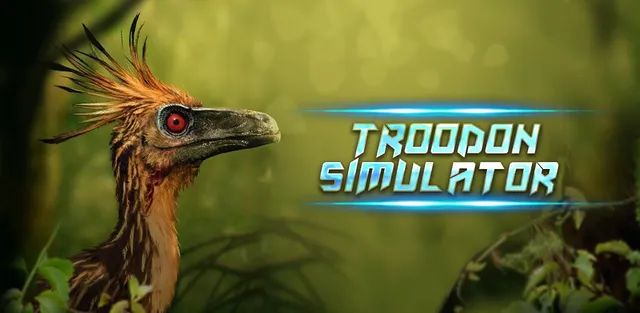
Troodon: Smart Dino Simulator lets you play a troodontid in a night-hunting adventure. Its store listing describes tracking prey, planning attacks, levelling up abilities and building a dinosaur family. Troodon also appears as an opponent in games such as T-Rex: Dino Simulator.
The listing’s claims about night vision and intelligence are game features and not established facts about the fossil genus; as explained above, the skull often used to show a large brain is now assigned to Stenonychosaurus. Game animations and abilities are entertainment, not scientific evidence.
Classification and fossil record
The Paleobiology Database taxonomic record catalogues Troodon under Troodontinae. This is the immediate parent in that catalogue, rather than a complete list of evolutionary relationships.
Discovery and naming history
The original tooth was discovered in 1855 and initially interpreted within a lizard context. Reassignments of later skeletons and renewed proposals about the name’s validity mean its naming history cannot be treated as a settled complete body reconstruction. Historical overview.
The corroborated occurrence sample includes United States, Canada; those are modern discovery locations, not a complete ancient geographic range.
Research starting point
The catalogue links Troodon to Leidy, 1856, published in Proceedings of the Academy of Natural Sciences of Philadelphia. This identifies a research starting point; the catalogue’s citation alone does not verify every later reconstruction or species assignment.
For the meaning of taxonomic terms and how evidence is checked, see the glossary and editorial policy.
Quick answers
- Is Troodon a dinosaur?
- Yes. Troodon is a small bird-like theropod dinosaur from the Late Cretaceous of North America, although the genus is based on a single tooth and its status is disputed.
- When did Troodon live?
- The type tooth is about 77 million years old, from the Campanian age of the Late Cretaceous. Museum figures give a slightly wider range of roughly 79 to 75 million years ago.
- Is Troodon still a valid name?
- It is disputed. The name rests on one tooth, and many skeletons once called Troodon are now assigned to Stenonychosaurus. A 2025 proposal would tie the name to better material.
- What did Troodon eat?
- Probably a mixed diet. Its serrated teeth resemble those of meat-eaters but also some plant-eaters, and a study of tooth wear points to soft food, mostly meat.
- Was Troodon a raptor?
- No. Troodon was a troodontid, a relative of the raptor family that includes Velociraptor. Many troodontids had a similar enlarged toe claw, which may have evolved independently.