Jurassic Dinos editorial · Updated · Source-based review
What is Shantungosaurus?
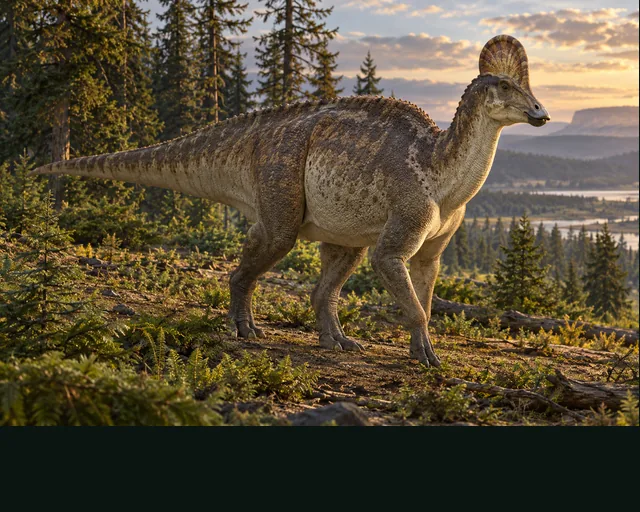
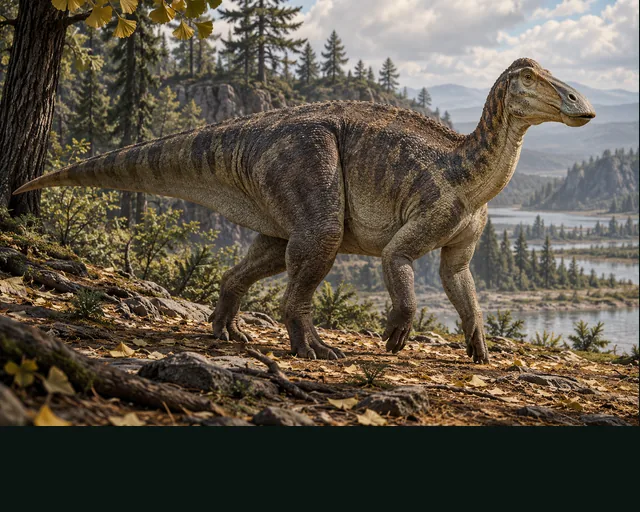
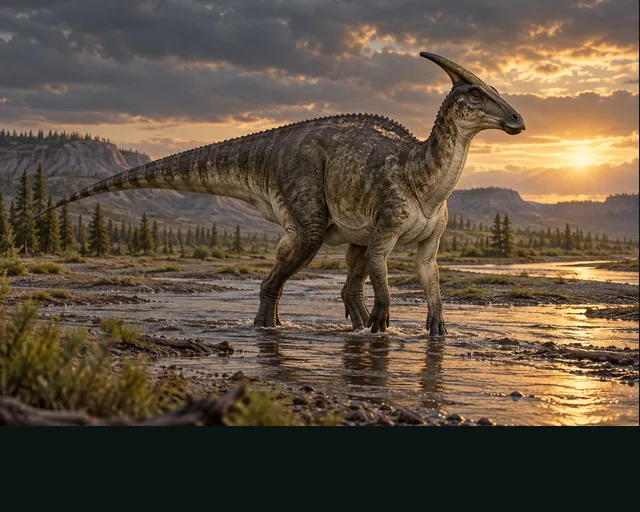
Shantungosaurus was a very large Late Cretaceous Chinese hadrosaur from the Wangshi Group of Shandong.
Distinctive features and evidence
Its unusual size belongs to the duck-billed dinosaur lineage, rather than the sauropods. Uncertain later records and reconstructed dimensions should be kept distinct from the better-supported formation assignments.
Genus overview and research references.
Shantungosaurus fossil discoveries
Shantungosaurus is known from more than five incomplete skeletons, which were dug up in Shandong Province in eastern China between 1964 and 1968 and described in 1973. The remains include skull bones, limb bones and vertebrae. None of the skeletons is complete, and the mounted skeleton in Beijing is a composite.
Later finds in the same area were given their own names. Zhuchengosaurus, named in 2007, and Huaxiaosaurus were both known from the Zhucheng area of Shandong. More recent analyses concluded that the apparent differences came from growth stage, individual variation and distortion during fossilisation, and treated both names as junior synonyms, meaning later names for the same animal, of Shantungosaurus.
How big was Shantungosaurus?
Shantungosaurus is the largest known hadrosaur, a group of duck-billed dinosaurs. The type skull is about 1.63 metres long. The composite mounted skeleton in Beijing measures 14.7 metres, and a second mount, once called Zhuchengosaurus, measures 16.6 metres.
Size estimates are therefore usually given as roughly 15 to 17 metres in length, with a body mass of about 13 to 16 tonnes for the biggest individuals. In 2016, Gregory Paul argued that earlier studies had overestimated it and preferred about 15 metres and 13 tonnes, which still keeps it the largest of its group. These are estimates scaled from incomplete skeletons, not measurements of a living animal.
Is Shantungosaurus related to Edmontosaurus?
Yes. Shantungosaurus belongs to Hadrosauridae, specifically the saurolophine branch, and recent analyses recover it as the closest relative of Edmontosaurus from North America. Together they form a clade, or family-tree branch, that links Asia and North America. The Paleobiology Database places it in the group Edmontosaurini.
Like other hadrosaurs, it had a toothless beak at the front of its jaws. Behind it the jaws held around 1,500 tiny chewing teeth. A large opening near the nostril may have been covered by a flap of skin that could be inflated, but whether it was used for sound or display is not established.
Where and when Shantungosaurus lived
Shantungosaurus lived in the Late Cretaceous, in the middle to late Campanian. The Natural History Museum dates it to about 78 to 74 million years ago. Its remains come from the Wangshi Group of the Shandong Peninsula, from the top of the Xingezhuang Formation up to the middle of the Hongtuya Formation. There are possible records from the Maastrichtian, a later stage, but these are uncertain, and the Paleobiology Database range is broader than the Campanian.
Classification and fossil record
The Paleobiology Database taxonomic record catalogues Shantungosaurus under Edmontosaurini. This is the immediate parent in that catalogue, rather than a complete list of evolutionary relationships.
The corroborated occurrence sample includes China; those are modern discovery locations, not a complete ancient geographic range.
The sourced length estimate for Shantungosaurus is 15–17 metres. This is an estimate for the reconstructed animal, not a measurement shared by every individual. See the body-size discussion and linked evidence for context.
Research starting point
The catalogue links Shantungosaurus to Hu, 1973, published in Acta Geologica Sinica. This identifies a research starting point; the catalogue’s citation alone does not verify every later reconstruction or species assignment.
For the meaning of taxonomic terms and how evidence is checked, see the glossary and editorial policy.
Quick answers
- Is Shantungosaurus a dinosaur?
- Yes. Shantungosaurus was a very large herbivorous hadrosaurid, or duck-billed dinosaur, that lived in what is now eastern China during the Late Cretaceous.
- When did Shantungosaurus live?
- It lived in the middle to late Campanian of the Late Cretaceous. The Natural History Museum gives roughly 78 to 74 million years ago.
- How big was Shantungosaurus?
- Estimates are about 15 to 17 metres long and 13 to 16 tonnes, based on incomplete skeletons. It is the largest known hadrosaur.
- Is Shantungosaurus a hadrosaur?
- Yes. It is a saurolophine hadrosaurid, and the closest relative of Edmontosaurus according to recent analyses.
- Where was Shantungosaurus found?
- In the Wangshi Group of Shandong Province, China, where skeletons were excavated between 1964 and 1968 and described in 1973.