Jurassic Dinos editorial · Updated · Source-based review
What is Seismosaurus?
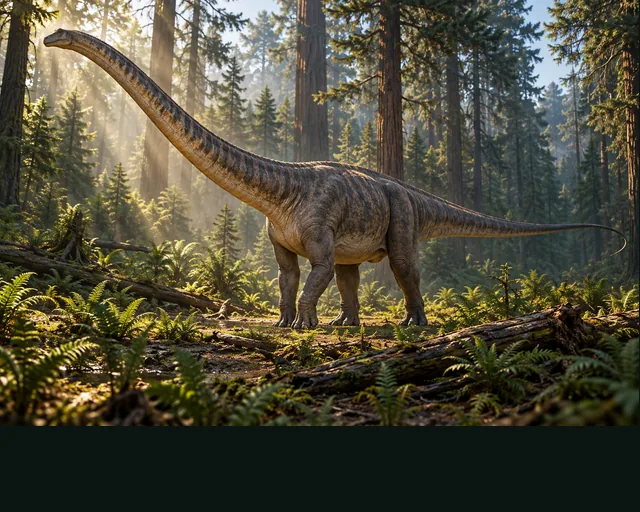
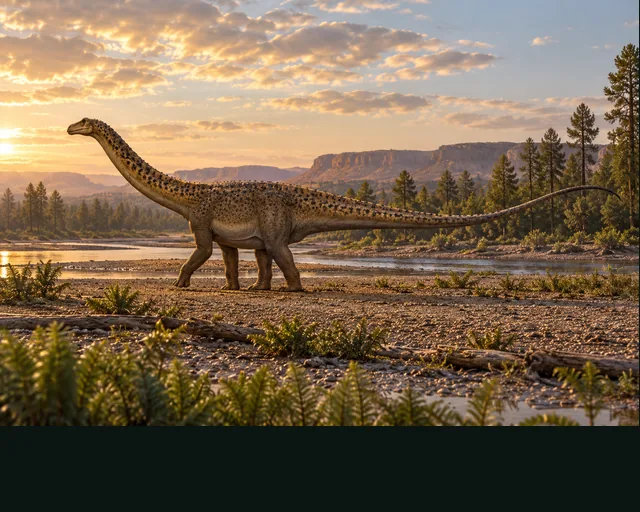
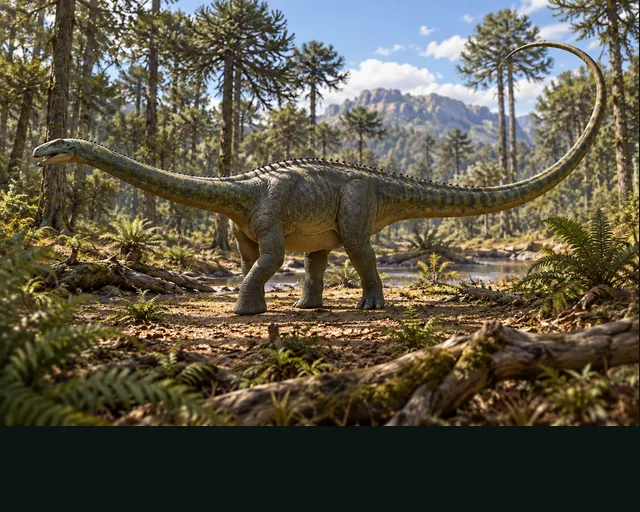
Seismosaurus is a historical sauropod name now generally discussed within Diplodocus.
Distinctive features and evidence
The source overview resolves to Diplodocus rather than an independent genus account. This page preserves the familiar name as an entry point while directing readers to the current taxonomic interpretation and avoiding duplicate counts of the same animal.
Genus overview and research references.
Seismosaurus fossil discoveries
The story begins in 1979, when three hikers noticed several large vertebrae sticking out of rock near some petroglyphs in a canyon west of San Ysidro, New Mexico. They reported the find to the New Mexico Museum of Natural History, and an expedition led by David Gillette began collecting the skeleton in 1985. Work continued over several visits until 1990.
The bones were partly still lined up as they had lain in life. They include a series of vertebrae, part of the hip, the right thigh bone and 230 stones called gastroliths. No skull was found. Gillette described the animal in the Journal of Vertebrate Paleontology in 1991 as Seismosaurus halli, and in 1994 he changed the species ending to hallorum to match the two people it honours, Jim and Ruth Hall.
Is Seismosaurus the same as Diplodocus?
Seismosaurus is a historical name. Today current references and the Paleobiology Database treat the genus as a junior synonym of Diplodocus, meaning it is the same genus under an older valid name. The animal is not a separate extra dinosaur, and this site lists it so that readers who search for the famous name can find the current explanation.
Gillette argued in 1991 and 1994 that the New Mexico skeleton was distinct, pointing to a stouter pubis, a hook-like process on the ischium and an unusual combination of tail features. A study led by Spencer Lucas in 2006 replied that the pubis was within the range of Diplodocus, that the tail features came from vertebrae being placed in the wrong order, and that the hook was part of a displaced spine stuck onto the ischium. A 2004 report by Upchurch and colleagues also failed to separate the two.
The species itself has survived. In 2015 Tschopp and colleagues identified eight features that set Diplodocus hallorum apart from Diplodocus carnegii and referred three more specimens to it, including one of the early mounted skeletons. So the most accurate short answer is that Seismosaurus is no longer used as a genus, while D. hallorum is a species of Diplodocus that still has its own anatomical features.
How big was Seismosaurus?
Its size estimates have changed a great deal. In 1991 Gillette scaled up from a complete skeleton of D. carnegii and arrived at about 33 metres. A few years later he suggested that it was probably longer, 39 to 45 metres, with some individuals possibly reaching 52 metres and weighing 80 to 100 tonnes.
Those numbers fell once other researchers showed that some of the tail vertebrae had been numbered incorrectly. Later estimates were about 29 to 35 metres, with weight estimates from about 23 tonnes up to 38 tonnes. In 2024 Woodruff and colleagues used the thickness of the thigh bone to calculate a mass of roughly 21 tonnes for the holotype, which is the lowest figure so far. Over the years the published length estimates have ranged from about 28 to 52 metres.
There is a second problem. The Carnegie Museum skeleton used for scaling was found to include a tail vertebra from another dinosaur. Treat all figures as estimates rather than measurements.
Was Seismosaurus fully grown?
Probably yes. The 2024 study sampled the bone structure of the holotype and concluded that the animal was skeletally mature when it died. Using the growth record in the bone and calculating back to allow for early growth that had been erased, the authors estimated a maximum age at death of about 60 years.
The authors raise a point about rarity. Very large specimens of D. hallorum and Supersaurus are uncommon in the Morrison Formation, but this may simply reflect that they were old, mature animals, rather than odd giants. Only four specimens are currently assigned to D. hallorum, and their sizes vary, so extreme size alone does not define the species.
Where and when Seismosaurus lived
The fossils come from the Morrison Formation, a famous sequence of Late Jurassic rocks across the western United States. The holotype was found in the middle part of the formation known as the Brushy Basin Member. Diplodocus in general is common in the middle and upper Morrison, mostly in rocks dated to roughly 152 to 149 million years ago.
The age was less clear when the animal was first named. Gillette’s 1991 paper title describes the rocks as Upper Jurassic or Lower Cretaceous. Later work places the formation in the Late Jurassic. A mounted skeleton of D. hallorum, formerly Seismosaurus, is displayed in the New Mexico Museum of Natural History and Science.
What did Seismosaurus eat?
Seismosaurus itself has no known skull, so ideas about its diet come from Diplodocus and its close relatives. Diplodocus had long, slender teeth with wear on the outer face, which is unusual among sauropods. Biomechanical modelling in 2012 found that stripping leaves from branches and precise biting were both plausible ways to use them, while bark stripping put the skull under too much stress.
In short, scientists think it was a plant-eater, but the exact food and feeding method are still being studied. Related Morrison sauropods include Apatosaurus and Barosaurus.
Classification and fossil record
The Paleobiology Database taxonomic record catalogues Seismosaurus under Diplodocinae. This is the immediate parent in that catalogue, rather than a complete list of evolutionary relationships.
The corroborated occurrence sample includes United States; those are modern discovery locations, not a complete ancient geographic range.
Research starting point
The catalogue links Seismosaurus to Gillette, 1991, published in Journal of Vertebrate Paleontology. This identifies a research starting point; the catalogue’s citation alone does not verify every later reconstruction or species assignment.
See Diplodocus for the current genus account and the distinction between a historical name and an additional animal.
For the meaning of taxonomic terms and how evidence is checked, see the glossary and editorial policy.
Quick answers
- Is Seismosaurus a dinosaur?
- Yes. It was a diplodocid sauropod, a giant long-necked plant-eater from the Late Jurassic of New Mexico. The name is now treated as a synonym of Diplodocus rather than a separate genus.
- Is Seismosaurus the same as Diplodocus?
- Current references treat Seismosaurus as a junior synonym of Diplodocus. Its species survives as Diplodocus hallorum, which a 2015 analysis found has features distinguishing it from Diplodocus carnegii.
- How big was Seismosaurus?
- Estimates have ranged widely, from about 28 to 52 metres, with recent corrections favouring roughly 29 to 35 metres. A 2024 study calculated a mass of about 21 tonnes for the holotype.
- Where was Seismosaurus found?
- In the Morrison Formation near San Ysidro in New Mexico, USA. Hikers spotted the first vertebrae in 1979, and the main collecting ran from 1985 to 1990.
- What did Seismosaurus eat?
- Scientists think it ate plants, based on its relatives. Diplodocus teeth were slender, and branch stripping or precise biting are plausible feeding methods, but no Seismosaurus skull is known.