Jurassic Dinos editorial · Updated · Source-based review
What is Saltasaurus?
Saltasaurus was a Late Cretaceous Argentine sauropod with bony plates in its skin.
Distinctive features and evidence
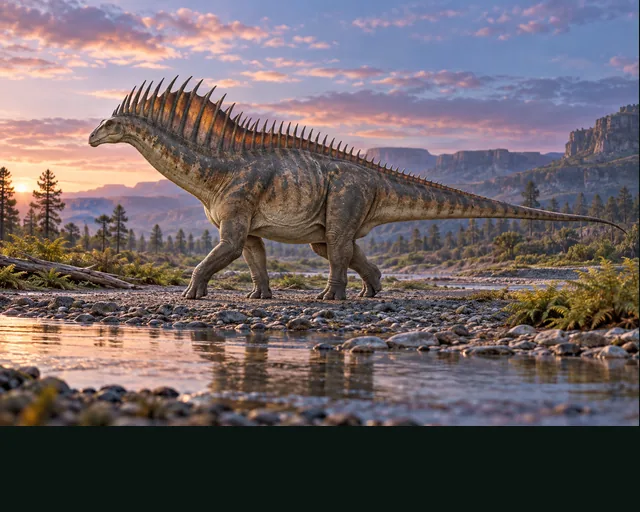
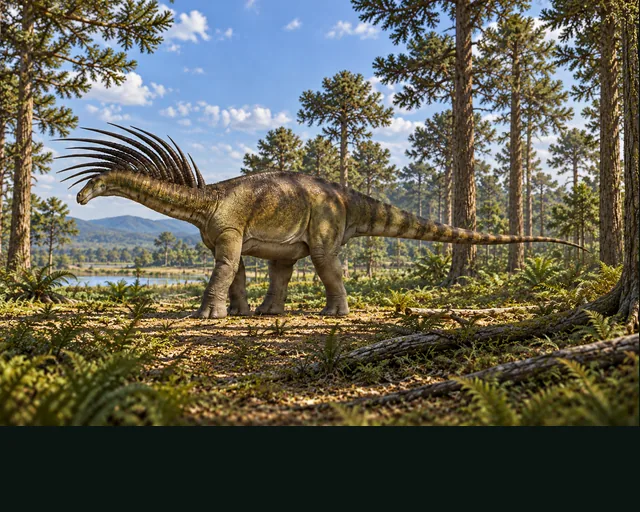
Its osteoderms helped establish that some titanosaurs carried armor. The discovery does not imply that all sauropods had the same covering, and its relatively modest sauropod size should be distinguished from giant-titanosaur imagery.
Genus overview and research references.
Saltasaurus fossil discoveries
José Bonaparte, Martín Vince and Juan Leal dug up the fossils of Saltasaurus between 1975 and 1977 at a ranch called Estancia El Brete in Salta Province, northwestern Argentina. Bonaparte and Jaime Powell named it in 1980. The type specimen is a sacrum, the fused hip vertebrae, connected to two pelvic bones, from the Lecho Formation.
More than 200 other bones were later catalogued with it, including parts of the skull, teeth, vertebrae from the neck, back and tail, shoulder and hip bones, limb bones and pieces of armour. Together they represent at least five individuals, two adults and three young or half-grown animals, which gives researchers more to work with than for many sauropods.
How big was Saltasaurus?
Saltasaurus was small for a sauropod, though still heavy by the standards of living animals. Estimates differ widely. Powell put adult length at about 6 metres, Gregory Paul estimated up to 8.5 metres and 2.5 tonnes in 2010, and Donald Henderson suggested around 12.8 metres and nearly 7 tonnes. The Natural History Museum lists about 12 metres.
What is better established is the body plan: a short neck, short and stubby limbs with especially short hands and feet, and a very wide belly. The teeth were cylindrical with spoon-shaped tips, and its vertebrae contain shallow hollows and air chambers that would have lightened the skeleton.
Saltasaurus armour: what the plates tell us
Saltasaurus was the first sauropod known to have bony plates embedded in its skin. These osteoderms come in two kinds. Oval plates up to about 12 centimetres long were keeled or spiked and may have lain in rows along the back. Between them were tiny rounded or five-sided ossicles, about 7 millimetres across, forming a continuous covering.
The find overturned the idea that sheer size alone was enough protection for sauropods, and scientists have since investigated whether other sauropods carried armour too. Powell thought adults were defended by their armour, but how the plates were actually used is not known. A nesting site at Auca Mahuevo in Patagonia, made by other saltasaurine titanosaurs, preserved embryos with skin impressions showing a mosaic of small bead-like scales that resembled the Saltasaurus pattern.
Is Saltasaurus a titanosaur?
Yes. Saltasaurus is a titanosaur, a group of sauropods that stayed common in South America and Africa to the end of the Cretaceous, and it is the namesake of the family Saltasauridae. Famous relatives include the giant Argentinosaurus and North America’s Alamosaurus, but Saltasaurus was far smaller than the biggest members of the group.
Only one species, Saltasaurus loricatus, is currently recognised. Two other species once suggested are now placed in a separate genus, Neuquensaurus, and some armour plates from the region were earlier named Loricosaurus by a researcher who thought they came from an armoured ankylosaur. Some scientists have proposed that those plates in fact belong to Saltasaurus.
Where and when Saltasaurus lived
The Lecho Formation layer that yielded Saltasaurus dates to the early Maastrichtian, about 70 million years ago, near the end of the age of dinosaurs. The Natural History Museum describes it as one of the last sauropods, living shortly before the group died out.
Classification and fossil record
The Paleobiology Database taxonomic record catalogues Saltasaurus under Saltasaurini. This is the immediate parent in that catalogue, rather than a complete list of evolutionary relationships.
The corroborated occurrence sample includes Argentina; those are modern discovery locations, not a complete ancient geographic range.
Research starting point
The catalogue links Saltasaurus to Bonaparte and Powell, 1980, published in Mémoires de la Société Géologique de France, Nouvelle Série. This identifies a research starting point; the catalogue’s citation alone does not verify every later reconstruction or species assignment.
For the meaning of taxonomic terms and how evidence is checked, see the glossary and editorial policy.
Quick answers
- Is Saltasaurus a dinosaur?
- Yes. Saltasaurus was a sauropod dinosaur, a plant-eating titanosaur from Late Cretaceous Argentina, and it is relatively small for a sauropod.
- When did Saltasaurus live?
- Saltasaurus lived in the early Maastrichtian age of the Late Cretaceous, about 70 million years ago, shortly before the end of the dinosaurs.
- How big was Saltasaurus?
- Estimates range from about 6 metres to nearly 13 metres in length and from roughly 2.5 to 7 tonnes. It was small for a sauropod, but the size is uncertain.
- Is Saltasaurus a titanosaur?
- Yes. Saltasaurus is a titanosaur and belongs to the family Saltasauridae, a branch of that group. Small bony plates have since been found on other titanosaurs.
- Where was Saltasaurus found?
- It was found at Estancia El Brete in Salta Province, northwestern Argentina, in the Lecho Formation, between 1975 and 1977.