Jurassic Dinos editorial · Updated · Source-based review
What is Liaoceratops?
Liaoceratops was a small Early Cretaceous Chinese ceratopsian that informs the early history of horned dinosaurs.
Distinctive features and evidence
It predates the familiar giant ceratopsids and illustrates how the group began with different proportions. Membership in Ceratopsia does not establish a large frill or the full horn arrangement of later forms.
Genus overview and research references.
Liaoceratops fossil discoveries in Liaoning
Liaoceratops was found in Liaoning Province, China, a region better known for its feathered dinosaurs. A team led by Xu Xing and Peter Makovicky described it in 2002 from an almost complete skull. A second skull, from a juvenile, was referred to it, and in 2007 the skull of an even younger individual was added. That last skull lacked its roof, which researchers have explained as possible damage by a predator that opened the braincase to reach the contents, although that remains an explanation, not a certainty. The species name refers to the town of Yanzigou.
The same Yixian Formation beds have also produced insects, ginkgo plants and other dinosaurs, including the early troodontid Sinovenator.
How big was Liaoceratops compared with Triceratops?
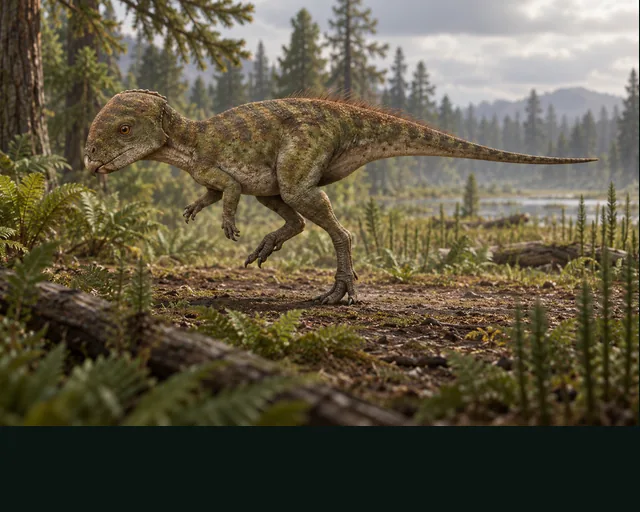
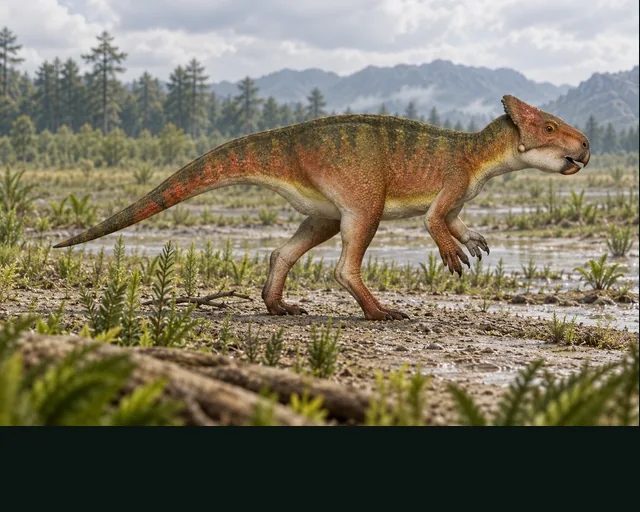
Very small. One published summary gives a length of about 50 centimetres and a weight near 2 kilograms, and the holotype skull is only 154 millimetres long. It had horns on the cheekbones, the jugals, and a small frill at the back of the skull, but lacked the horns above the eyes and the large neck shield seen in later horned dinosaurs. By comparison the Natural History Museum describes Triceratops as roughly 9 metres long, with three horns and a frill that could approach a metre across. Liaoceratops shows how the group looked early in its history, long before such giants appeared.
What did Liaoceratops eat, and how did it sense the world?
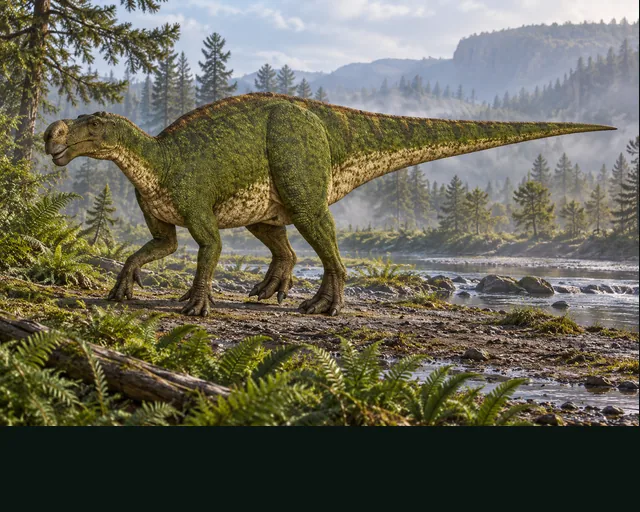
Liaoceratops is thought to have browsed close to the ground, on plants such as ferns and cycads, as other members of its group did. Its small frill and cheek horns are more likely to have helped animals recognise each other, or to have been used for display, than for fighting, but this is only a hypothesis. Studies of the braincase report large olfactory bulbs for its size, which suggests a good sense of smell, and the shape of the inner ear has been used to argue that it held its head almost level.
Where does Liaoceratops fit among horned dinosaurs?
Liaoceratops is regarded as an early relative of the horned ceratopsids and is placed in Neoceratopsia, the line that includes Protoceratops from the Late Cretaceous of Mongolia and China. Another ceratopsian from the same part of the world, Psittacosaurus, also lived in the Early Cretaceous, so horned dinosaurs of different kinds shared the region. Being a member of this group does not mean Liaoceratops had a full set of horns or a big frill; those features appear later.
Where and when Liaoceratops lived
The holotype comes from the Yixian Formation, which is dated to the Barremian stage of the Early Cretaceous, about 126 million years ago in one account. The museum gives 127 to 121 million years ago, and the Paleobiology Database occurrences span about 125.8 to 119.6, so dates are approximate. The animal belonged to the Jehol Biota, a community of forests and wetlands that also included insects, plants and many feathered dinosaurs.
Classification and fossil record
The Paleobiology Database taxonomic record catalogues Liaoceratops under Neoceratopsia. This is the immediate parent in that catalogue, rather than a complete list of evolutionary relationships.
The corroborated occurrence sample includes China; those are modern discovery locations, not a complete ancient geographic range.
Research starting point
The catalogue links Liaoceratops to Xu and Makovicky, 2002, published in Nature. This identifies a research starting point; the catalogue’s citation alone does not verify every later reconstruction or species assignment.
For the meaning of taxonomic terms and how evidence is checked, see the glossary and editorial policy.
Quick answers
- Is Liaoceratops a dinosaur?
- Yes. Liaoceratops was a small, beaked ceratopsian, an ornithischian plant-eating dinosaur, from the Early Cretaceous of Liaoning Province, China.
- When did Liaoceratops live?
- Liaoceratops lived in the Early Cretaceous, about 126 million years ago by one account, with the museum giving a range of 127 to 121 million years ago.
- How big was Liaoceratops?
- It was small. One published summary gives about 50 centimetres long and 2 kilograms, and the type skull is only 154 millimetres long.
- Did Liaoceratops have horns?
- It had horns on its cheekbones and a small frill, but not the brow horns or large neck shield of later horned dinosaurs such as Triceratops.
- Where was Liaoceratops found?
- Liaoceratops was found in the Yixian Formation in Liaoning Province, China, in beds that also hold many feathered dinosaurs and other fossils.