Jurassic Dinos editorial · Updated · Source-based review
What is Baryonyx?
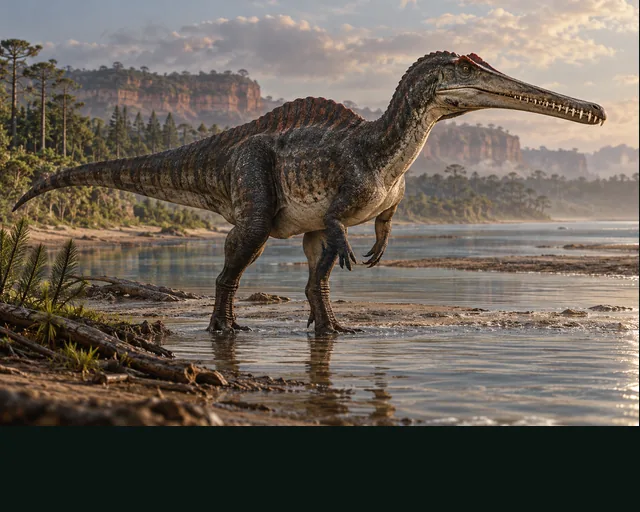
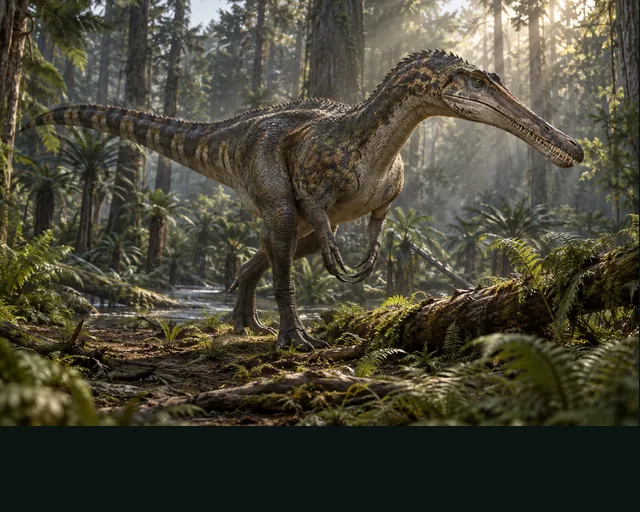
Baryonyx was an Early Cretaceous spinosaurid from England, named after its large first-finger claw.
Distinctive features and evidence
The Smokejack specimen preserves an unusually informative skeleton for a spinosaurid. Its long snout and hand claw provide anatomical evidence; material once assigned to Baryonyx elsewhere has sometimes been moved to other genera.
Genus overview and research references.
Baryonyx fossil discoveries
In January 1983 William Walker, a plumber and amateur fossil collector, was searching the Smokejack Clay Pit, a working pit close to Ockley in Surrey, southern England. Inside one rock he noticed a large claw, and when he pieced it together at home he saw the tip was missing, so he returned some weeks later and found that piece after about an hour of searching. The claw was shown to Alan Charig and Angela Milner at the Natural History Museum in London, who recognised it as part of a theropod dinosaur. A team of museum staff and volunteers dug out roughly two tonnes of rock in 54 blocks over three weeks, in May and June.
Preparing the bones took six years, because they were locked in very hard siltstone. The result was about 65 per cent of a skeleton, including parts of the skull, teeth, neck, back and tail, shoulders, arms, hips and some leg bones. Charig and Milner named it Baryonyx walkeri in 1986, with the species name honouring Walker. They were not sure at first whether the claw belonged to the hand or the foot. Journalists nicknamed the animal “Claws”, and a plaster copy of the skeleton stands in the museum in London. It remains the most complete spinosaurid skeleton known.
How big was Baryonyx?
Baryonyx is estimated at about 7.5 to 10 metres long, about 2.5 metres high at the hips, and 1.2 to 2 tonnes in weight. The Natural History Museum lists 10 metres and 2,000 kilograms. The skeleton may not have been fully grown, since some skull and backbone bones had not yet fused, though a fused breastbone points the other way. The full skull length of about 91 to 95 centimetres is an estimate, based on a larger relative, since much of the skull is missing.
The giant thumb claw measured about 31 centimetres along its curve. In life it would have been longer, because a sheath of keratin covered the bone.
What did Baryonyx eat?
Baryonyx is the first theropod dinosaur shown to have eaten fish. In 1997 Charig and Milner reported acid-etched scales and teeth of a common fish, Scheenstia mantelli, in the stomach region of the skeleton, along with bones of a young iguanodontid dinosaur. The long, narrow snout with a spoon-shaped tip, full of many small conical teeth, resembles the snout of a gharial, a fish-eating crocodile relative.
That does not mean it lived on fish alone. A tooth embedded in a pterosaur bone from Brazil shows that spinosaurids sometimes took other prey, and a 2013 study concluded that their diets probably depended on body size. Some researchers have also argued for scavenging. Scientists still debate how the big claws were used, whether to hook or pin fish, to tear food, or to dig.
Did Baryonyx swim?
Charig and Milner thought Baryonyx could swim, as most land animals can, but not that it was aquatic, because the nostrils and the skeleton did not show special swimming features. Later studies have suggested that spinosaurids as a group spent a lot of time in or near water. A 2010 chemical study of spinosaurid teeth from around the world supports this. In 2022 a team argued from bone density that Baryonyx could dive, but a 2024 reanalysis criticised the methods. The safest summary is that Baryonyx probably fished along rivers and shallow water, and that how far it went into deeper water is unresolved.
Where and when Baryonyx lived
The Smokejack skeleton comes from the Weald Clay Formation, in the Barremian stage of the Early Cretaceous, about 130 to 125 million years ago. The Natural History Museum lists around 125 million years ago. At that time southern England held a large fresh to brackish lake, fed by rivers, with shallow water, lagoons and marshes around it, and a sub-tropical climate. Other animals from the same area included the plant-eaters Iguanodon and its relatives, small sauropods, crocodiles, pterosaurs, turtles, sharks and bony fishes, and the plants included ferns, horsetails and conifers.
Is Baryonyx a spinosaurid?
Yes. Baryonyx is a member of the family Spinosauridae, alongside Spinosaurus, Irritator and Oxalaia. In 1986 Charig and Milner thought it was so unusual that it needed its own family, Baryonychidae, and that name is now treated as part of Spinosauridae. Spinosaurids share a long, low crocodile-like snout, a rosette-shaped tip, and conical teeth.
It is placed in a subfamily, the Baryonychinae, with Suchomimus from Niger, although a 2021 study found Suchomimus closer to two other British spinosaurids. Several bones once named as Baryonyx from the Isle of Wight, Spain and Portugal have since been moved to new genera or are considered uncertain, so the genus is now mainly known from the Surrey skeleton.
Baryonyx in the game
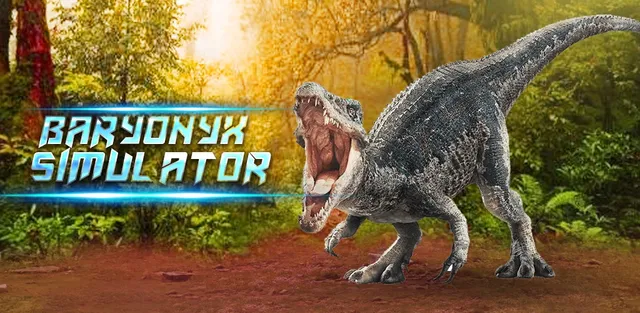
Baryonyx Dinosaur Simulator lets players explore an open-world Jurassic island as a Baryonyx. The store listing describes hunting prey, finding water, quests, skill upgrades, customisation, and weather and day-night cycles, with battles against other dinosaurs such as Spinosaurus and Triceratops.
The game is entertainment. Its fights, skills and mix of animals are not scientific evidence about how the real Baryonyx lived.
Classification and fossil record
The Paleobiology Database taxonomic record catalogues Baryonyx under Baryonychinae. This is the immediate parent in that catalogue, rather than a complete list of evolutionary relationships.
Discovery and naming history
The name-bearing skeleton was discovered at Surrey’s Smokejack Clay Pit in 1983. It became Baryonyx walkeri, while some material historically referred to the genus elsewhere has subsequently received other names. Historical overview.
Research starting point
The catalogue links Baryonyx to Charig and Milner, 1986, published in Nature. This identifies a research starting point; the catalogue’s citation alone does not verify every later reconstruction or species assignment.
For the meaning of taxonomic terms and how evidence is checked, see the glossary and editorial policy.
Quick answers
- Is Baryonyx a dinosaur?
- Yes. Baryonyx was a theropod dinosaur from the Early Cretaceous of England, and a member of the spinosaurid family.
- When did Baryonyx live?
- In the Barremian stage of the Early Cretaceous, about 130 to 125 million years ago according to the main published dating, and around 125 million years ago in the Natural History Museum's account.
- How big was Baryonyx?
- Estimates are about 7.5 to 10 metres long and 1.2 to 2 tonnes, based on one incomplete skeleton that might not have been fully grown.
- Is Baryonyx a spinosaurid?
- Yes. It belongs to Spinosauridae, the group with Spinosaurus, and shares their long, narrow, crocodile-like snout and conical teeth.
- What did Baryonyx eat?
- Mostly fish, but not only fish. Its stomach region held fish scales and teeth plus bones of a young iguanodontid, so it also ate other animals and may have scavenged.
- Where was Baryonyx found?
- The type skeleton was found in 1983 in the Smokejack Clay Pit near Ockley, Surrey, England, in the Weald Clay Formation. Other claimed finds elsewhere are now doubtful.