Jurassic Dinos editorial · Updated · Source-based review
What was Panoplosaurus?
Panoplosaurus was a heavily armoured plant-eating dinosaur from Late Cretaceous Alberta. Its name means well-armoured lizard. It belongs to the armoured dinosaur branch commonly discussed with nodosaurids, rather than the famous club-tailed body plan of Ankylosaurus.
What makes the fossil distinctive?
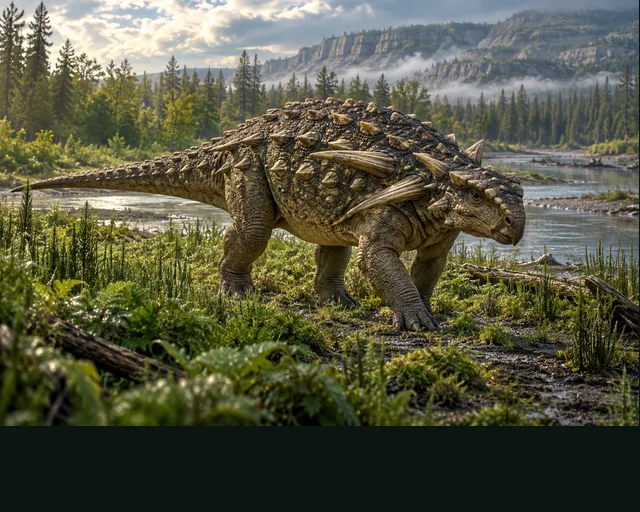
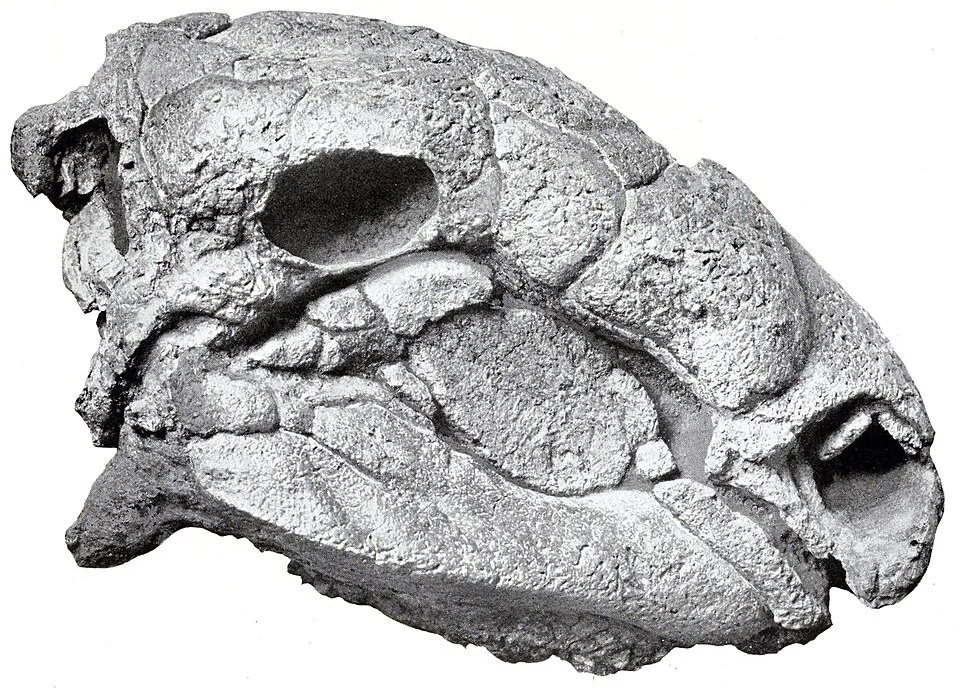
Bony plates covered the head, neck and body. Smaller armour elements filled spaces between larger ones. The short snout and patterned skull armour help researchers compare it with relatives such as Edmontonia. A complete covering is more complicated than a few large spikes placed on a generic dinosaur.
Where was it found and how was it named?
The original fossil was discovered in 1917 and named in 1919 from the Dinosaur Park Formation. Its relationship with Edmontonia has been interpreted differently over time, and some older records assigned a wider range of material to Panoplosaurus than current accounts accept.
What can we infer, and what remains uncertain?
Armour offers a reasonable defensive interpretation, but it does not make an animal invulnerable or tell us exactly how a predator attacked. Panoplosaurus also lacked the characteristic bony tail club associated with advanced ankylosaurids. Comparing the two body plans is a useful way to avoid treating all armoured dinosaurs as identical tanks.
Did Panoplosaurus have an Ankylosaurus-style tail club?
No. Its armour belonged to a different body plan, without that characteristic terminal bony club.
How can you check the evidence?
The Paleobiology Database record catalogues Panoplosaurus under Nodosauridae. Its linked bibliography identifies this research starting point: L. M. Lambe. 1919. Description of a new genus and species (Panoplosaurus mirus) of an armoured dinosaur from the Belly River Beds of Alberta. Proceedings and Transactions of the Royal Society of Canada, series 3 13:39-50. Open the bibliographic record. A catalogue entry establishes the source trail; it does not independently verify every later illustration or behavioural claim.
Use the dated genus overview to follow the references behind the discovery and anatomy discussed above. When sources disagree, compare which specimen and rock layer each author studied. A reconstructed whole animal can combine original bones with comparisons to relatives; those two kinds of evidence should not be confused. The account above explains the particular limits that matter for Panoplosaurus, rather than supplying unsupported size, speed or lifespan figures.
Read the image and keep exploring
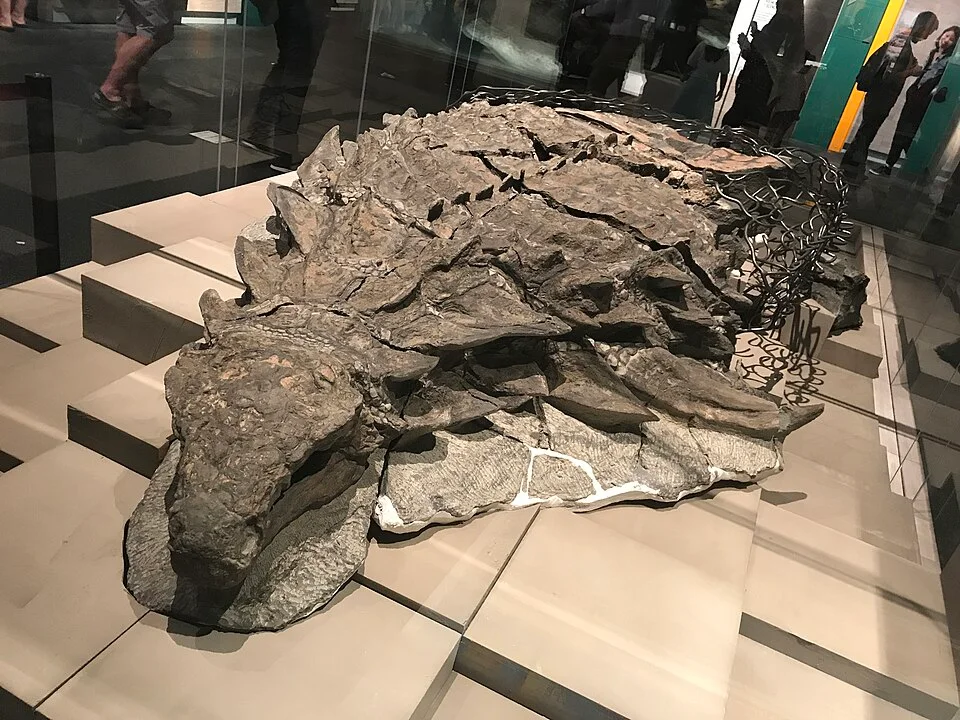
A historical illustration of the Panoplosaurus skull shows its short snout and textured bony covering. A displayed specimen or skeletal mount can include restored parts. Its appearance should be read alongside the original specimen description.
Compare Edmontonia, Borealopelta, Ankylosaurus. Find more names in the P index and explore ornithischian field notes. The glossary explains unfamiliar fossil terms.
Quick answers
- Where have Panoplosaurus fossils been found?
- The discoveries discussed here come from Canada. Modern place names describe discovery locations, not a complete ancient geographic range.
- When did Panoplosaurus live?
- It is placed in the Cretaceous period. See the discovery discussion for qualifications about the particular rock layers and dating.
- Where can I compare Panoplosaurus with related dinosaurs?
- Follow the related field notes below. Comparisons explain shared anatomy; they do not imply that all the animals lived together.