Jurassic Dinos editorial · Updated · Source-based review
What was Kunbarrasaurus?
Kunbarrasaurus was a small armoured dinosaur from Early Cretaceous Queensland, Australia. Its relatively complete fossil preserves an unusually informative skull and body covering. The genus helps reveal the diversity of ankylosaurs beyond the familiar northern-hemisphere giants.
What makes the fossil distinctive?
Preparation and CT scanning exposed details of the skull, including internal anatomy. These methods let researchers compare structures that a surface view would miss. Bony armour and other preserved traces add information about the living body, although colour and many soft-tissue details remain uncertain.
Where was it found and how was it named?
The skeleton was discovered in 1989 and initially referred to Minmi. More detailed study showed differences supporting a separate genus, named Kunbarrasaurus in 2015. Kunbarra is a word for shield in the language of the local Wunumara people.
What can we infer, and what remains uncertain?
This is a case where better preparation changed identification. A fossil can hold information that is invisible when it first reaches a museum. Calling it a different genus does not erase its discovery history; it reflects a more detailed understanding of the same specimen. Compare it with Minmi to see why geographic proximity and armour alone do not establish identical anatomy.
Why was it once called Minmi?
The initial identification was revised after preparation and scanning revealed anatomical differences supporting a separate genus.
How can you check the evidence?
The Paleobiology Database record catalogues Kunbarrasaurus under Parankylosauria. Its linked bibliography identifies this research starting point: L. G. Leahey, R. E. Molnar, and K. Carpenter, L. M. Witmer, S. W. Salisbury. 2015. Cranial osteology of the ankylosaurian dinosaur formerly known as Minmi sp. (Ornithischia: Thyreophora) from the Lower Cretaceous Allaru Mudstone of Richmond, Queensland, Australia. PeerJ 3:e1475:1-47. Open the bibliographic record. A catalogue entry establishes the source trail; it does not independently verify every later illustration or behavioural claim.
Use the dated genus overview to follow the references behind the discovery and anatomy discussed above. When sources disagree, compare which specimen and rock layer each author studied. A reconstructed whole animal can combine original bones with comparisons to relatives; those two kinds of evidence should not be confused. The account above explains the particular limits that matter for Kunbarrasaurus, rather than supplying unsupported size, speed or lifespan figures.
Read the image and keep exploring
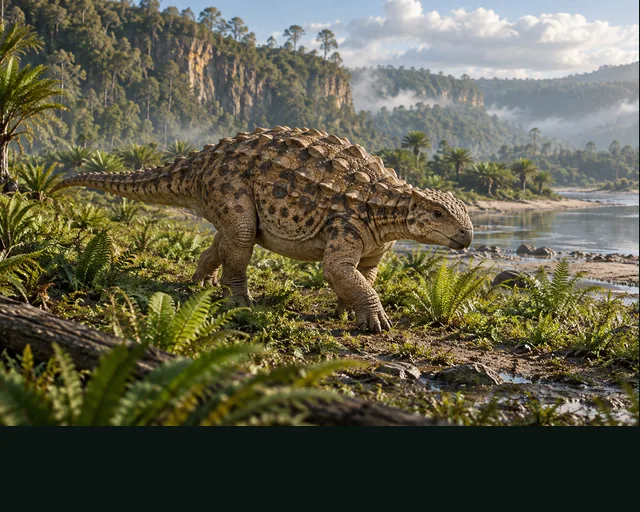
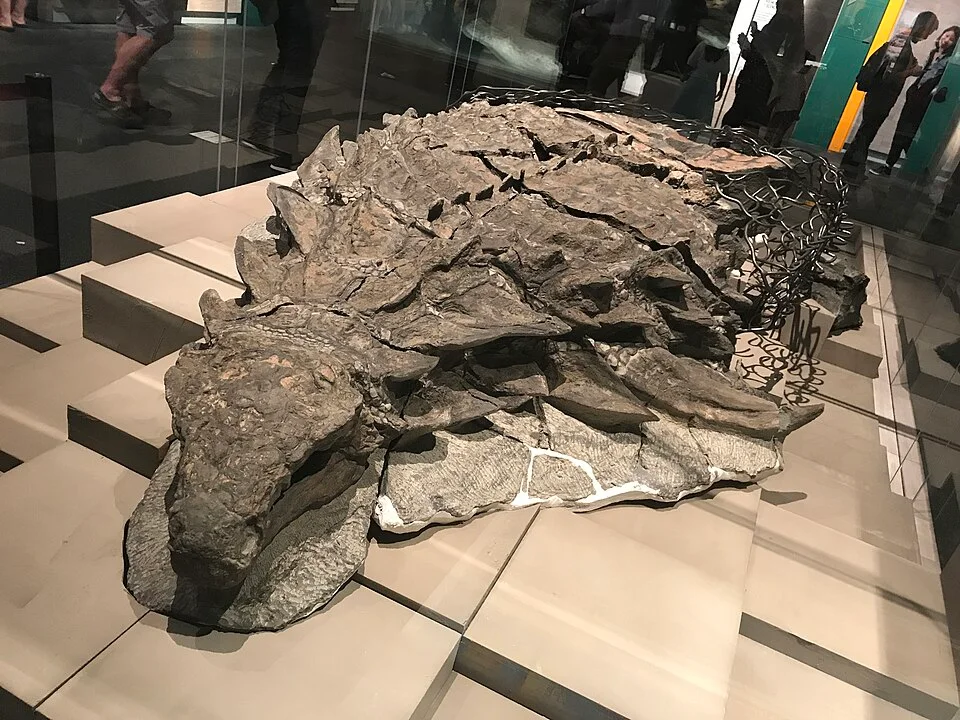
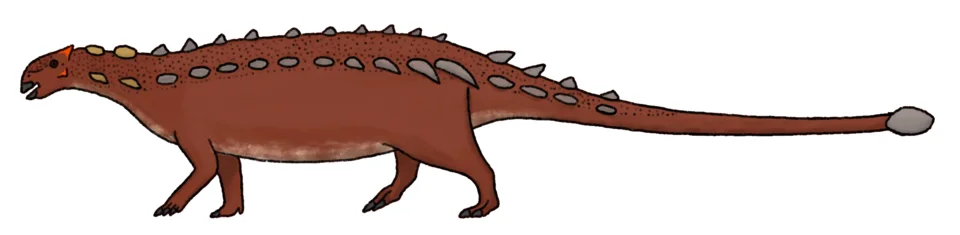
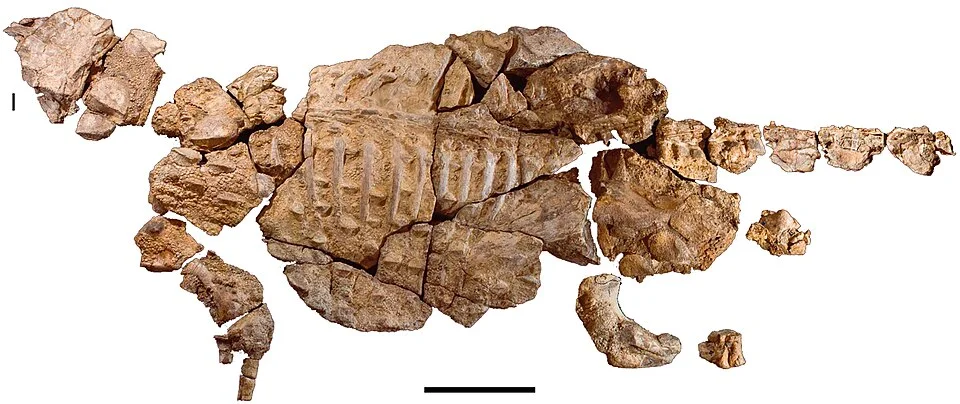
The Kunbarrasaurus specimen preserves a broad body, skull and associated armour, offering evidence beyond isolated bones. A displayed specimen or skeletal mount can include restored parts. Its appearance should be read alongside the original specimen description.
Compare Minmi, Borealopelta, Bissektipelta. Find more names in the K index and explore ornithischian field notes. The glossary explains unfamiliar fossil terms.
Quick answers
- Where have Kunbarrasaurus fossils been found?
- The discoveries discussed here come from Australia. Modern place names describe discovery locations, not a complete ancient geographic range.
- When did Kunbarrasaurus live?
- It is placed in the Cretaceous period. See the discovery discussion for qualifications about the particular rock layers and dating.
- Where can I compare Kunbarrasaurus with related dinosaurs?
- Follow the related field notes below. Comparisons explain shared anatomy; they do not imply that all the animals lived together.