Jurassic Dinos editorial · Updated · Source-based review
What was Buriolestes?
Buriolestes was a small early dinosaur from Late Triassic Brazil. Although it belonged to the lineage that eventually produced giant plant-eating sauropods, its teeth indicate a diet involving animal food. It is a useful warning against projecting the habits of later relatives onto every earlier member of a group.
What makes the fossil distinctive?
The jaws contain curved, finely serrated teeth suited to handling animal prey. Features of the limbs and skeleton nevertheless place it among early sauropodomorphs rather than simply grouping it with all meat-eating theropods. Diet and ancestry are different kinds of information: animals can change diet within an evolutionary lineage.
Where was it found and how was it named?
The first named specimen was discovered in the Santa Maria Formation and described in 2016. Additional, well-preserved material includes a more complete skull and much of the skeleton. Fossils of the small reptile Ixalerpeton were found at the same locality, illustrating that early dinosaurs shared their environments with other branches of archosaurs. Sharing a fossil bed does not by itself demonstrate a predator-prey interaction.
What can we infer, and what remains uncertain?
Unlike the tiny-headed giants that appear later in sauropodomorph history, Buriolestes retained a relatively substantial head and a lightly built body. The change from such animals to large herbivores involved shifts in feeding anatomy, proportions and locomotion over many branches and generations. Do not label it the proven direct ancestor of every sauropod. It documents a combination of traits near the early part of the lineage, not a complete family history on its own.
Were all sauropodomorphs plant-eaters?
No. Buriolestes is an important early example with teeth interpreted as adapted to animal food. The familiar herbivorous giant body plan evolved later.
How can you check the evidence?
The Paleobiology Database record catalogues Buriolestes under Sauropodomorpha. Its linked bibliography identifies this research starting point: S. F. Cabreira, A. W. A. Kellner, and S. Dias-da-Silva, L. R. da Silva, M. Bronzati, J. C. A. Marsola, R. T. Müller, J. S. Bittencourt, B. J. Batista, T. Raugust, R. Carrilho, A. Brodt, M. C. Langer. 2016. A unique Late Triassic dinosauromorph assemblage reveals dinosaur ancestral anatomy and diet. Current Biology 26(22):3090-3095. Open the bibliographic record. A catalogue entry establishes the source trail; it does not independently verify every later illustration or behavioural claim.
Use the dated genus overview to follow the references behind the discovery and anatomy discussed above. When sources disagree, compare which specimen and rock layer each author studied. A reconstructed whole animal can combine original bones with comparisons to relatives; those two kinds of evidence should not be confused. The account above explains the particular limits that matter for Buriolestes, rather than supplying unsupported size, speed or lifespan figures.
Read the image and keep exploring
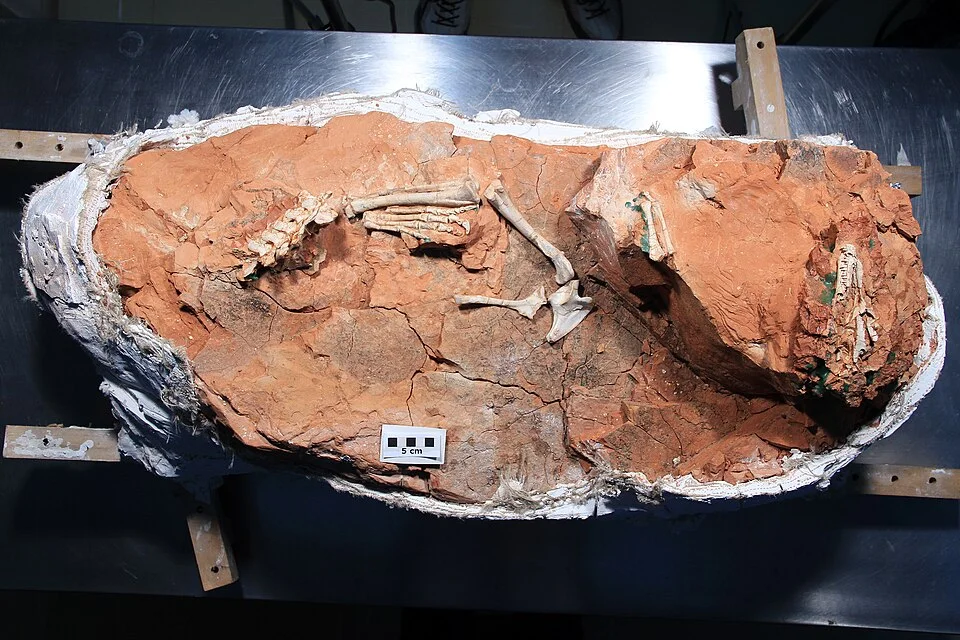
The Buriolestes fossil is displayed within its surrounding rock, preserving the positions of associated skeletal elements. A displayed specimen or skeletal mount can include restored parts. Its appearance should be read alongside the original specimen description.
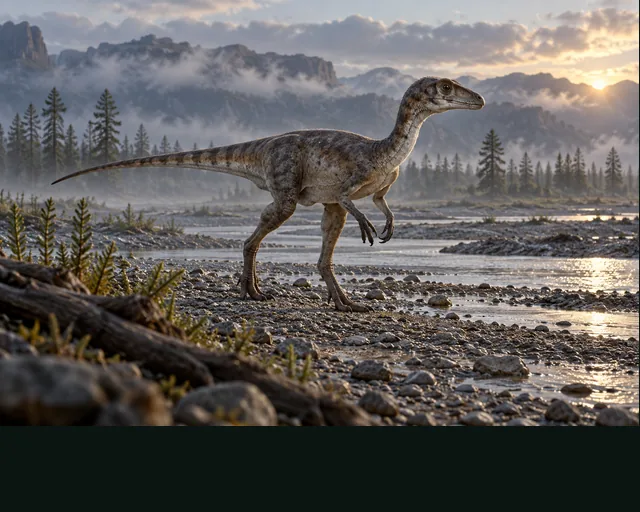
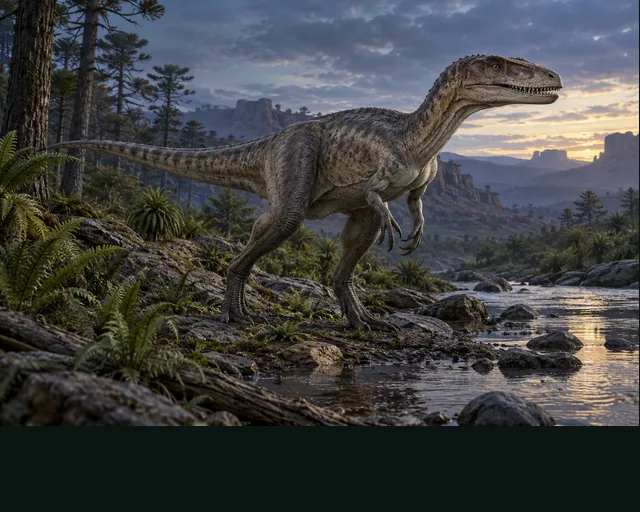
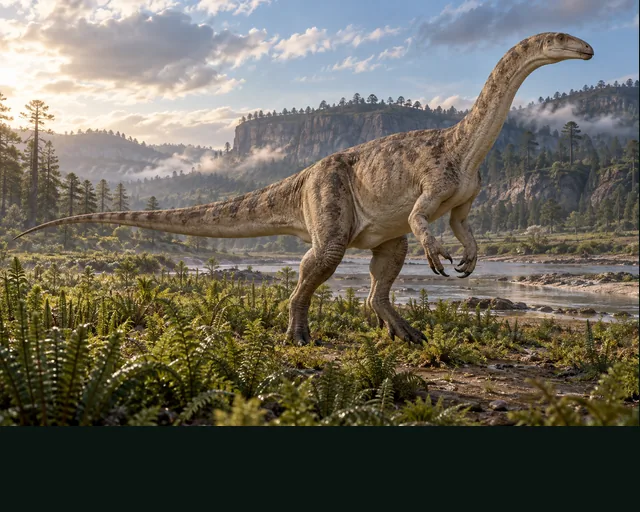
Compare Eoraptor, Herrerasaurus, Plateosaurus. Find more names in the B index and explore sauropodomorph field notes. The glossary explains unfamiliar fossil terms.
Quick answers
- Where have Buriolestes fossils been found?
- The discoveries discussed here come from Brazil. Modern place names describe discovery locations, not a complete ancient geographic range.
- When did Buriolestes live?
- It is placed in the Triassic period. See the discovery discussion for qualifications about the particular rock layers and dating.
- Where can I compare Buriolestes with related dinosaurs?
- Follow the related field notes below. Comparisons explain shared anatomy; they do not imply that all the animals lived together.
.jpg)