Jurassic Dinos editorial · Updated · Source-based review
What was Ampelosaurus?
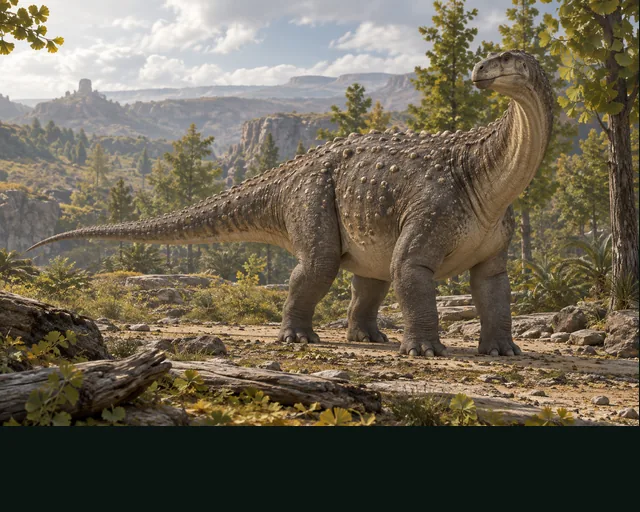
Ampelosaurus was a Late Cretaceous titanosaur from Europe, best known from southern France. It combined the long neck and massive body of a sauropod with bony armour elements. The name means vineyard lizard, reflecting the landscape around its discovery area rather than its diet.
What makes the fossil distinctive?
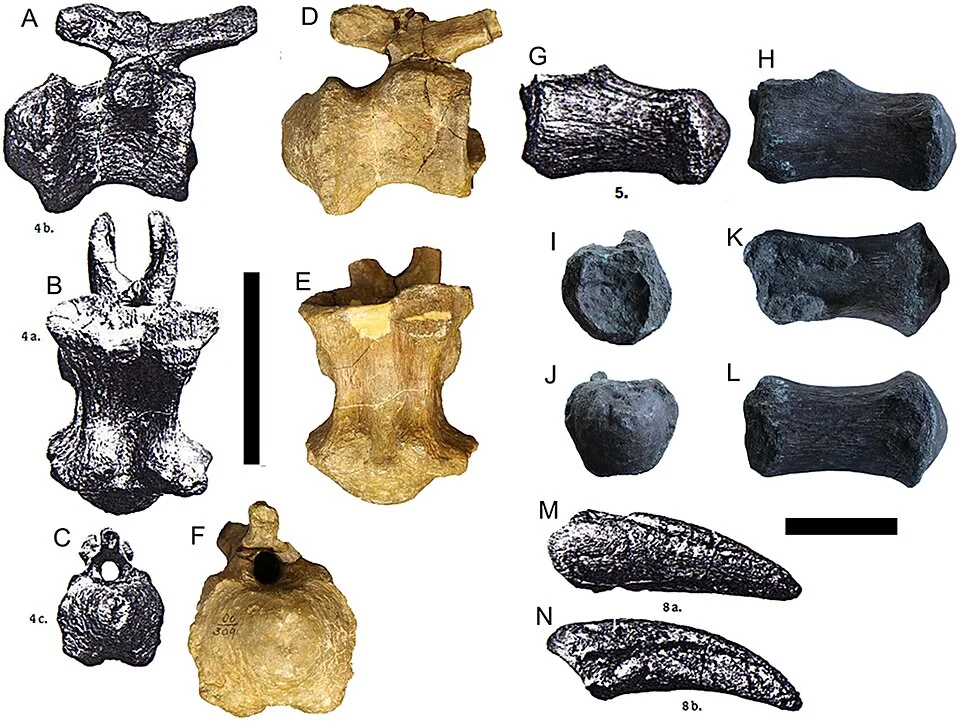
The armour elements are osteoderms, bones formed within the skin. Their presence does not mean Ampelosaurus wore a continuous ankylosaur-like shell. The arrangement and amount of armour on a complete living animal require reconstruction, especially when individual plates are found separated from skeletons.
Where was it found and how was it named?
Many bones have been recovered from the Bellevue locality near Campagne-sur-Aude. The genus was named in 1995, and continued discoveries have expanded the available anatomical material. As with other bone-rich sites, identifying which elements belong to which individual or species is an important part of the work.
What can we infer, and what remains uncertain?
Cretaceous Europe was divided into islands and changing coastlines. Ampelosaurus contributes to understanding the diversity of sauropods in those environments, but island geography alone does not prove that every European dinosaur was dwarfed. Comparing it with Saltasaurus highlights the occurrence of armour among titanosaurs, while comparison with Magyarosaurus opens a separate discussion about body size and growth evidence.
Did Ampelosaurus eat grapes?
Its name refers to vineyards near the fossil locality. That modern landscape does not identify the plants eaten by the dinosaur millions of years earlier.
How can you check the evidence?
The Paleobiology Database record catalogues Ampelosaurus under Lirainosaurinae. Its linked bibliography identifies this research starting point: J. Le Loeuff. 1995. Ampelosaurus atacis (nov, gen., nov. sp.), un nouveau Titanosauridae (Dinosauria, Sauropoda) du Crétacé supérieur de la Haute Vallée de l’Aude (France) [Ampelosaurus atacis (nov, gen., nov. sp.), a new titanosaurid (Dinosauria, Sauropoda) from the Upper Cretaceous of the Upper Aude Valley (France)]. Comptes Rendus de l’Académie des Sciences à Paris, Série IIa 321:693-699. Open the bibliographic record. A catalogue entry establishes the source trail; it does not independently verify every later illustration or behavioural claim.
Use the dated genus overview to follow the references behind the discovery and anatomy discussed above. When sources disagree, compare which specimen and rock layer each author studied. A reconstructed whole animal can combine original bones with comparisons to relatives; those two kinds of evidence should not be confused. The account above explains the particular limits that matter for Ampelosaurus, rather than supplying unsupported size, speed or lifespan figures.
Read the image and keep exploring
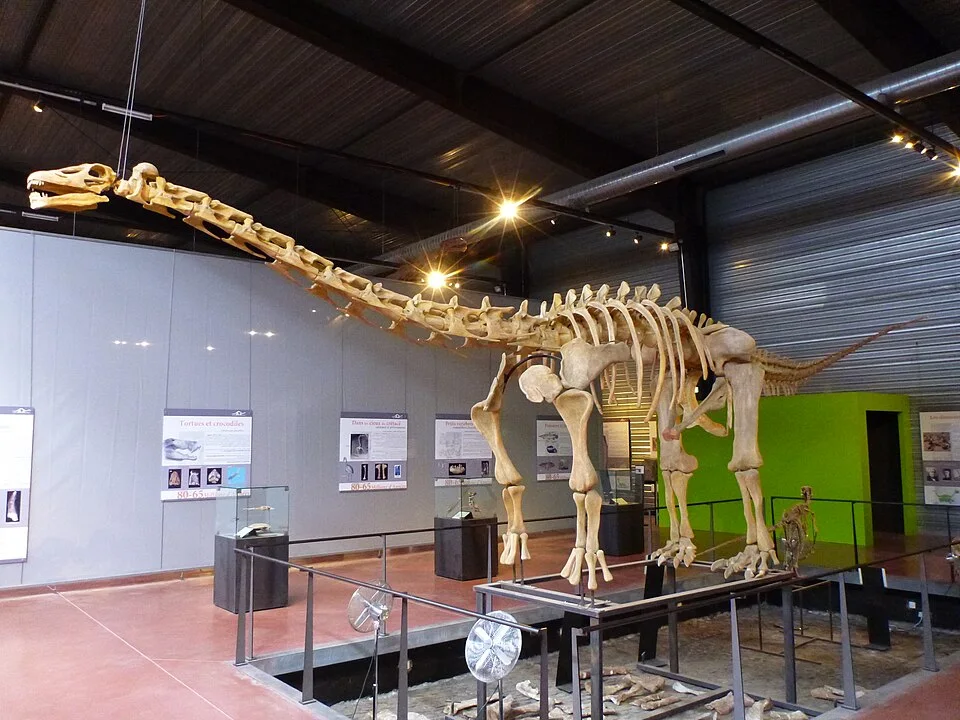
An Ampelosaurus skeletal mount presents a long-necked titanosaur body with displayed armour elements. A displayed specimen or skeletal mount can include restored parts. Its appearance should be read alongside the original specimen description.
Compare Saltasaurus, Rapetosaurus, Magyarosaurus. Find more names in the A index and explore sauropodomorph field notes. The glossary explains unfamiliar fossil terms.
Quick answers
- Where have Ampelosaurus fossils been found?
- The discoveries discussed here come from France. Modern place names describe discovery locations, not a complete ancient geographic range.
- When did Ampelosaurus live?
- It is placed in the Cretaceous period. See the discovery discussion for qualifications about the particular rock layers and dating.
- Where can I compare Ampelosaurus with related dinosaurs?
- Follow the related field notes below. Comparisons explain shared anatomy; they do not imply that all the animals lived together.