Jurassic Dinos editorial · Updated · Source-based review
What was Magyarosaurus?
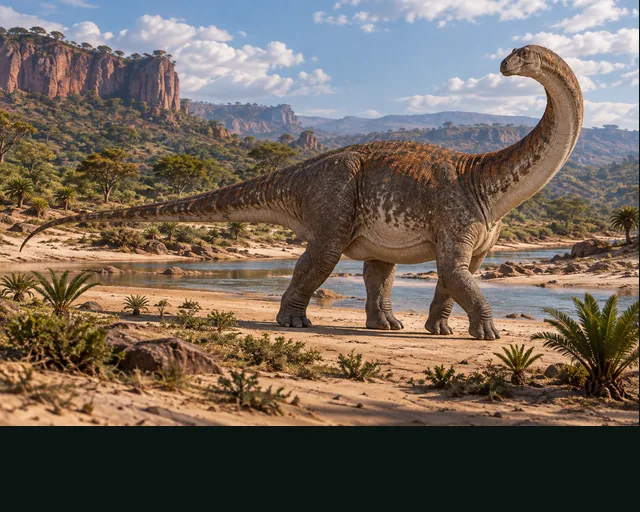
Magyarosaurus was a small titanosaur from Late Cretaceous Transylvania, in present-day Romania. It is central to discussions of island dwarfism, the evolution of smaller adult size in some island populations.
What makes the fossil distinctive?
Small fossil bones could belong either to young giants or to genuinely small adults. Studies of bone microstructure provide evidence of growth and maturity, helping researchers distinguish those explanations. Looking inside bone can therefore answer a question that body length alone cannot.
Where was it found and how was it named?
The fossils were originally named as a species of Titanosaurus in 1915 and transferred to Magyarosaurus in 1932. Historical geographic names reflect the region’s political history, while modern locality descriptions place the discoveries in Romania. Older material assigned to the genus has also undergone taxonomic reassessment.
What can we infer, and what remains uncertain?
The Hațeg island setting provides an environmental context for dwarfism hypotheses. Limited resources are a proposed evolutionary influence, not a direct observation of an individual dinosaur going hungry. Comparisons with larger titanosaurs and evidence of skeletal maturity make the argument stronger than simply labelling every small island fossil a dwarf.
How can researchers tell a dwarf adult from a juvenile giant?
Bone microstructure records growth and maturity. It can show that a small individual had reached an advanced growth stage rather than merely being young.
How can you check the evidence?
The Paleobiology Database record catalogues Magyarosaurus under Eutitanosauria. Its linked bibliography identifies this research starting point: F. v. Huene. 1932. Die fossile Reptil-Ordnung Saurischia, ihre Entwicklung und Geschichte [The fossil reptile order Saurischia, their development and history]. Monographien zur Geologie und Palaeontologie, serie 1 4(1-2):1-361. Open the bibliographic record. A catalogue entry establishes the source trail; it does not independently verify every later illustration or behavioural claim.
Use the dated genus overview to follow the references behind the discovery and anatomy discussed above. When sources disagree, compare which specimen and rock layer each author studied. A reconstructed whole animal can combine original bones with comparisons to relatives; those two kinds of evidence should not be confused. The account above explains the particular limits that matter for Magyarosaurus, rather than supplying unsupported size, speed or lifespan figures.
Read the image and keep exploring
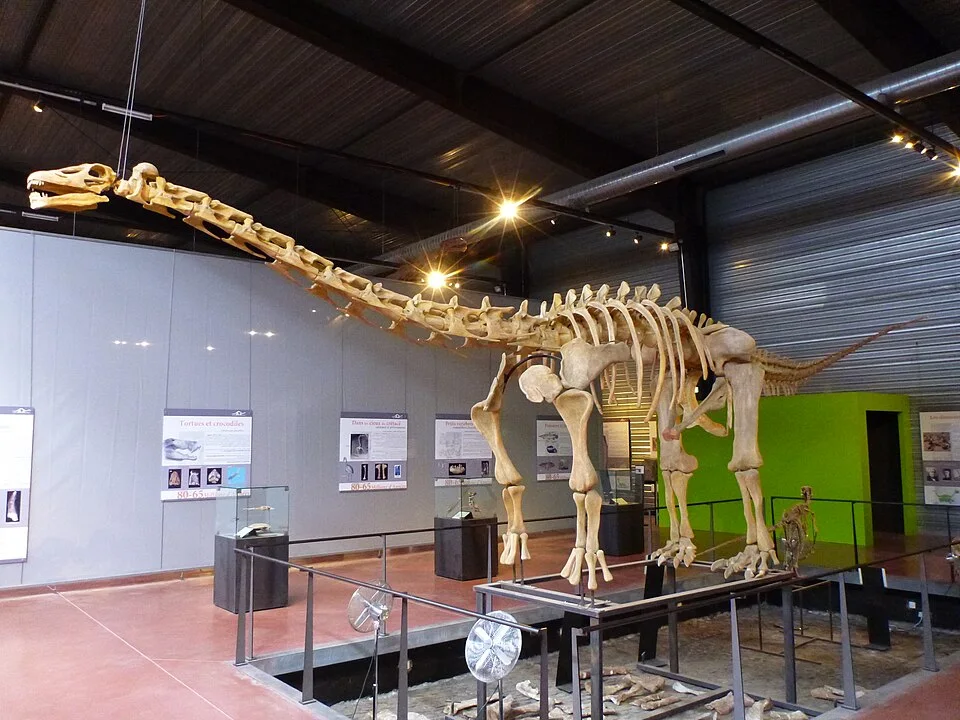
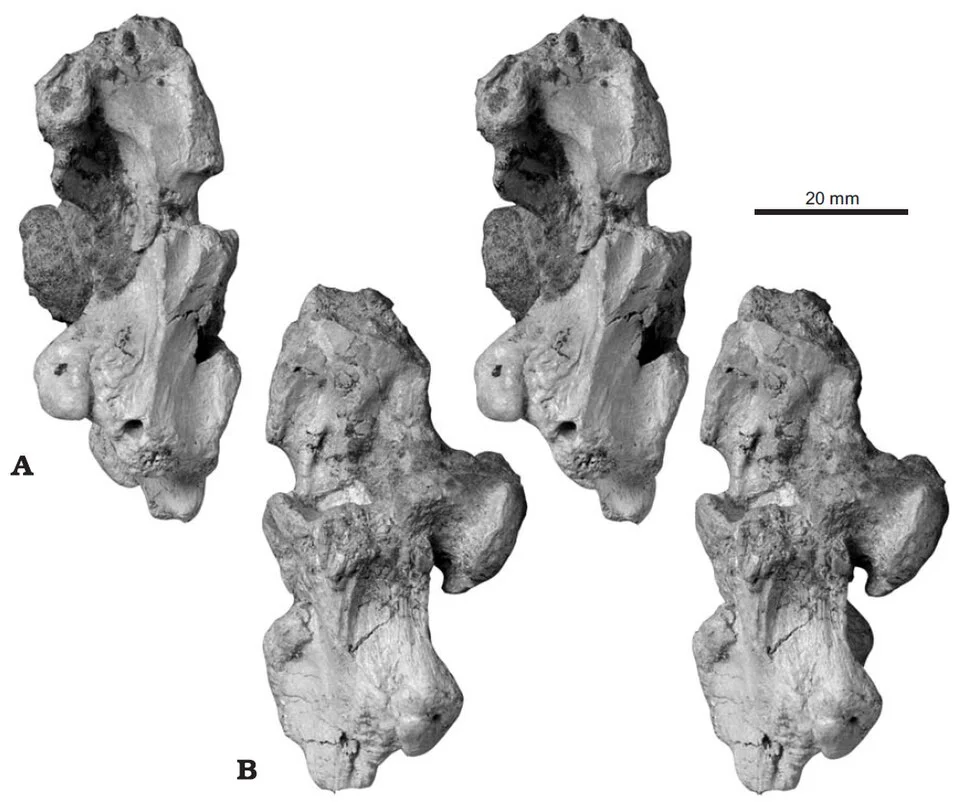
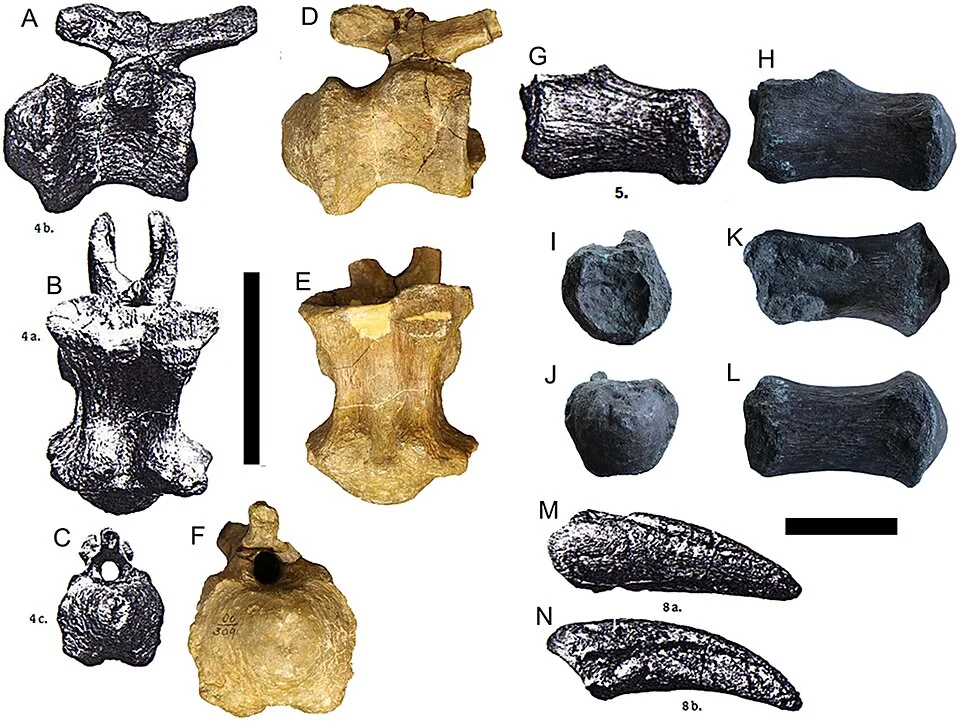
Photographs and drawings of Magyarosaurus vertebral material document specific fossil elements rather than a generic dwarf-sauropod silhouette. A displayed specimen or skeletal mount can include restored parts. Its appearance should be read alongside the original specimen description.
Compare Lirainosaurus, Ampelosaurus, Rapetosaurus. Find more names in the M index and explore sauropodomorph field notes. The glossary explains unfamiliar fossil terms.
Quick answers
- Where have Magyarosaurus fossils been found?
- The discoveries discussed here come from Romania. Modern place names describe discovery locations, not a complete ancient geographic range.
- When did Magyarosaurus live?
- It is placed in the Cretaceous period. See the discovery discussion for qualifications about the particular rock layers and dating.
- Where can I compare Magyarosaurus with related dinosaurs?
- Follow the related field notes below. Comparisons explain shared anatomy; they do not imply that all the animals lived together.