Jurassic Dinos editorial · Updated · Source-based review
What is Achillobator?
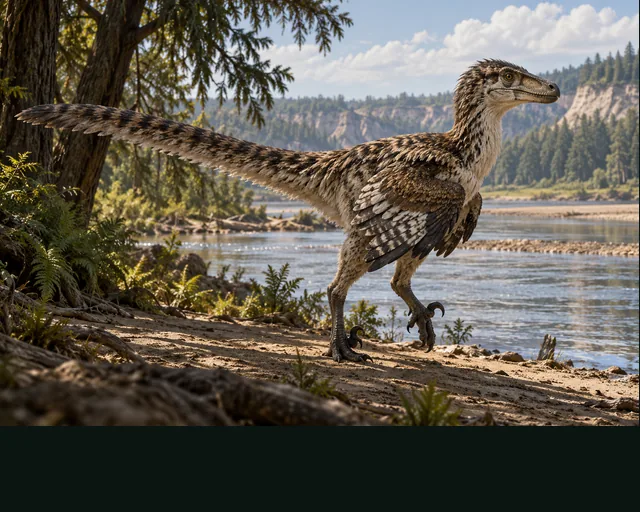
Achillobator was a robust dromaeosaurid theropod from Mongolia’s Late Cretaceous Bayan Shireh Formation.
Distinctive features and evidence
Its heavily built skeleton broadens the familiar picture of a lightly built raptor. The enlarged second-toe claw belongs to its anatomy; exact hunting routines and speeds cannot be read directly from that claw.
Genus overview and research references.
Achillobator fossil discoveries
Achillobator is known mainly from one partly jumbled skeleton found at the Burkhant locality in Mongolia’s Gobi Desert in 1989. The bones include a left upper jaw with teeth, neck, back and tail vertebrae, most of the hips, both thigh bones, part of a lower leg and some foot and hand bones. Altangerel Perle, Mark Norell and James Clark described it in 1999 as the type of the new genus, with the specimen catalogued as MNUFR-15.
The original paper was brief and contained errors. One claw described as the sickle claw of the foot was later reinterpreted by Phil Senter in 2007 as a hand claw. A large dromaeosaurid claw found at the same site in 1993, and a few more fragments reported later, were reported as belonging to large dromaeosaurids.
How big was Achillobator?
Estimates put Achillobator at about 4.5 to 5 metres long. Weight has been estimated at roughly 250 to 300 kilograms, which is a single published range and not a measurement. That makes it one of the larger dromaeosaurids known, alongside Utahraptor and Austroraptor, though it is a long way from the size of a tyrannosaur.
Its build was heavy for the family. The upper jaw is deep, the thigh bone is stout and longer than the shin, and the arms were relatively short. Studies of limb proportions have suggested it was not built for long, fast chases.
Was Achillobator really one animal?
The skeleton looks unusual for a dromaeosaurid. Its pubis, one of the hip bones, points straight down and has a large boot at the end, while most relatives have a pubis that points backwards. Because of this, a 2000 study proposed that the specimen was a chimera, a mix of bones from different animals.
Other researchers noted that the bones were found partly connected, with similar colour and preservation, which supports a single individual. In later analyses the genus keeps coming out as a dromaeosaurid, though the exact position remains debated.
Is Achillobator related to Velociraptor?
Achillobator is a dromaeosaurid, as are Velociraptor and Deinonychus, and most analyses put it among the eudromaeosaurs, ground-living meat-eaters often called the true dromaeosaurids. Its closest relative in many studies is Utahraptor. Whether the pair sits with Dromaeosaurus or with Velociraptor and kin differs between studies.
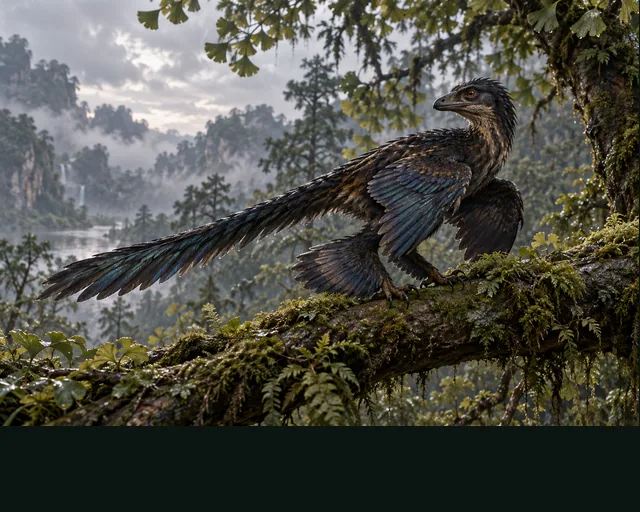
No feathers were found with the skeleton. Scientists expect feathers because other dromaeosaurids preserve them, but that is an inference.
Where and when did Achillobator live?
The Bayan Shireh Formation records a well-watered, slightly dry region of rivers, lakes and streams, with flowering plants present. Radiometric dating published in 2020 gave the formation an age of about 95.9 to 89.6 million years, with sizeable error margins, in the Cenomanian to Santonian stages, but databases and museum pages quote slightly different ranges.
Its neighbours included the therizinosaurs Erlikosaurus and Segnosaurus, the armoured Talarurus and the long-necked Erketu, together with turtles and crocodile relatives.
Classification and fossil record
The Paleobiology Database taxonomic record catalogues Achillobator under Eudromaeosauria. This is the immediate parent in that catalogue, rather than a complete list of evolutionary relationships.
Discovery and naming history
The first material was collected on a Mongolian–Russian expedition in 1989; the genus was described a decade later. That gap illustrates why a fossil discovery date and a scientific publication date are different events. Historical overview.
The corroborated occurrence sample includes Mongolia; those are modern discovery locations, not a complete ancient geographic range.
The sourced length estimate for Achillobator is 4.5–5 metres. This is an estimate for the reconstructed animal, not a measurement shared by every individual. See the body-size discussion and linked evidence for context.
Research starting point
The catalogue links Achillobator to Perle and Norell, 1999, published in Contributions of the Department of Geology, National University of Mongolia. This identifies a research starting point; the catalogue’s citation alone does not verify every later reconstruction or species assignment.
For the meaning of taxonomic terms and how evidence is checked, see the glossary and editorial policy.
Quick answers
- Is Achillobator a dinosaur?
- Yes. Achillobator was a large dromaeosaurid theropod dinosaur, a relative of Velociraptor, that lived in Mongolia during the Late Cretaceous.
- How big was Achillobator?
- Estimates are about 4.5 to 5 metres long, with a single estimated weight of roughly 250 to 300 kilograms, making it one of the larger dromaeosaurids.
- Where was Achillobator found?
- It was found at the Burkhant locality of the Bayan Shireh Formation in the Gobi Desert of Mongolia, during a Mongolian-Russian expedition in 1989.
- Is Achillobator a dromaeosaurid?
- Yes, most studies place it among the dromaeosaurids, and usually near Utahraptor, though a 2000 paper suggested the skeleton mixed bones of different animals.
- What does Achillobator mean?
- Achilles hero. The name refers to the Achilles tendon, which supported the raptor-like toe claw in dromaeosaurids, plus the Mongolian word for hero.