Jurassic Dinos editorial · Updated · Source-based review
What was Shri?
Shri was a genus of small predatory dromaeosaurid dinosaurs from Late Cretaceous Mongolia. The genus was named in 2021 with the species Shri devi. Another species, Shri rapax, was described in 2025. A genus groups related species; it does not make every specimen, locality or anatomical observation interchangeable between them.
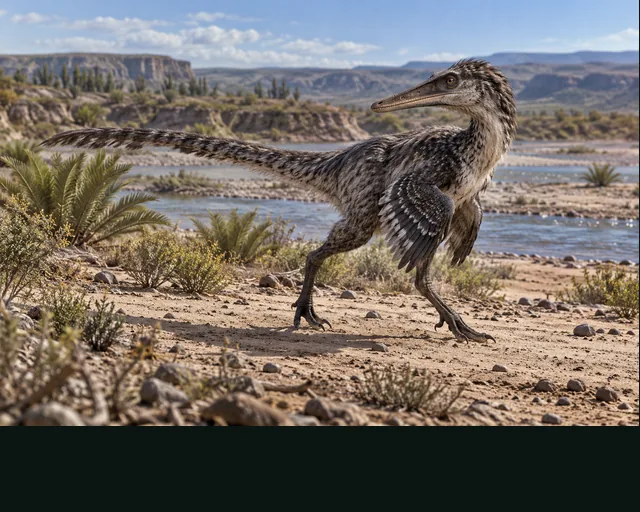
Our illustration specifically follows a complete restoration labelled S. rapax. That matters because a generic picture caption saying only Shri could otherwise hide which species the artist intended to show. The fossil context discussed in the following sections concerns rapax rather than automatically applying to every member of the genus.
Why are its hands interesting?
The Institute of Natural Sciences account highlights unusually robust hands in S. rapax. Researchers interpreted them as evidence of a feeding specialization. Robust means strongly built, rather than simply longer. Comparing how different parts of a limb are built can suggest different ways of applying force.
That interpretation does not give us a filmed hunt or a confirmed list of victims. Different hunting techniques and prey choices remain hypotheses to test. Our picture therefore shows an alert standing animal instead of staging a supposedly documented attack. It also avoids inventing exposed fingers where the approved reference covers the hands with feathers.
Was its skull always missing?
No. The specimen’s skull was scanned before it was later lost. Digital information and casts allowed researchers to retain evidence from it. Losing an original bone is serious, but it is different from a structure never having been discovered or recorded at all.
This history illustrates the value of preserving access to original specimens as well as documenting them carefully. A cast, a scan and an original fossil are related records with different strengths; none should be casually described as the others.
How certain is the feathered appearance?
The institutional account reports no feather traces on the discussed rapax specimen. Plumage is an informed reconstruction, and its exact arrangement and colour are not directly established there. Our image follows the named complete artwork rather than using fossils to invent an exterior.
The long feathered tail, folded forelimb plumage and sandy scene are presented with that limitation. Compare Velociraptor and Buitreraptor as separate dromaeosaurid accounts, then explore the S directory.
Quick answers
- Which species does the illustration depict?
- Shri rapax, following an explicitly identified complete restoration.
- What was unusual about its hands?
- The describing research highlights their exceptional robustness.
- Was its skull never discovered?
- No. It was scanned before being lost later.
- Are its feathers directly preserved?
- Not on the specimen discussed in the institution account.