Jurassic Dinos editorial · Updated · Source-based review
What was Pegomastax?
Pegomastax africana was a small plant-eating dinosaur from Early Jurassic South Africa. It belonged to the heterodontosaurids, a group notable for having different kinds of teeth within the same mouth. Its combination of a short beak and enlarged fang-like teeth can look surprising in an animal interpreted as a herbivore.
Do fangs always mean meat-eating?
No. The University of Chicago’s research announcement describes a beak at the front, enlarged canines and taller teeth farther back for processing plants. A single conspicuous tooth shape should not override the rest of the feeding anatomy. Different teeth can serve different functions within one animal’s mouth.
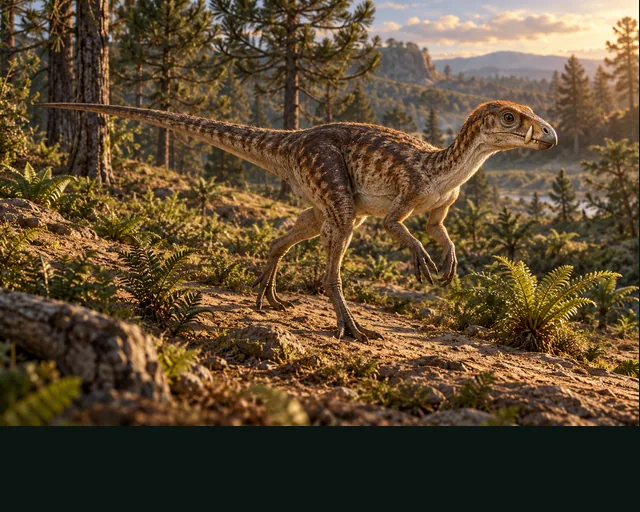
The announcement’s plant-eating interpretation does not establish the exact purpose of every enlarged tooth in every situation. Our picture therefore avoids a prey-killing scene or an invented behavioural demonstration. It introduces the unusual mouth without turning a possible function into something directly observed.
Why do sources use two species spellings?
The animal was initially introduced as Pegomastax africanus. A correction by the original author changed the species ending to africana so that it agreed with the grammatical gender of the genus name. The correction retained the same animal and authorship.
This is a nomenclatural change, meaning a change governed by scientific naming rules. It is not the discovery of a second species, and we do not create another encyclopedia page for the earlier spelling. The old spelling on the approved complete artwork therefore has a documented link to the corrected name used here.
Were its bristles actually preserved?
The university announcement discusses bristles known from another heterodontosaur, Tianyulong, when explaining the reconstructed appearance of these animals. That evidence belongs to the other taxon. It should not be rewritten as a discovery of preserved Pegomastax skin or a proven colour pattern.
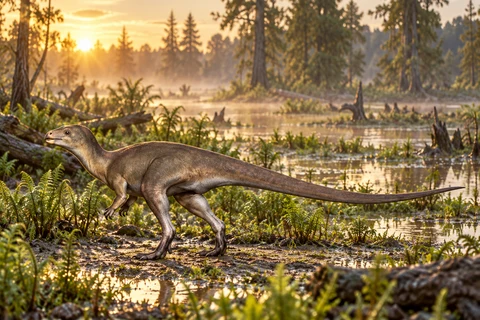
Our full-body illustration follows the approved named Pegomastax restoration for its short head, filament-covered body, grasping forelimbs and long tail. The covering and missing body proportions remain interpretive. The source specimen’s recognition in an existing collection also shows that museum research can produce discoveries long after excavation. Compare Heterodontosaurus and Echinodon, then browse the P directory.
Quick answers
- Does having fangs make Pegomastax a predator?
- No. The research announcement identifies it as a plant-eater.
- Which spelling is used here?
- Pegomastax africana, following the original author correction.
- Are africanus and africana separate dinosaurs?
- No. The change corrects the same species name.
- Are its own bristles directly preserved?
- The reviewed announcement bases that comparison on a different heterodontosaur, not preserved Pegomastax skin.