Jurassic Dinos editorial · Updated · Source-based review
What was Overosaurus?
Overosaurus paradasorum was a relatively small titanosaurian sauropod from Late Cretaceous Patagonia. Its fossils came from the Anacleto Formation in Neuquen, Argentina, in rocks assigned to the Campanian stage. Titanosaurs were a varied group, so the presence of smaller members is part of their diversity rather than an exception to be ignored.
What makes its backbone informative?
The original description reported an articulated series extending from the back of the neck through the trunk and into the tail. Articulated means the bones retain their anatomical connection or arrangement. Associated ribs and pelvic material added further information about the body.
An articulated series can help researchers follow changes along a backbone. A vertebra near the neck does a different job from one farther down the tail, so knowing their positions improves comparisons. Loose bones without a secure position can be harder to interpret, especially when several animals occur at one locality.
Was this a complete skeleton?
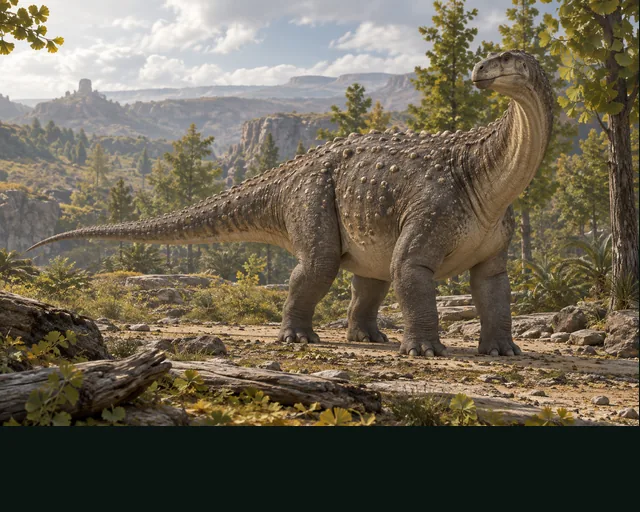
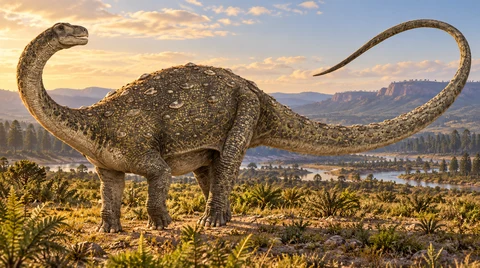
No. A long connected series is valuable without preserving every part of the dinosaur. The described material does not become a complete head-to-tail skeleton merely because a full-body illustration accompanies the account. Researchers and illustrators must keep the preserved regions separate from restored portions.
The naming paper used a combination of vertebral, rib and pelvic features to distinguish Overosaurus. Some concerned the shape of particular tail vertebrae; others involved the ilium, one of the main bones of the pelvis. A diagnosis can therefore depend on several anatomical regions rather than one spectacular horn or crest.
Why does its smaller size matter?
The original study placed Overosaurus near the smaller end of a diverse Patagonian sauropod assemblage. This broad comparison does not provide an exact adult weight. It also does not mean every small titanosaur was the same species, shared one growth pattern or occupied an identical habitat.
Our illustration follows the approved complete living drawing for the small head, rising neck, broad trunk, four pillar-like legs and long tail. Its faint stripes are artistic choices; the bold zebra-like reference pattern is not fossil pigment evidence. Compare Saltasaurus and Neuquensaurus, then browse the O directory for separate accounts and sources.
Quick answers
- Where did Overosaurus live?
- The region now known as Neuquen in Argentine Patagonia.
- What does articulated mean?
- Bones preserve their anatomical connection or arrangement.
- Was a complete skeleton described?
- No. A connected backbone series is not the same as a complete animal.
- Are the stripes in the reference proven?
- No. They are an artistic colour scheme.