Jurassic Dinos editorial · Updated · Source-based review
What was Lourinhasaurus?
Lourinhasaurus was a sauropod from Late Jurassic Portugal. It was a long-necked plant eater and is distinct from the similarly named predator Lourinhanosaurus. Small spelling differences can refer to very different animals.
What makes the fossil distinctive?
The principal specimen is an incomplete skeleton from near Alenquer. Its vertebrae and limb bones provide evidence for comparisons with other macronarian sauropods, the broad group containing Camarasaurus and brachiosaurids. Missing skull material limits reconstruction of the head.
Where was it found and how was it named?
The skeleton was discovered in 1949. It was originally assigned to Apatosaurus and later discussed under other sauropod classifications before receiving the genus Lourinhasaurus in 1998. Some additional material once associated with it was subsequently reassigned elsewhere.
What can we infer, and what remains uncertain?
This history shows why old museum labels and books can differ from modern accounts. A revised genus reflects comparative anatomy, while a reassigned specimen should not continue supplying facts to the old animal’s profile. The name refers to Lourinhã even though the principal specimen was found near Alenquer, another reminder that names are historical choices rather than exact distribution maps.
Why do older sources call it Apatosaurus?
The original assignment was later revised after anatomical comparison supported a separate genus. The fossil itself remained available for restudy.
How can you check the evidence?
The Paleobiology Database record catalogues Lourinhasaurus under Camarasauridae. Its linked bibliography identifies this research starting point: P. Dantas, J. L. Sanz, and C. M. da Silva, F. Ortega, V. F. dos Santos, M. Cachão. 1998. Lourinhasaurus n. gen. Novo dinossáurio saurópode do Juássico superior (Kimeridgiano superior-Titoniano inferior) de Portugal [Lourinhasaurus n. gen. New sauropod dinosaur from the Upper Jurassic (upper Kimmeridgian-lower Tithonian) of Portugal]. Actas do V Congresso Nacional de Geologia (Resumos Alargados). Comunicações del Instituto Geológico e Mineiro 84(1):A91-A94. Open the bibliographic record. A catalogue entry establishes the source trail; it does not independently verify every later illustration or behavioural claim.
Use the dated genus overview to follow the references behind the discovery and anatomy discussed above. When sources disagree, compare which specimen and rock layer each author studied. A reconstructed whole animal can combine original bones with comparisons to relatives; those two kinds of evidence should not be confused. The account above explains the particular limits that matter for Lourinhasaurus, rather than supplying unsupported size, speed or lifespan figures.
Read the image and keep exploring
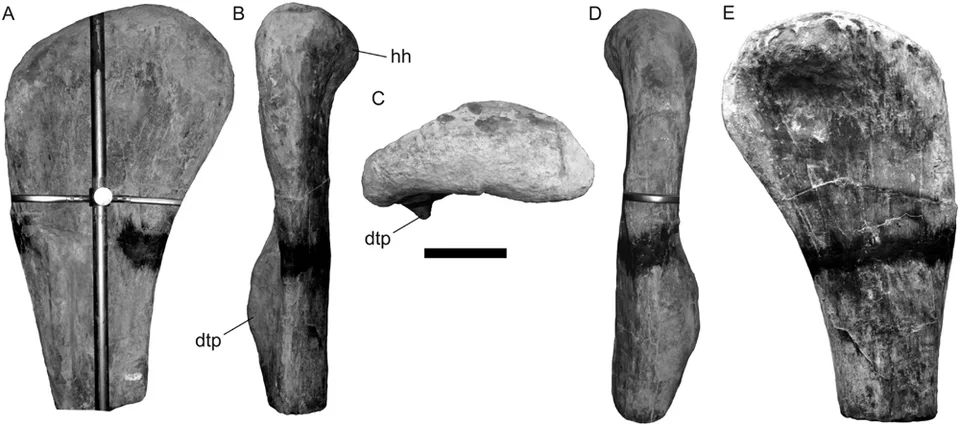
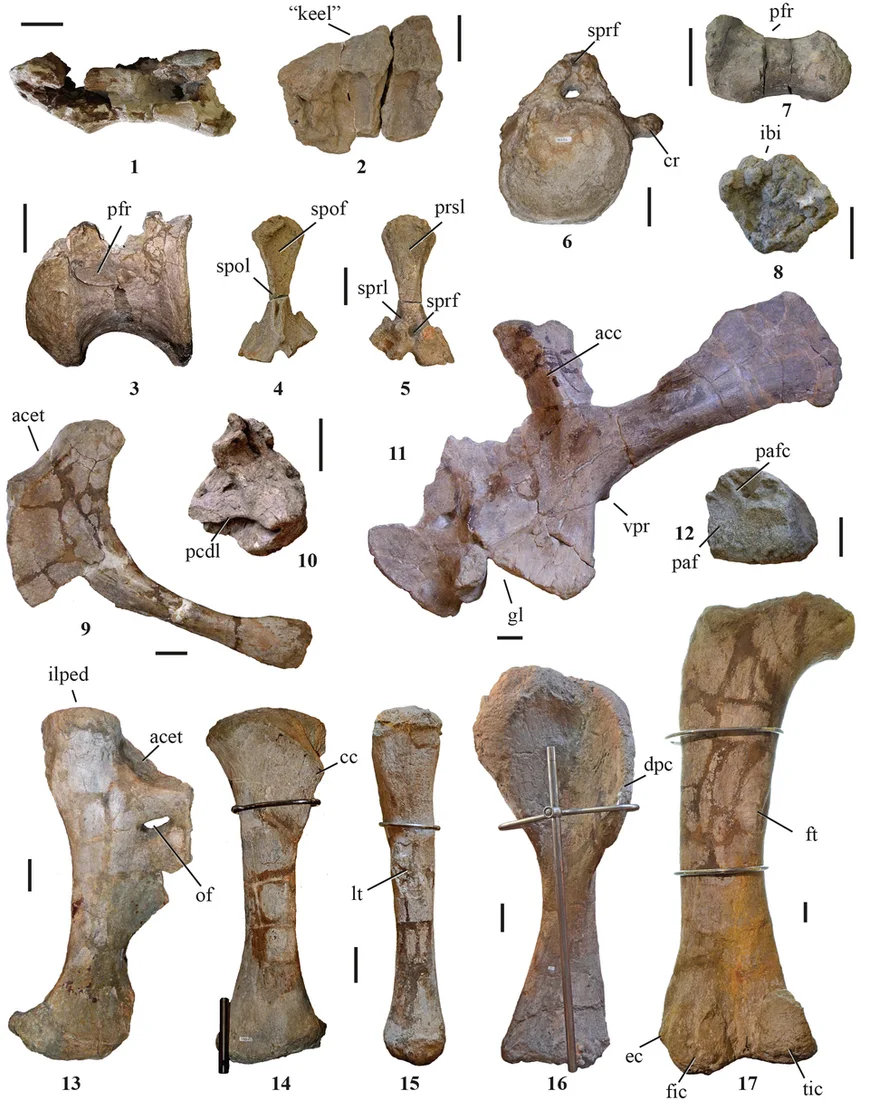
A labelled plate of Lourinhasaurus skeletal elements shows the individual bones behind the sauropod reconstruction. A displayed specimen or skeletal mount can include restored parts. Its appearance should be read alongside the original specimen description.
Compare Camarasaurus, Lusotitan, Apatosaurus. Find more names in the L index and explore sauropodomorph field notes. The glossary explains unfamiliar fossil terms.
Quick answers
- Where have Lourinhasaurus fossils been found?
- The discoveries discussed here come from Portugal. Modern place names describe discovery locations, not a complete ancient geographic range.
- When did Lourinhasaurus live?
- It is placed in the Jurassic period. See the discovery discussion for qualifications about the particular rock layers and dating.
- Where can I compare Lourinhasaurus with related dinosaurs?
- Follow the related field notes below. Comparisons explain shared anatomy; they do not imply that all the animals lived together.