Jurassic Dinos editorial · Updated · Source-based review
What was Lophorhothon?
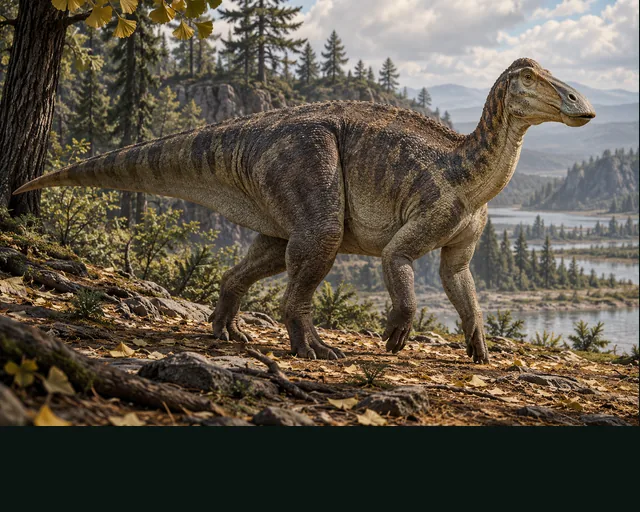
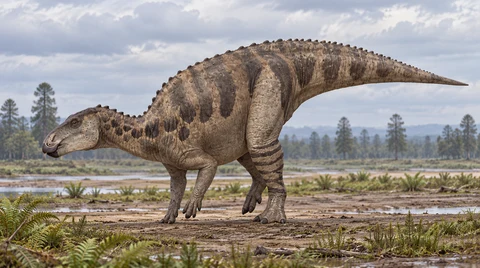
Lophorhothon atopus was a plant-eating ornithopod dinosaur from Late Cretaceous Alabama in the southeastern United States. Its name refers to a crested nose. Rather than a long hollow tube like some famous duck-billed dinosaur crests, the reviewed study describes a solid nasal crest with distinctive bony features.
Why examine a dinosaur named decades earlier?
A 2021 redescription re-examined the original material alongside another specimen from the same beds. Together, the fossils supplied substantially more anatomical information than an isolated crest could provide. That allowed researchers to revise the diagnosis: the combination of features used to identify the named animal.
The study placed Lophorhothon just outside Hadrosauridae, the duck-billed-dinosaur family, within the broader hadrosauromorph group. An older directory may place it more narrowly inside that family. Here we follow the reviewed redescription rather than assuming that every familiar database or display label reflects the same analysis.
What can an opening in the skull tell us?
One part of the reassessment concerned an opening between the frontal and nasal regions. An opening interpreted as a fontanelle can suggest incomplete closure during development. The authors argued that some examples, including Lophorhothon’s, should instead be considered a fenestra: an anatomical opening rather than simply a temporary gap of youth.
The distinction matters because two similar-looking gaps need not have the same significance. It is also not an extra eye socket. Researchers must compare the edges and surrounding structures before deciding what an opening means for growth or identification.
Were eastern dinosaurs evolutionarily behind?
The paper challenges the old idea that Appalachian dinosaurs were a primitive relict fauna. In this context, relict suggests surviving representatives of an otherwise outdated assemblage. New dating and comparisons with European and Asian hadrosauromorphs weakened that picture.
Being found outside the best-known western North American dinosaur sites does not make an animal evolutionarily inferior. Unequal collecting and preservation can affect which regions seem well understood. Lophorhothon helps broaden the geographical picture instead of filling a supposedly backward corner of dinosaur history.
Our complete image follows the approved museum restoration; colours and coastal scenery are artistic. Compare Bactrosaurus and Edmontosaurus, then explore the L directory.
Quick answers
- Where is the reviewed fossil material from?
- Alabama in the southeastern United States.
- Was its nasal crest hollow like a long tube?
- The reviewed redescription characterises a solid nasal crest.
- Did the analysis place it within Hadrosauridae?
- It placed Lophorhothon just outside that family.
- Should eastern dinosaurs automatically be called primitive relicts?
- No. The authors specifically challenge that assumption.