Jurassic Dinos editorial · Updated · Source-based review
Bactrosaurus johnsoni was a plant-eating hadrosauroid dinosaur from northern China. Hadrosauroids belong to the ornithopods and include the broader duck-billed dinosaur radiation. Bactrosaurus is especially useful for understanding growth, because its remains represent several stages of life.
A collection of different-sized animals
Gilmore named Bactrosaurus in 1933. The Natural History Museum notes skull fragments and body bones from at least twelve individuals, ranging from juveniles to adults. The material comes from the Iren Dabasu Formation near Erenhot.
A bonebed containing many individuals is not automatically one complete animal or a preserved family group. Researchers first have to identify the bones, evaluate their developmental stages and understand the deposit. The presence of young and adult material does not, by itself, prove parental care or a particular herd structure.
What changes as a dinosaur grows?
Prieto-Márquez’s 2011 study documented changes in skull and limb elements from juvenile to adult Bactrosaurus. Some regions become more robust, while certain proportions and processes change shape. Ontogeny is the term for this development during an individual’s life.
This matters for naming dinosaurs. If a feature changes during growth, two different-looking bones might belong to different-aged members of one species. On the other hand, the study found that many phylogenetically informative characters were not strongly affected by ontogeny. Young fossils can therefore still provide useful information when their limits are understood.
How precise is the date?
The study discusses differing published age assessments for the Iren Dabasu Formation. This page uses the broad Late Cretaceous setting instead of selecting a narrow numerical age without resolving that geological question.
The same caution applies to appearance. Calling an animal a hadrosauroid does not imply that it had the hollow tube crest of Parasaurolophus. Bactrosaurus’s own evidence and the named visual reference must guide the account.
Reading our whole-body image
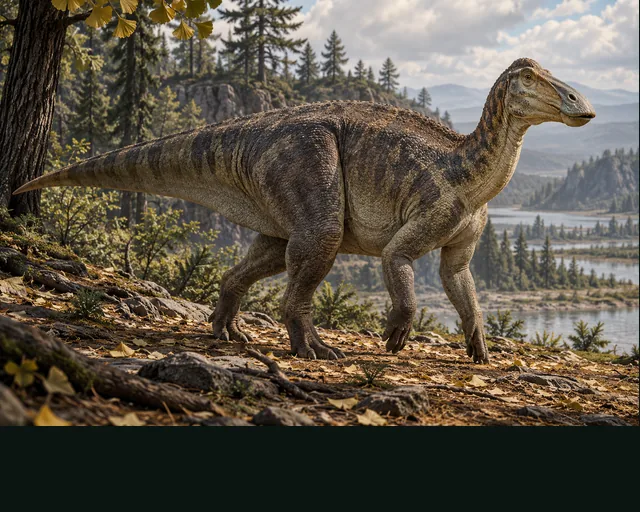
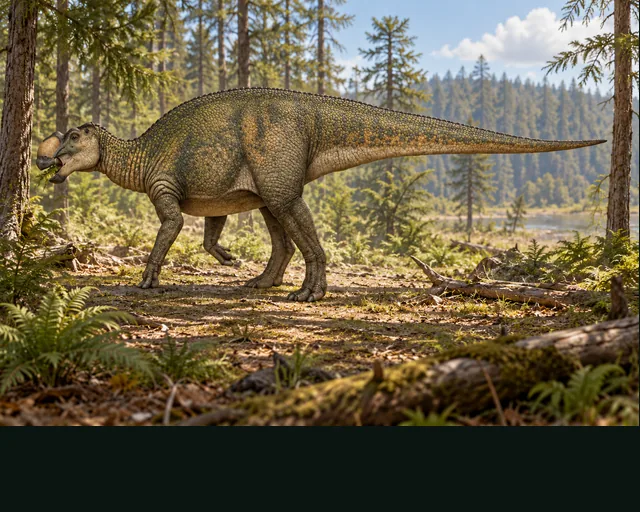
Andrey Atuchin’s complete named restoration supplies the visual form: a broad low beaked head, short forelimbs, robust hind legs, a deep tail and a low line of dorsal bumps. The back profile, markings and colours remain artistic interpretations. Our cinematic scene follows that whole restoration and does not use growth-study bone figures to invent missing structures.
Compare Edmontosaurus and Gryposaurus as separate hadrosauroid stories, then explore the A–Z directory. Looking at a dinosaur’s age can change the questions we ask about its anatomy.
Quick answers
- What is Bactrosaurus?
- A herbivorous hadrosauroid ornithopod, represented by skull and body material from northern China.
- Why compare young and adult specimens?
- Some bone shapes change during growth, and those differences must not automatically be used to name separate species.
- Was its skull crest like Parasaurolophus?
- The complete reference shows a low beaked head, not a large hollow tube; hadrosauroid identity alone does not imply that crest.
- Does a mixed-age bonebed prove a family herd?
- No. Multiple individuals and ages document an assemblage, but do not by themselves establish family relationships or behaviour.