Jurassic Dinos editorial · Updated · Source-based review
What was Kileskus?
Kileskus was an early tyrannosauroid from Middle Jurassic Siberia. Its fossils help extend the record of that lineage far before the giant tyrannosaurids of the Late Cretaceous. The name comes from the Khakas language word for lizard.
What makes the fossil distinctive?
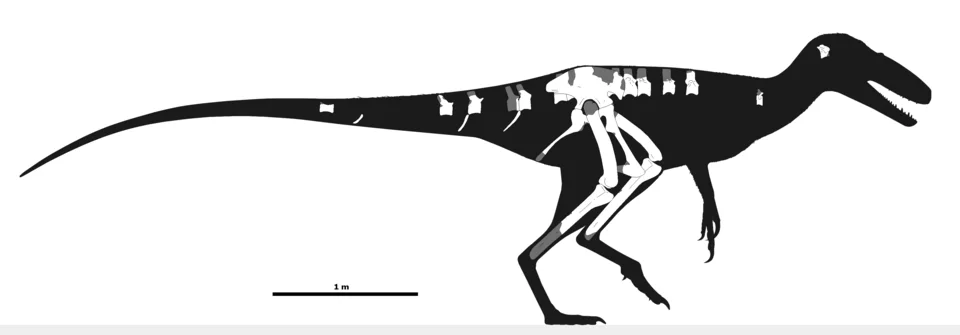
The known material includes parts of the upper and lower jaws and other skeletal elements. Similarities with Proceratosaurus support a proceratosaurid relationship. The preserved skull bones do not include everything needed to establish a complete head crest.
Where was it found and how was it named?
Kileskus was named in 2010 from the Itat Formation in the Krasnoyarsk region. Later referred material expanded the anatomical discussion. Assigning additional isolated bones requires comparison and context rather than assuming that every small theropod bone from a site belongs to the same genus.
What can we infer, and what remains uncertain?
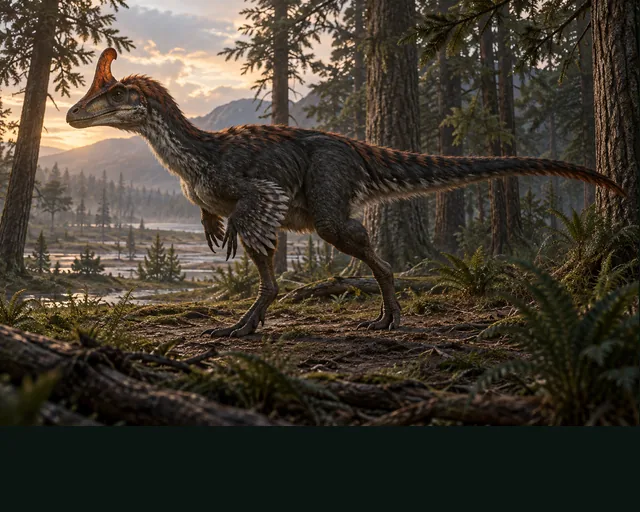
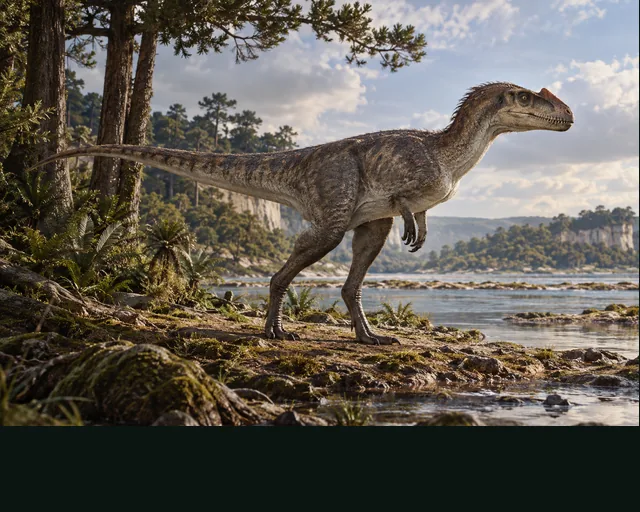
Some close relatives had conspicuous crests, but membership in that group does not prove Kileskus carried an identical one. Illustrations should distinguish an inferred crest from a preserved structure. Likewise, an early tyrannosauroid should not be drawn with all the proportions of Tyrannosaurus simply because the two share a broad evolutionary relationship.
Is a large nasal crest directly known for Kileskus?
No. Its relationships support comparison with crested relatives, but the preserved material does not establish the complete crest itself.
How can you check the evidence?
The Paleobiology Database record catalogues Kileskus under Proceratosauridae. Its linked bibliography identifies this research starting point: A. O. Averianov, S. A. Krasnolutskii, and S. V. Ivantsov. 2010. A new basal coelurosaur (Dinosauria: Theropoda) from the Middle Jurassic of Siberia. Proceedings of the Zoological Institute, Russian Academy of Science 314(1):42-57. Open the bibliographic record. A catalogue entry establishes the source trail; it does not independently verify every later illustration or behavioural claim.
Use the dated genus overview to follow the references behind the discovery and anatomy discussed above. When sources disagree, compare which specimen and rock layer each author studied. A reconstructed whole animal can combine original bones with comparisons to relatives; those two kinds of evidence should not be confused. The account above explains the particular limits that matter for Kileskus, rather than supplying unsupported size, speed or lifespan figures.
Read the image and keep exploring
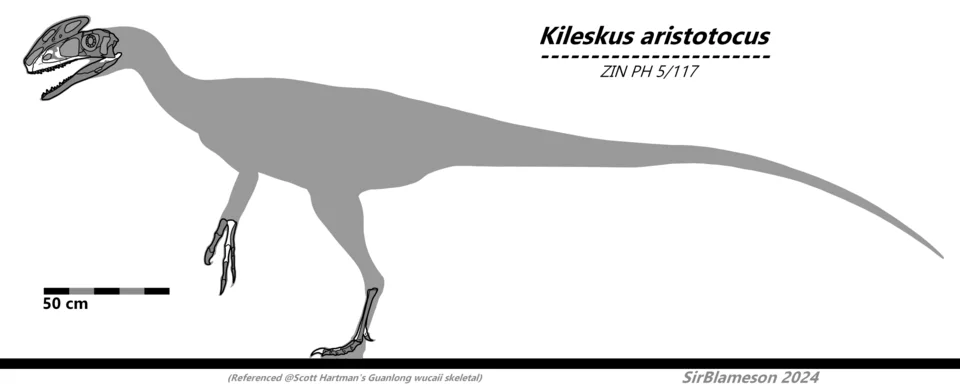
The Kileskus silhouette places limited skull material within an inferred body. Its complete crest and proportions remain uncertain. This diagram explains the stated evidence; schematic elements are not additional fossil observations.
Compare Proceratosaurus, Guanlong, Juratyrant. Find more names in the K index and explore theropod field notes. The glossary explains unfamiliar fossil terms.
Quick answers
- Where have Kileskus fossils been found?
- The discoveries discussed here come from Russia. Modern place names describe discovery locations, not a complete ancient geographic range.
- When did Kileskus live?
- It is placed in the Jurassic period. See the discovery discussion for qualifications about the particular rock layers and dating.
- Where can I compare Kileskus with related dinosaurs?
- Follow the related field notes below. Comparisons explain shared anatomy; they do not imply that all the animals lived together.