Jurassic Dinos editorial · Updated · Source-based review
What was Jiangjunosaurus?
Jiangjunosaurus junggarensis was a plant-eating stegosaur from the Late Jurassic Shishugou Formation in Xinjiang, China. Its 2007 description expanded the known dinosaur community of the Junggar Basin. The name belongs to a particular fossil-based scientific account, rather than to every animal with tall plates along its back.
Why examine its teeth?
The original abstract highlights symmetrical, proportionally broad tooth crowns among the features used to identify Jiangjunosaurus. A tooth crown is the exposed working part of a tooth, above its root. Features of neck vertebrae, including a distinctive profile and openings, also contribute to the diagnosis.
This is a useful surprise for anyone expecting stegosaurs to be recognised only by their spectacular plates. Small, repeatable details can be easier to compare precisely than an overall silhouette. Scientists ask whether a combination of features distinguishes the specimen, rather than simply choosing the most dramatic-looking structure in a painting.
Where does it sit in the family tree?
The authors’ preliminary comparison placed Jiangjunosaurus beyond Huayangosaurus but earlier-diverging than many other stegosaurs. That statement describes one analysis of relationships. It does not mean that an individual Huayangosaurus grew into a Jiangjunosaurus or that every proposed relationship is permanent.
A branch can retain some features and share other, newer ones with a different set of relatives. As additional specimens are compared, the arrangement of branches can change. Knowing which study proposed a relationship is therefore more useful than memorising a ladder of “primitive” and “advanced” animals.
How should you read the plates in our image?
The complete reference by Connor Ashbridge shows a low head, heavy four-legged body, narrow pointed plates and a spiked tail. Our new scene follows that named living artwork. Its complete plate arrangement, precise spike shapes and reddish shoulder marking remain artistic choices, not a claim that every visible detail is independently established by the reviewed abstract.
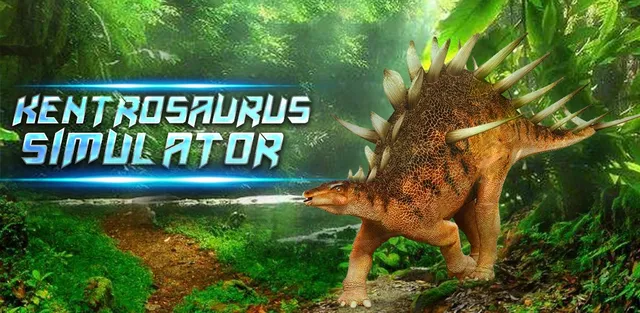
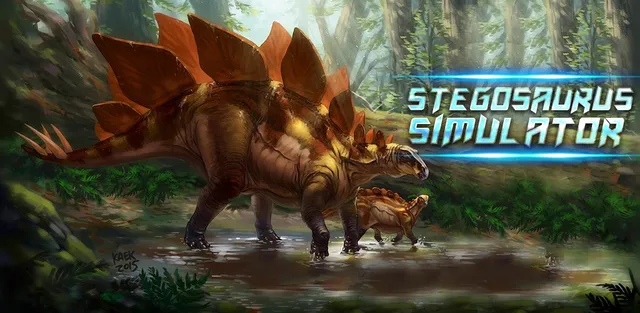
Enjoy the silhouette, then return to the anatomical evidence. The illustration helps you recognise the subject; the tooth and vertebral descriptions explain how researchers distinguish the fossils. Compare Stegosaurus and Kentrosaurus with those two different tasks in mind. More dinosaur names beginning with J offer further opportunities to practise separating a reconstruction from the evidence behind it.
Quick answers
- Where did Jiangjunosaurus live?
- Late Jurassic Xinjiang, China.
- Which formation contains its fossils?
- The Shishugou Formation.
- Were only the back plates important for identification?
- No. Teeth and neck-bone features also matter.
- Does the drawing confirm every plate and spike?
- No. Their complete arrangement follows the reference artwork.