Jurassic Dinos editorial · Updated · Source-based review
What was Hesperonyx?
Hesperonyx was a plant-eating ornithopod from the Late Jurassic of Portugal. Its species Hesperonyx martinhotomasorum was described in 2024 from the Lourinhã Formation record.
Despite the similar-looking name, it is not Hesperonychus, the small predatory theropod from Late Cretaceous Canada. Reading the entire name, geological setting and anatomical description prevents those two very different dinosaurs from becoming mixed together.
What parts of the specimen were described?
The holotype, ML 2700, includes hand elements and a partial left hindlimb. The described material contains lower-leg bones and several elements of the foot, along with limited wrist and hand material.
This is not a complete skull and body skeleton. The preserved limbs supplied a combination of characters that the researchers compared with those of other early iguanodontians. A diagnosis concerns those anatomical distinctions, rather than a unique colour scheme in a portrait.
Why were the leg and foot useful?
The original diagnosis identified differences involving the tibia, fibula and foot bones. The tibia and fibula are the principal lower-leg bones; their shapes and the way they fit together can preserve information about relationships.
Claw-like toe bones were also part of the comparison. Possessing claws does not turn an animal into a raptor or prove a carnivorous diet. Different dinosaur groups retained or modified claws for different purposes, and the broader skeleton must be considered.
What did the discovery add to Portugal’s record?
Early-diverging iguanodontians from Europe’s Late Jurassic are less fully understood than many later large-bodied members of the wider group. A newly described specimen adds information for testing that diversity and the relationships between European forms.
The same modern region can preserve several species in different beds. Their presence in one formation should not automatically become a scene in which all of them meet. Geological position is needed before close contemporaneity can be established.
Reading our reconstruction
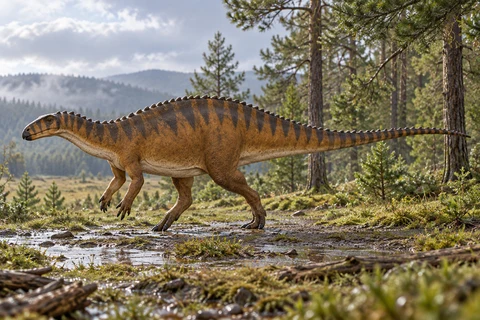
The approved complete Hesperonyx reference guided the small low head, short grasping forelimbs, deep torso, long hindlegs and tapering tail. The high trunk contour is part of that restoration, not evidence for a newly discovered sail.
Striping, colours, skin and soft-tissue proportions remain artistic. Because the type material is incomplete, the portrait should not be measured to obtain an exact adult size or treated as a preserved whole-body outline.
Compare Dryosaurus and Draconyx, then explore the H directory.
Quick answers
- Where was Hesperonyx found?
- In the Lourinhã Formation record of Portugal.
- Is it the same as Hesperonychus?
- No. Hesperonyx is a Jurassic plant-eating ornithopod; Hesperonychus is a different theropod name.
- What fossils define it?
- Hand elements and a partial hindlimb including lower-leg and foot bones.
- Does a claw make it a raptor?
- No. Many dinosaurs outside the raptor group possessed claws.