Jurassic Dinos editorial · Updated · Source-based review
What was Haya?
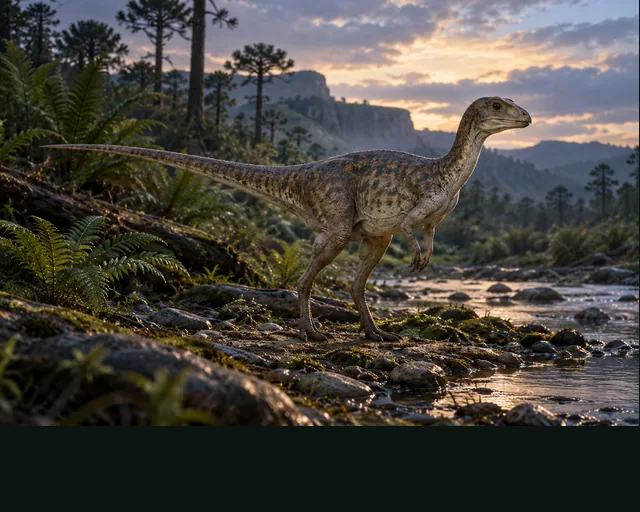
Haya was a small ornithischian from Late Cretaceous Mongolia. Its elongated skull and relatively complete specimens make it useful for studying small-bodied dinosaurs that are easily overshadowed by giant predators and plant eaters.
What makes the fossil distinctive?
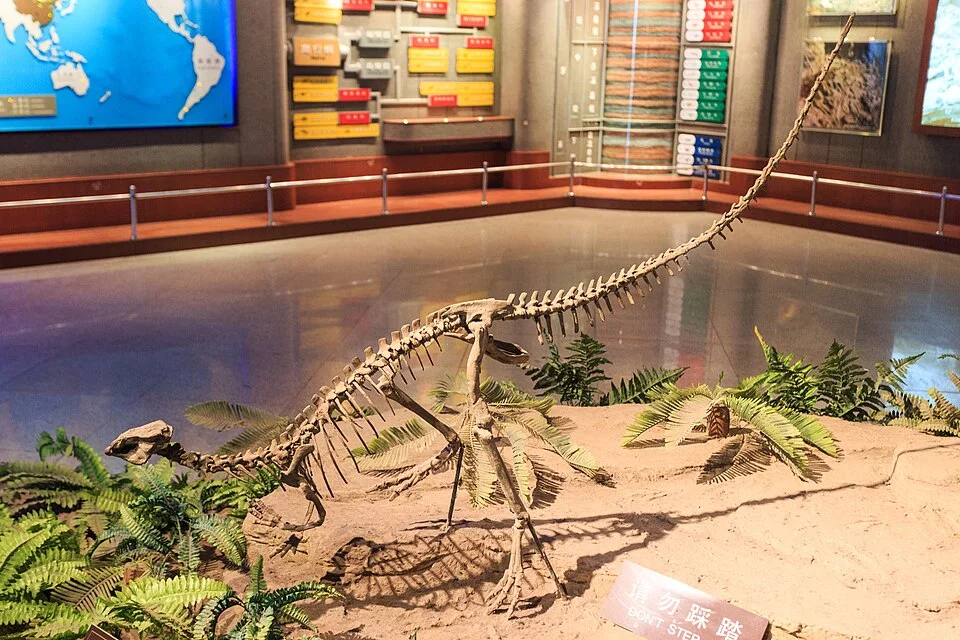
Several specimens preserve skull and skeletal material, including a young individual. One skeleton contains a concentration of stones interpreted as gastroliths, or stomach stones. Their association with the body provides a more informative context than an isolated polished pebble.
Where was it found and how was it named?
The genus was named in 2011 from fossils collected during fieldwork in the Gobi region. Both parts of the species name refer to Hayagriva, a horse-headed figure represented in Asian religious art. The reference concerns the elongated skull and cultural naming choice, not horse ancestry.
What can we infer, and what remains uncertain?
Haya has been compared with Jeholosaurus and related small ornithischians. The stomach stones invite questions about digestion, but they do not identify every food item or prove a particular grinding mechanism. We leave its exact diet unresolved here. Collections spanning different growth stages are particularly valuable for separating juvenile proportions from characters that identify the genus.
Do its stomach stones tell us its complete diet?
No. They are evidence relevant to digestion, but identifying particular foods requires additional evidence.
How can you check the evidence?
The Paleobiology Database record catalogues Haya under Orodrominae. Its linked bibliography identifies this research starting point: P. J. Makovicky, B. M. Kilbourne, and R. W. Sadleir, M. A. Norell. 2011. A new basal ornithopod (Dinosauria, Ornithischia) from the Late Cretaceous of Mongolia. Journal of Vertebrate Paleontology 31(3):626-640. Open the bibliographic record. A catalogue entry establishes the source trail; it does not independently verify every later illustration or behavioural claim.
Use the dated genus overview to follow the references behind the discovery and anatomy discussed above. When sources disagree, compare which specimen and rock layer each author studied. A reconstructed whole animal can combine original bones with comparisons to relatives; those two kinds of evidence should not be confused. The account above explains the particular limits that matter for Haya, rather than supplying unsupported size, speed or lifespan figures.
Read the image and keep exploring
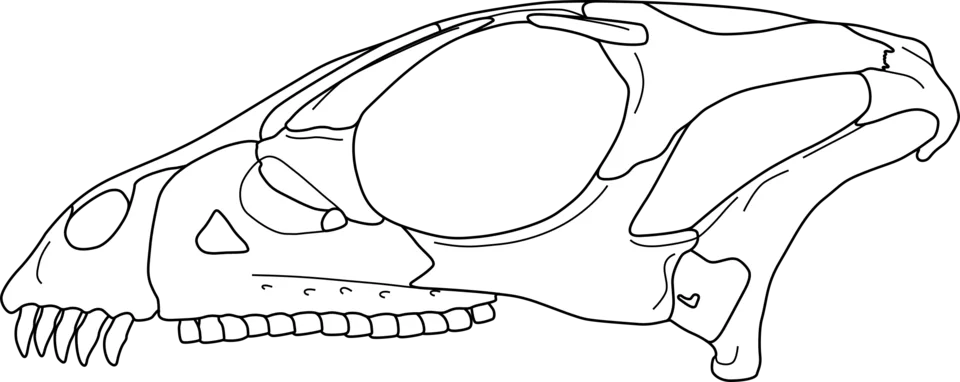
A Haya skull drawing shows the elongated snout, eye opening and tooth row used in anatomical comparison. This diagram explains the stated evidence; schematic elements are not additional fossil observations.
Compare Agilisaurus, Lesothosaurus. Find more names in the H index and explore ornithischian field notes. The glossary explains unfamiliar fossil terms.
Quick answers
- Where have Haya fossils been found?
- The discoveries discussed here come from Mongolia. Modern place names describe discovery locations, not a complete ancient geographic range.
- When did Haya live?
- It is placed in the Cretaceous period. See the discovery discussion for qualifications about the particular rock layers and dating.
- Where can I compare Haya with related dinosaurs?
- Follow the related field notes below. Comparisons explain shared anatomy; they do not imply that all the animals lived together.