Jurassic Dinos editorial · Updated · Source-based review
What was Agilisaurus?
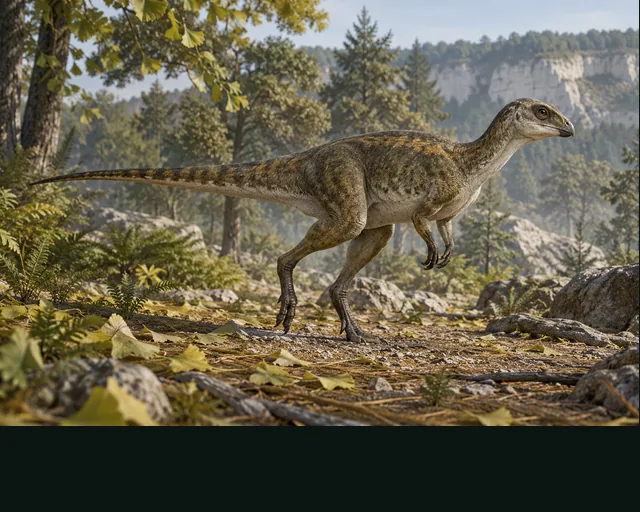
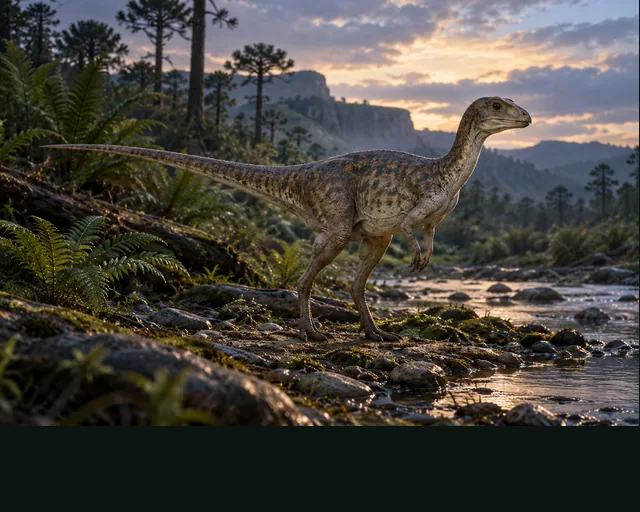
Agilisaurus was a small Middle Jurassic plant-eater from Sichuan, China. An unusually complete skeleton preserves a lightweight body, long hindlimbs and a balancing tail. It offers a useful contrast to the enormous sauropods and armoured dinosaurs that often dominate images of Jurassic life.
What makes the fossil distinctive?
Its leaf-shaped teeth were adapted for processing plants. The hindlimb proportions suggest an animal capable of agile bipedal movement, but they do not provide a reliable top speed. Small dinosaurs were not simply scaled-down versions of large ones: different proportions affected how they moved, fed and avoided danger.
Where was it found and how was it named?
The skeleton was discovered in 1984 during construction of the Zigong Dinosaur Museum. It comes from the Lower Shaximiao Formation at the famous Dashanpu fossil area. The genus was named around the beginning of the 1990s, with a fuller description following. The species name honours geologist George Louderback.
What can we infer, and what remains uncertain?
Because so much of the skeleton is preserved, missing elements on one side can sometimes be compared with the opposite side. That is a different level of uncertainty from reconstructing an entire body from a single tooth. Its precise position among early ornithischians has been analysed in different ways, but the specimen remains an important anatomical reference for studying small plant-eating dinosaurs.
Does its name prove that it was the fastest dinosaur?
No. The name refers to apparent agility. Establishing running performance requires more than a name or long legs, and a fastest-dinosaur ranking is not supported by this specimen.
How can you check the evidence?
The Paleobiology Database record catalogues Agilisaurus under Neornithischia. Its linked bibliography identifies this research starting point: G. Peng. 1992. Jurassic ornithopod Agilisaurus louderbacki (Ornithopoda: Fabrosauridae) from Zigong, Sichuan, China. Vertebrata PalAsiatica 30(1):39-53. Open the bibliographic record. A catalogue entry establishes the source trail; it does not independently verify every later illustration or behavioural claim.
Use the dated genus overview to follow the references behind the discovery and anatomy discussed above. When sources disagree, compare which specimen and rock layer each author studied. A reconstructed whole animal can combine original bones with comparisons to relatives; those two kinds of evidence should not be confused. The account above explains the particular limits that matter for Agilisaurus, rather than supplying unsupported size, speed or lifespan figures.
Read the image and keep exploring
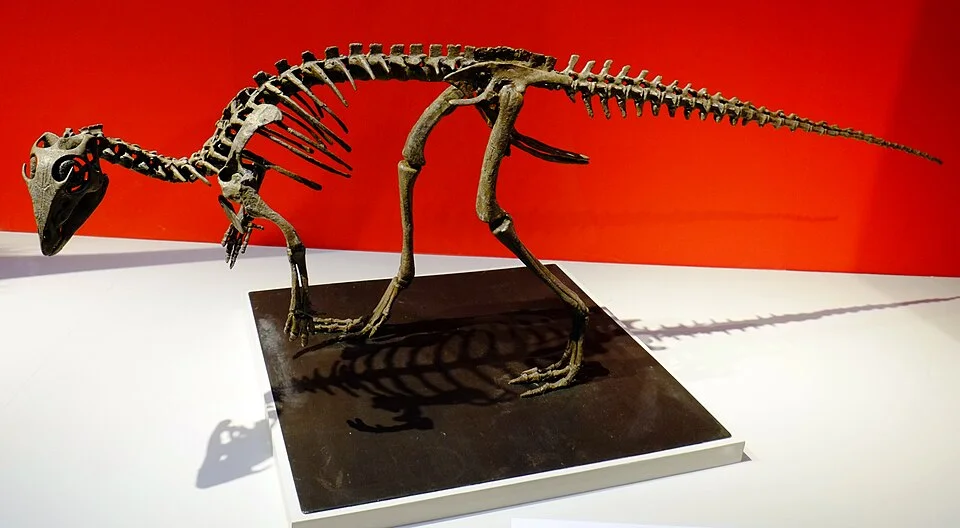
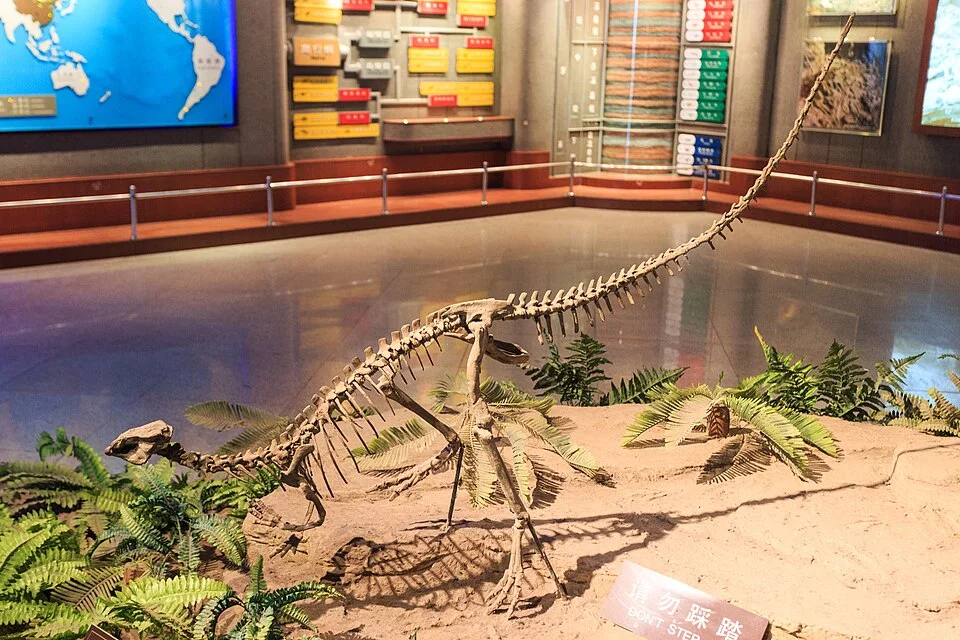
An Agilisaurus mount shows a lightly built, two-legged animal with a long balancing tail. A displayed specimen or skeletal mount can include restored parts. Its appearance should be read alongside the original specimen description.
Compare Lesothosaurus, Hypsilophodon, Kulindadromeus. Find more names in the A index and explore ornithischian field notes. The glossary explains unfamiliar fossil terms.
Quick answers
- Where have Agilisaurus fossils been found?
- The discoveries discussed here come from China. Modern place names describe discovery locations, not a complete ancient geographic range.
- When did Agilisaurus live?
- It is placed in the Jurassic period. See the discovery discussion for qualifications about the particular rock layers and dating.
- Where can I compare Agilisaurus with related dinosaurs?
- Follow the related field notes below. Comparisons explain shared anatomy; they do not imply that all the animals lived together.