Jurassic Dinos editorial · Updated · Source-based review
What was Haplocheirus?
Haplocheirus was a theropod from the Late Jurassic of Xinjiang, northwestern China. Its species Haplocheirus sollers was described in 2010 from the Shishugou Formation record. A later detailed skull study placed the specimen in the Oxfordian interval.
The original interpretation identified it as an early alvarezsauroid. This wider group includes later dinosaurs with remarkably shortened forelimbs and specialised hands, making an older, less modified form especially useful for comparison.
Why do its fingers matter?
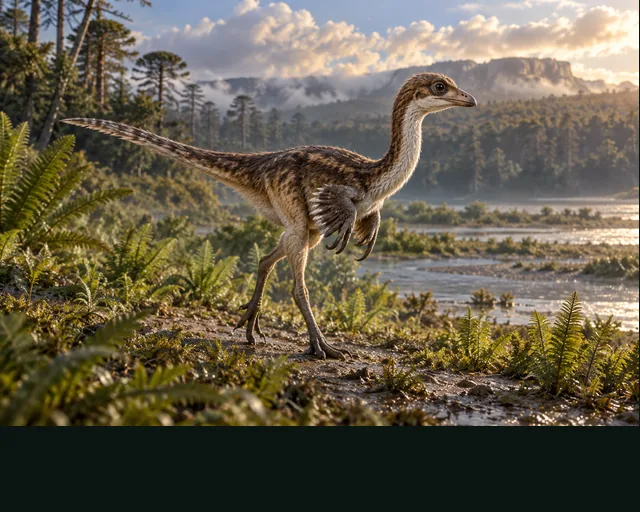
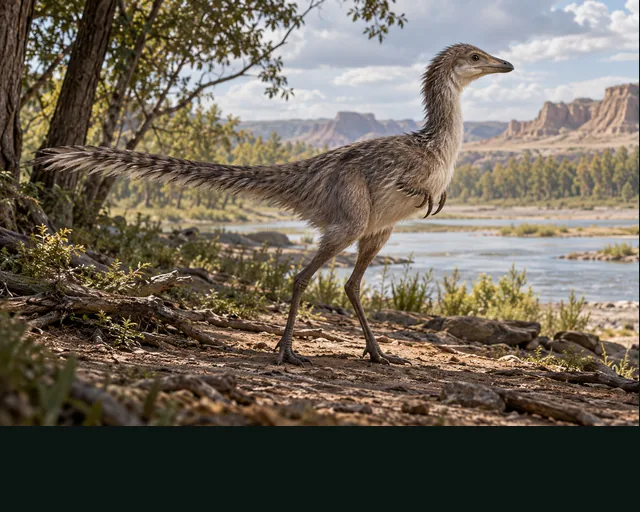
Our approved complete reference shows three clawed fingers on each hand. One digit is more prominent, but the hand should not be replaced by the highly reduced single-fingered condition familiar from some later alvarezsaurids.
Evolution can alter the relative sizes of structures before some become greatly reduced. Comparing an earlier hand with later ones helps researchers ask which changes occurred together and which appeared at different points along a lineage. It does not mean that this particular individual was the direct ancestor of every later member.
What does the skull add?
The 2014 cranial study described the skull in detail. Cranial means related to the skull. Such work supplies characters that can test relationships independently of the unusual hands that first attract attention.
A classification based only on one conspicuous feature risks missing contradictory information elsewhere. Teeth, jaw contacts and other cranial structures can reveal a more complicated mixture of similarities. Detailed description is therefore an essential companion to an eye-catching discovery announcement.
Was this a flightless bird?
Alvarezsauroid relationships have a history of changing interpretations. Haplocheirus contributes evidence about that history, but the discovery should not be presented as resolving every question about the origin of birds in a single step.
A shared anatomical feature can reflect common ancestry, retention of an older condition or independent evolution. Researchers test those alternatives with broad comparisons. The animal’s long tail and grasping hands are useful visual features, not a complete family-tree analysis by themselves.
Reading the reconstruction
The approved complete Haplocheirus reference guided the long low head, elongated neck, three-fingered hands, long hindlegs and horizontal tail. Both generated hands were checked for three readable clawed digits.
The covering, colours and landscape remain artistic. No precise running speed, prey item or preserved skin pattern is inferred from the illustration. This account leaves the diet unspecified rather than assigning a specialised feeding habit from later relatives.
Compare Alvarezsaurus and Mononykus, or browse the H directory.
Quick answers
- When did Haplocheirus live?
- In the Late Jurassic, in the Shishugou Formation record of China.
- Did it have only one finger?
- The approved reference retains three clawed digits, unlike later strongly reduced alvarezsaurid hands.
- Why study its skull?
- It supplies comparisons with earlier anatomical conditions rather than only the unusual features of later relatives.
- Does it prove a specific diet?
- This account does not assign a detailed menu from family membership alone.