Jurassic Dinos editorial · Updated · Source-based review
What was Europelta?
Europelta was a plant-eating armoured dinosaur from Early Cretaceous Spain. The species Europelta carbonensis was named in 2013 after the study of two associated skeletons near Ariño, in Teruel. They came from the lower Albian part of the Escucha Formation.
Its broad, low body belongs to the ankylosaur story. However, ankylosaurs were more varied than a single familiar image of a tank-shaped animal swinging a huge club. Europelta was described as a nodosaurid, a different branch from the classic club-tailed ankylosaurids.
Why were two skeletons valuable?
Associated bones are found together in a way that helps researchers investigate which elements belong to an individual. Two specimens provide opportunities to compare overlapping parts and to examine regions that may be missing in one of them.
This does not mean that every bone or patch of skin was preserved. It means that the discovery supplied much more anatomical information than a collection of isolated armour pieces alone. The original authors compared those features with other known ankylosaurs to test the animal’s identity.
What can armour tell us?
Armour includes bones formed within the skin, often called osteoderms. Their shapes can help distinguish armoured dinosaur groups, but a complete life portrait also needs decisions about their arrangement across parts that are not preserved together.
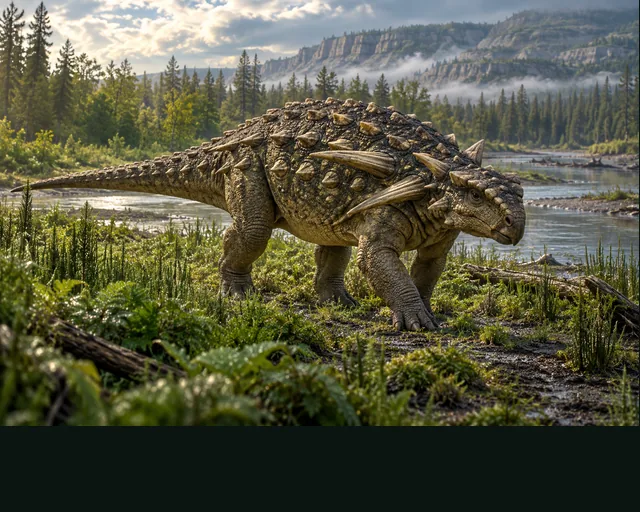
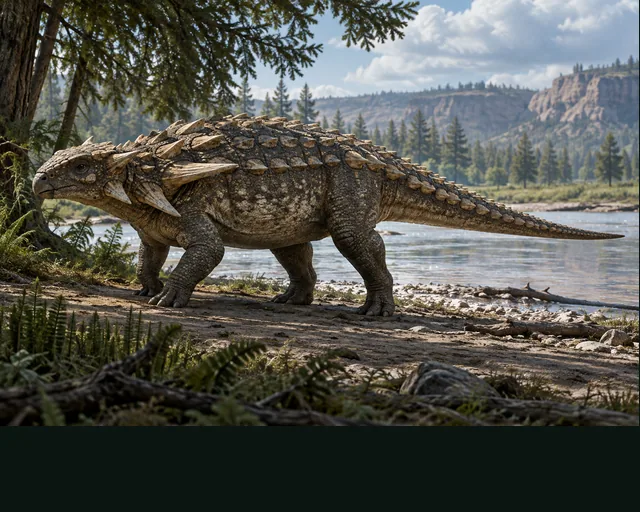
The low head, broad torso and tapering tail in our image follow the approved complete Europelta reference. An Ankylosaurus-style terminal club has not been added. The image also should not be used to calculate the force of a tail strike or the thickness of the living skin: those questions require evidence beyond an illustrated surface.
What did it add to Europe’s dinosaur history?
The 2013 analysis linked Europelta with other European nodosaurids and proposed a particular grouping within that branch. Such comparisons help researchers ask when related populations lived in different places and how their features changed over time.
Europe’s geography during the Cretaceous was not a modern political map. To investigate connections between fossil faunas, researchers combine anatomical relationships with the ages and settings of the rock units. Finding two similar animals is a starting point for that investigation, not proof of one exact migration route.
Reading the reconstruction
The rounded armour, wedge-shaped head and four-legged stance follow the named reference. Colour, mottling, exact scute spacing and the surrounding landscape are artistic. The portrait introduces the animal while leaving those uncertainties visible in the caption and source record.
Compare Sauropelta and Edmontonia, or continue through the E directory.
Quick answers
- Where was Europelta found?
- Near Ariño in Teruel, northeastern Spain.
- When did it live?
- In the Early Cretaceous, in the early Albian interval represented by the studied deposits.
- Was it a club-tailed Ankylosaurus?
- No. It was described as a nodosaurid and should not receive an Ankylosaurus-style club.
- Are its exact armour colours known?
- No. The life portrait follows a named full-body reference, with interpreted surface details.