Jurassic Dinos editorial · Updated · Source-based review
What was Eoneophron?
Eoneophron was a caenagnathid oviraptorosaur from the end of the Cretaceous in North America. Its species is Eoneophron infernalis, described in 2024. The fossil comes from the Hell Creek Formation of South Dakota.
Caenagnathids were birdlike theropods. Their remains are often incomplete, which makes it difficult to determine how many different species lived in a region. Eoneophron is especially interesting because the discovery tested whether a relatively small fossil represented a youngster or a smaller adult taxon.
Which part of the animal was found?
The naming study centred on a partial hindlimb. Leg bones can preserve identifying anatomical characters, but they do not directly reveal a complete head, beak or feather arrangement.
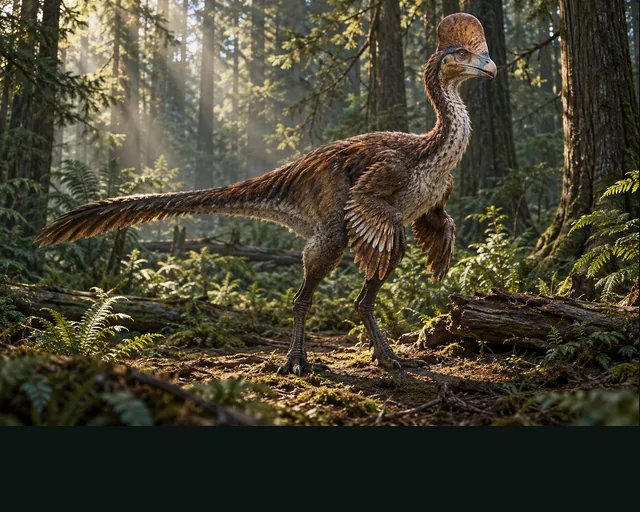
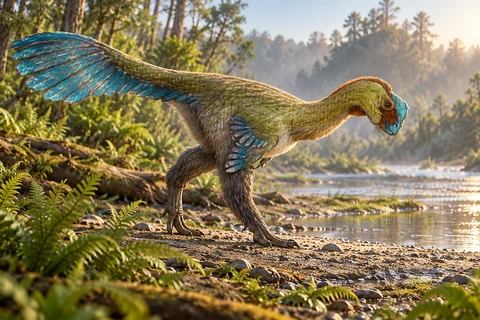
This is why a full-body portrait must remain separate from the fossil description. A finished image contains more structures than the leg actually preserves. We use a specifically named complete restoration as the visual reference rather than constructing the animal from a bone photograph.
How was it distinguished from Anzu?
Anzu was already known from the Hell Creek record. A smaller limb could have belonged to a young Anzu, so size alone was not enough to establish another taxon.
The researchers examined osteohistology, the microscopic structure of bone, together with anatomical differences. Their results supported a distinct caenagnathid with a smaller adult body size. The conclusion therefore combined evidence about maturity with the form of the preserved bones.
Does that identify every small Hell Creek fossil?
No. Other isolated remains require their own comparisons. A new name should not automatically absorb every small bone from the same formation, especially where equivalent anatomical regions do not overlap.
The study suggested that caenagnathid diversity had been underestimated. That broader implication depends on keeping specimen assignments testable, rather than making the known animal appear more complete by merging uncertain material.
What did it eat?
This account leaves its exact diet unresolved. A beaked artistic restoration and feeding adaptations reported in a different caenagnathid are not direct evidence for Eoneophron’s complete menu. Information about a relative can raise a question without supplying the answer for this animal.
The image follows a complete reference explicitly identified as Eoneophron infernalis. It retains the short beaked head, broad feathered forelimbs and feather-tipped tail. The green neck, plumage pattern and completed head remain artistic interpretations, not structures or colours preserved with the partial hindlimb.
Compare Anzu and Citipes, then explore the E directory.
Quick answers
- Where did Eoneophron live?
- It is known from the Hell Creek Formation of South Dakota, near the end of the Cretaceous.
- What remains established the name?
- A partial hindlimb, examined anatomically and through bone microstructure.
- Was it just a young Anzu?
- The reviewed study used maturity evidence and anatomical differences to support a separate taxon.
- Are its head and colours known from that leg?
- No. The completed head and plumage in the illustration remain artistic.