Jurassic Dinos editorial · Updated · Source-based review
What was Eocursor?
Eocursor was a small early ornithischian from South Africa. Ornithischians are the broad dinosaur branch that later included stegosaurs, horned dinosaurs and duck-billed dinosaurs. Eocursor helps investigate the early anatomy of that branch before those specialised forms appeared.
What makes the fossil distinctive?
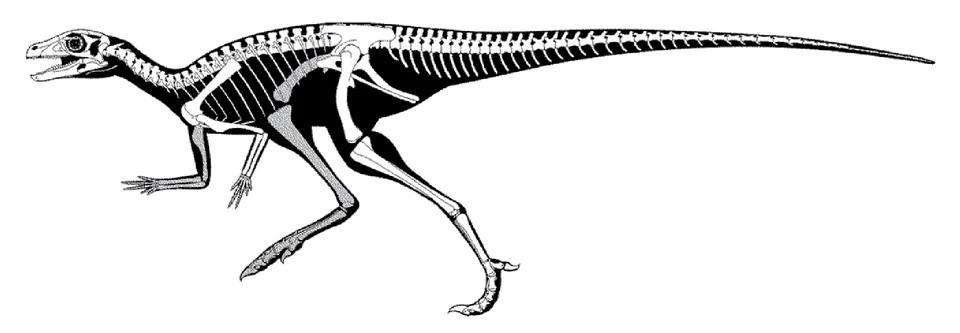
Its partial skeleton includes informative limb and pelvic material. Long hind limbs are consistent with a mobile, two-legged animal. They do not provide a stopwatch measurement of its speed, and the name “dawn runner” should not be read as a racing result.
Where was it found and how was it named?
The fossils were collected in 1993 and named in 2007. The age has been revised: early accounts placed Eocursor in the Late Triassic, while later reassessment of its position in the Elliot Formation supports an Early Jurassic age. This distinction affects claims about the oldest known ornithischians.
What can we infer, and what remains uncertain?
A fossil’s evolutionary position and its geological age are related questions, but they are established using different evidence. Bones help identify relationships; stratigraphy and dating constrain time. An early-branching animal does not have to be the oldest known member, and it need not be the direct ancestor of later groups. Its precise diet is left unresolved here rather than assigned from the habits of distant descendants.
Why do some books call Eocursor Triassic?
The original age interpretation was later revised after researchers reassessed the fossil’s position within the Elliot Formation.
How can you check the evidence?
The Paleobiology Database record catalogues Eocursor under Saphornithischia. Its linked bibliography identifies this research starting point: R. J. Butler, R. M. H. Smith, and D. B. Norman. 2007. A primitive ornithischian dinosaur from the Late Triassic of South Africa, and the early evolution and diversification of Ornithischia. Proceedings of the Royal Society of London B 274:2041-2046. Open the bibliographic record. A catalogue entry establishes the source trail; it does not independently verify every later illustration or behavioural claim.
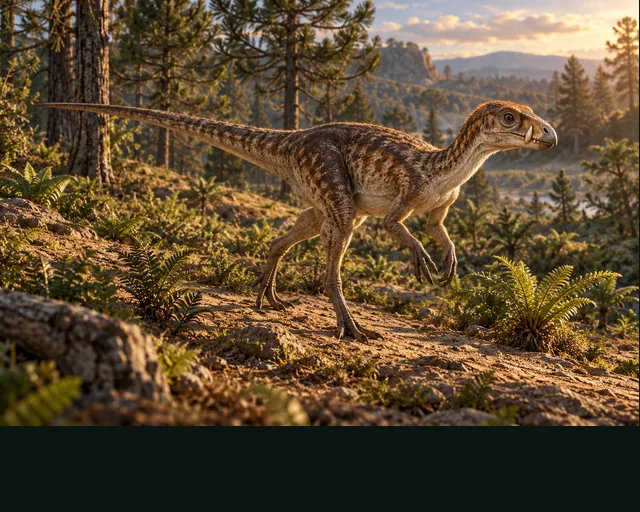
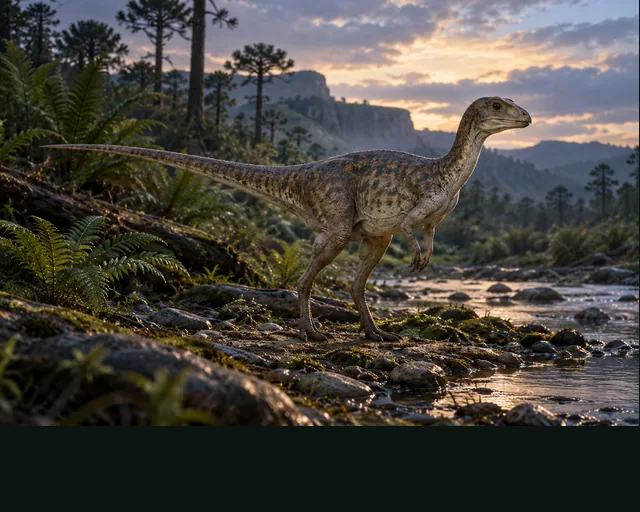
Use the dated genus overview to follow the references behind the discovery and anatomy discussed above. When sources disagree, compare which specimen and rock layer each author studied. A reconstructed whole animal can combine original bones with comparisons to relatives; those two kinds of evidence should not be confused. The account above explains the particular limits that matter for Eocursor, rather than supplying unsupported size, speed or lifespan figures.
Read the image and keep exploring
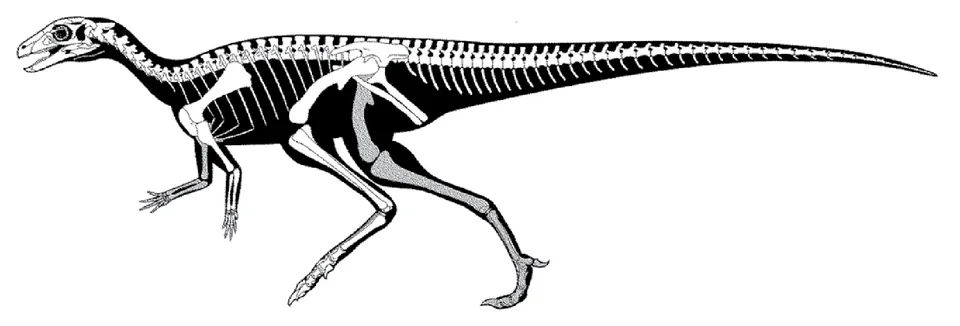
The Eocursor skeletal reconstruction places preserved elements within a light, two-legged body outline. This diagram explains the stated evidence; schematic elements are not additional fossil observations.
Compare Lesothosaurus, Heterodontosaurus, Laquintasaura. Find more names in the E index and explore ornithischian field notes. The glossary explains unfamiliar fossil terms.
Quick answers
- Where have Eocursor fossils been found?
- The discoveries discussed here come from South Africa. Modern place names describe discovery locations, not a complete ancient geographic range.
- When did Eocursor live?
- It is placed in the Jurassic period. See the discovery discussion for qualifications about the particular rock layers and dating.
- Where can I compare Eocursor with related dinosaurs?
- Follow the related field notes below. Comparisons explain shared anatomy; they do not imply that all the animals lived together.
.png)