Jurassic Dinos editorial · Updated · Source-based review
What was Daliansaurus?
Daliansaurus was a small troodontid dinosaur from Early Cretaceous China. Its species is Daliansaurus liaoningensis. The naming specimen comes from the Yixian Formation near Beipiao in Liaoning, a region important for studying small birdlike theropods.
The skeleton is unusually informative compared with dinosaurs known from a single isolated bone. Its preservation allowed researchers to compare several body regions instead of relying on one dramatic feature or the animal’s general outline.
What was special about its toes?
The original description highlighted an enlarged claw on the fourth toe. That claw was approximately as large as the specialised second-toe claw. An ungual is the bone that supports a claw; the living claw’s outer covering is a separate structure.
This detail distinguishes Daliansaurus from the simple mental picture of a theropod with one remarkable sickle claw and otherwise ordinary toes. It also shows why a useful diagnosis requires examining the actual fossil anatomy. Counting visible claws in an artistic side view may not reveal every structure hidden by perspective or feathers.
Which dinosaurs were its relatives?
The naming study’s analysis grouped Daliansaurus with other Liaoning troodontids, including Mei, Sinovenator and Sinusonasus. This suggested a regional diversification of small-bodied theropods. A relationship hypothesis does not establish that all these animals occupied precisely the same place at the same moment.
Troodontids belong near the bird-related portion of the theropod family tree. That connection should not be turned into an unsupported intelligence ranking or a claim that every feathered dinosaur could fly. Different questions require different anatomical evidence.
What can microscopic bone reveal?
A separate study examined the forearm bones using thin sections and synchrotron imaging. These methods investigate bone tissue at a much smaller scale than an ordinary skeleton photograph. Differences in tissue structure can record changes in deposition during growth.
That information complements external anatomy. The shape of a bone can help identify a dinosaur, while its internal tissue can provide another kind of evidence about the individual. Neither method supplies a direct film of its behaviour.
Reading our feathered restoration
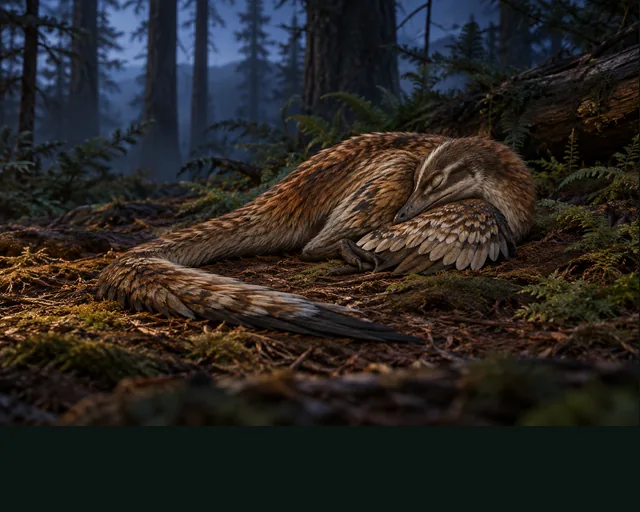
The image follows Tom Parker’s complete named Daliansaurus reference. It retains the low feathered head, folded forelimbs, long hindlimbs and feathered distal tail. Its colours and detailed plumage remain artistic. The picture’s foot perspective does not resolve every diagnostic claw, so the fourth-toe feature is explained from the publication rather than claimed as demonstrated by the artwork.
Compare Mei and Velociraptor, then explore the D directory.
Quick answers
- Where was Daliansaurus found?
- In the Early Cretaceous Yixian Formation of Liaoning, China.
- What was unusual about its foot?
- The original description identified an enlarged claw on the fourth toe, approximately as large as the specialised second claw.
- Was it a troodontid?
- Yes. The naming study recovered it among small Liaoning troodontids.
- Does the picture show every diagnostic claw?
- No. Perspective and soft tissue obscure details; the toe diagnosis comes from research, not the illustration.