Jurassic Dinos editorial · Updated · Source-based review
What was Cryolophosaurus?
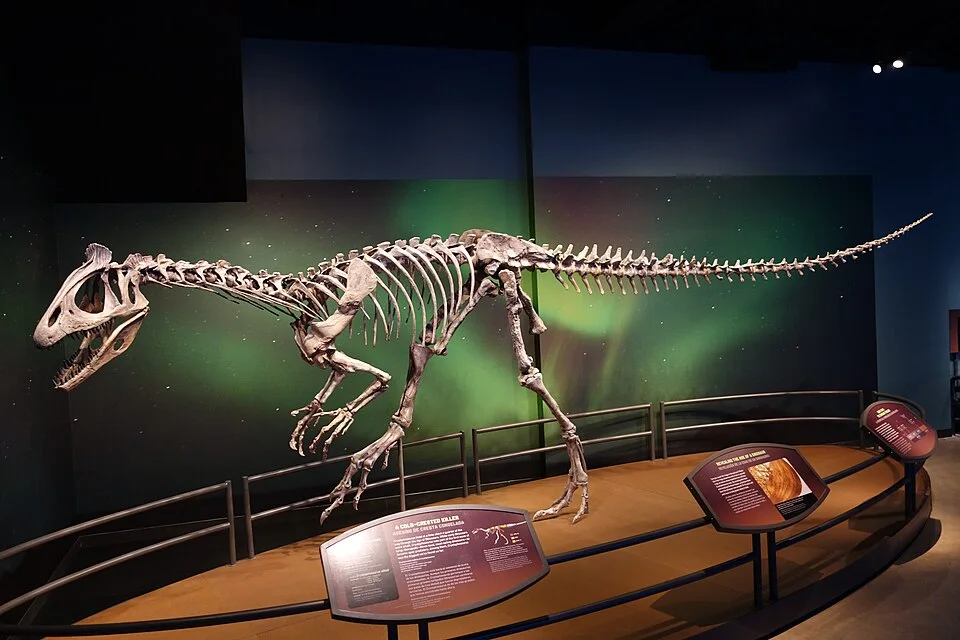
Cryolophosaurus was a meat-eating dinosaur from Early Jurassic Antarctica. Its unusual crest stretched across the top of the head, giving it a silhouette quite different from dinosaurs with paired lengthwise crests. It shows that Antarctica has a deep history of terrestrial life beyond its present ice-covered landscape.
What makes the fossil distinctive?
The crest is the easiest feature to notice, but the rest of the skeleton matters just as much. Its skull and leg bones combine features that have produced different proposals about its closest relatives. Scientists compare many anatomical characters together; a decorative crest alone cannot establish a dinosaur’s family tree. The known material includes an individual that had not necessarily reached its maximum adult size.
Where was it found and how was it named?
Fossils were collected from the Hanson Formation during Antarctic fieldwork in the early 1990s, with later expeditions recovering additional material. Removing fossil-bearing rock in this setting required considerable logistical effort. The genus was formally described in 1994. Its species name honours geologist David Elliot, while the genus name refers to cold and to the distinctive crest.
What can we infer, and what remains uncertain?
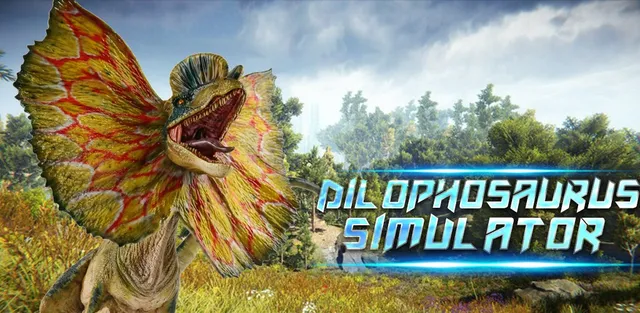
Do not picture the animal hunting across today’s Antarctic ice sheet. Continents move and climates change, so a modern location is not a complete description of an ancient habitat. The crest may have helped individuals recognise or display to one another, but its exact use is not directly preserved. Comparing Cryolophosaurus with Dilophosaurus is useful precisely because both are crested theropods without being identical animals or necessarily immediate relatives.
Did Cryolophosaurus live with Tyrannosaurus?
No. Cryolophosaurus lived in the Early Jurassic, long before the Late Cretaceous world of Tyrannosaurus. A shared carnivorous diet does not imply shared time or place.
How can you check the evidence?
The Paleobiology Database record catalogues Cryolophosaurus under Tetanurae. Its linked bibliography identifies this research starting point: W. R. Hammer and W. J. Hickerson. 1994. A crested theropod dinosaur from Antarctica. Science 264:828-830. Open the bibliographic record. A catalogue entry establishes the source trail; it does not independently verify every later illustration or behavioural claim.
Use the dated genus overview to follow the references behind the discovery and anatomy discussed above. When sources disagree, compare which specimen and rock layer each author studied. A reconstructed whole animal can combine original bones with comparisons to relatives; those two kinds of evidence should not be confused. The account above explains the particular limits that matter for Cryolophosaurus, rather than supplying unsupported size, speed or lifespan figures.
Read the image and keep exploring
The mounted Cryolophosaurus skeleton shows the head crest, long tail and two-legged theropod body plan. A displayed specimen or skeletal mount can include restored parts. Its appearance should be read alongside the original specimen description.
Compare Dilophosaurus, Ceratosaurus, Coelophysis. Find more names in the C index and explore theropod field notes. The glossary explains unfamiliar fossil terms.
Quick answers
- Where have Cryolophosaurus fossils been found?
- The discoveries discussed here come from Antarctica. Modern place names describe discovery locations, not a complete ancient geographic range.
- When did Cryolophosaurus live?
- It is placed in the Jurassic period. See the discovery discussion for qualifications about the particular rock layers and dating.
- Where can I compare Cryolophosaurus with related dinosaurs?
- Follow the related field notes below. Comparisons explain shared anatomy; they do not imply that all the animals lived together.