Jurassic Dinos editorial · Updated · Source-based review
What was Cedarpelta?
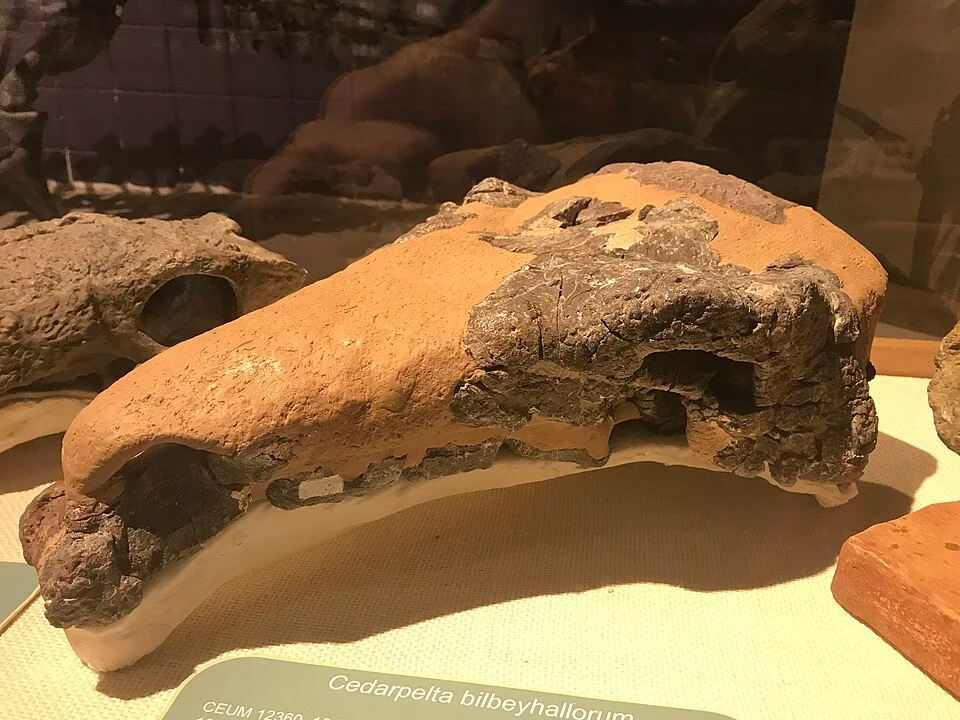
Cedarpelta was an armoured plant-eating dinosaur from Utah. Its skull is unusually informative because some bones remained separable rather than being completely obscured by the heavily remodelled surface seen in many ankylosaurs. That helps researchers investigate how the armoured head was constructed.
What makes the fossil distinctive?
An ankylosaur skull combines ordinary skull bones with surface ornament and armour-related changes. When the boundaries are visible, researchers can compare the underlying parts more directly. Cedarpelta is therefore useful even without a spectacular complete tail or an entire preserved armour covering.
Where was it found and how was it named?
The genus was named in 2001, with the species name honouring Sue Ann Bilbey and Evan Hall. Its fossils come from the Mussentuchit part of the Cedar Mountain Formation. Older summaries often called these rocks Early Cretaceous; revised dating places the relevant interval in the early Late Cretaceous.
What can we infer, and what remains uncertain?
This age revision concerns the rock sequence, not a change in the appearance of the fossil itself. A formation name can cover multiple intervals and should not be used as an exact date without checking the member and locality. Cedarpelta also illustrates why a museum reconstruction may be partly comparative: an informative skull does not automatically supply every armour plate on the back.
Why do sources disagree about its age?
Dating and subdivision of the Cedar Mountain Formation have been revised. The specific member and fossil horizon matter more than the formation name alone.
How can you check the evidence?
The Paleobiology Database record catalogues Cedarpelta under Ankylosauridae. Its linked bibliography identifies this research starting point: K. Carpenter, J. I. Kirkland, and D. L. Burge, J. Bird. 2001. Disarticulated skull of a new primitive ankylosaurid from the Lower Cretaceous of eastern Utah. The Armored Dinosaurs. Indiana University Press, Bloomington. Open the bibliographic record. A catalogue entry establishes the source trail; it does not independently verify every later illustration or behavioural claim.
Use the dated genus overview to follow the references behind the discovery and anatomy discussed above. When sources disagree, compare which specimen and rock layer each author studied. A reconstructed whole animal can combine original bones with comparisons to relatives; those two kinds of evidence should not be confused. The account above explains the particular limits that matter for Cedarpelta, rather than supplying unsupported size, speed or lifespan figures.
Read the image and keep exploring
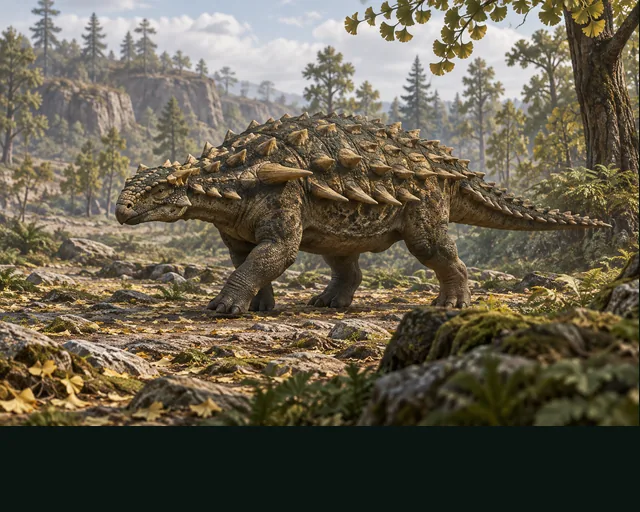
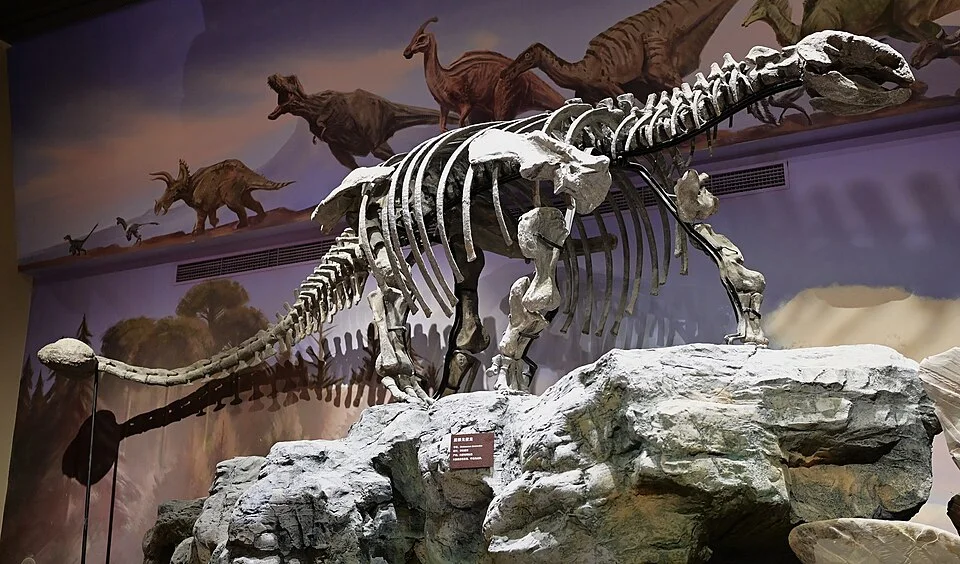
The displayed Cedarpelta skull is incomplete, exposing the preserved head material behind later whole-animal restorations. A displayed specimen or skeletal mount can include restored parts. Its appearance should be read alongside the original specimen description.
Compare Ankylosaurus, Polacanthus, Gobisaurus. Find more names in the C index and explore ornithischian field notes. The glossary explains unfamiliar fossil terms.
Quick answers
- Where have Cedarpelta fossils been found?
- The discoveries discussed here come from United States. Modern place names describe discovery locations, not a complete ancient geographic range.
- When did Cedarpelta live?
- It is placed in the Cretaceous period. See the discovery discussion for qualifications about the particular rock layers and dating.
- Where can I compare Cedarpelta with related dinosaurs?
- Follow the related field notes below. Comparisons explain shared anatomy; they do not imply that all the animals lived together.