Jurassic Dinos editorial · Updated · Source-based review
A short-necked sauropod?
Brachytrachelopan was a plant-eating sauropod from Jurassic Patagonia. Its most striking feature was a neck that was exceptionally short for a sauropod. If you expect every member of that group to look like an extremely long-necked Diplodocus, this dinosaur is a useful surprise. A group can share an evolutionary history while containing very different proportions.
Where does it fit in the dinosaur family tree?
The original 2005 description identified Brachytrachelopan as a dicraeosaurid, a branch of sauropods. The species is Brachytrachelopan mesai. Its long generic name refers to short-necked Pan, a shepherd figure; the original researchers acknowledged Daniel Mesa for finding the specimen.
The discovery came from Patagonia in Argentina. The primary publication places it in the latest Jurassic. Some brief directory labels give an inconsistent Jurassic subdivision, so the original study is the better guide here. Geological names and dates need checking just as animal names do.
How do we know the neck was short?
The fossil evidence includes parts of the neck and back vertebrae, ribs, pelvis and limb bones. Neck proportions can be investigated from preserved anatomy without claiming that an entire living animal was discovered.
The important comparison is proportion, not merely total length. A smaller dinosaur could have a shorter neck in metres but still have a relatively long neck for its body. Brachytrachelopan is interesting because its neck was unusually abbreviated within the sauropod body plan.
Why might neck proportions change?
The description contrasts this animal with the tendency toward neck elongation in many sauropods. Different feeding opportunities may help explain such differences. A body suited to reaching low vegetation would face different challenges from one suited to reaching far above or across a feeding area.
That is an evolutionary question, not a record of its favourite food. A short neck alone cannot name the plants it ate, measure how often it fed, or establish that it never lifted its head. Those narrower claims need additional evidence.
What should you notice in the artwork?
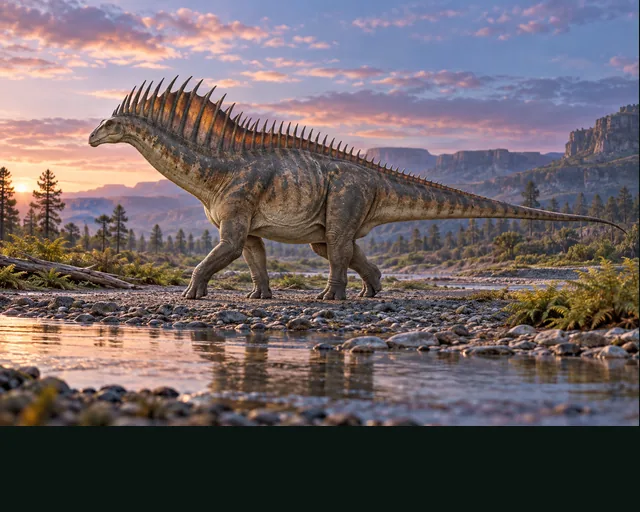
Our illustration follows the museum’s named complete restoration: a very short sauropod neck, stocky four-legged body and long tail. The dorsal covering, colours and exact pose are interpretive. We did not build a new exterior from isolated bones.
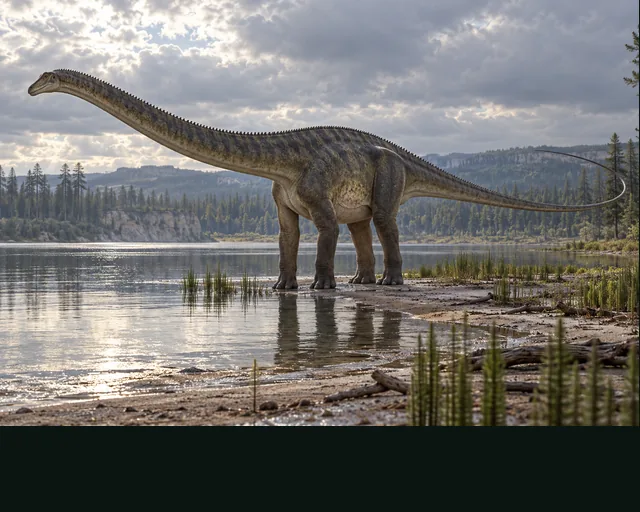
Compare Diplodocus and Amargasaurus to explore sauropod diversity, or return to the B directory.
Quick answers
- Was Brachytrachelopan really a sauropod?
- Yes. Its short neck did not remove it from Sauropoda; it belonged to the dicraeosaurids.
- Where did it live?
- The fossils came from Jurassic Patagonia in Argentina.
- Why is its neck interesting?
- Its unusually short proportions contrast with the neck elongation seen in many other sauropod lineages.
- Do the back projections in the picture prove a skin structure?
- No. The external dorsal covering in the credited whole-body reference remains an artistic interpretation.