Jurassic Dinos editorial · Updated · Source-based review
What was Brachylophosaurus?
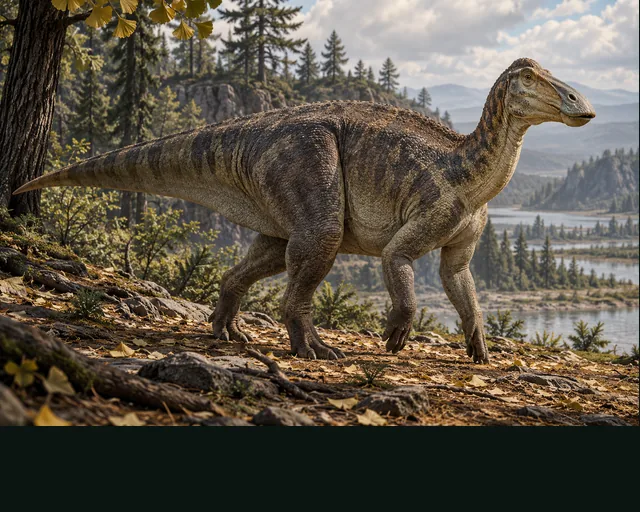
Brachylophosaurus was a duck-billed dinosaur from Late Cretaceous western North America. Its name refers to a short crest, which formed a low, broad projection over the skull. This shape differs from the long hollow tubes and towering helmets of other hadrosaurs.
What makes the fossil distinctive?
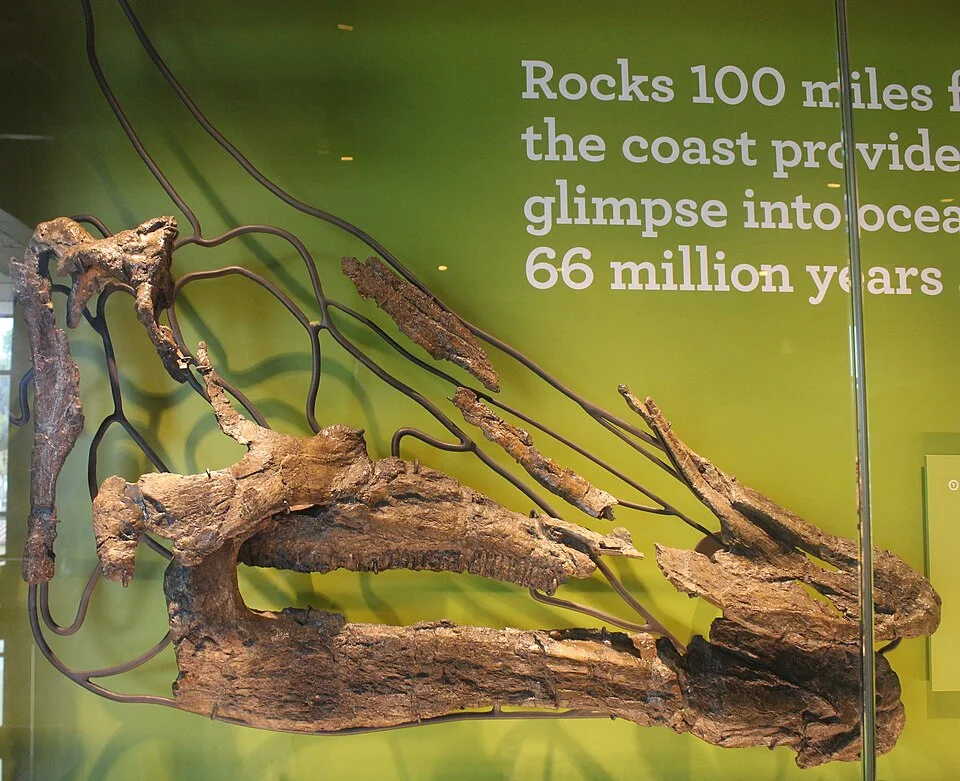
Like other hadrosaurids, it had a beak for gathering food and complex tooth batteries for processing plants. A tooth battery consists of many teeth arranged together, including replacements. It is a biological feeding apparatus rather than an electrical battery.
Where was it found and how was it named?
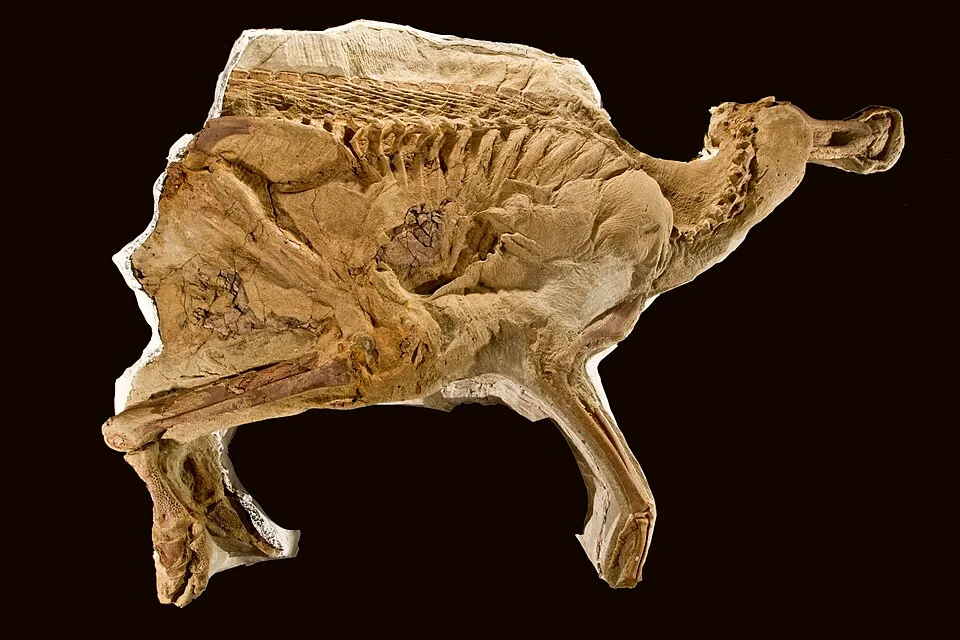
The genus was named in 1953 from Canadian material collected earlier. Fossils from Montana greatly expanded the record. A particularly famous specimen, nicknamed Leonardo, preserves extensive impressions and remains of the body covering, making it valuable for studying anatomy beyond the skeleton.
What can we infer, and what remains uncertain?
The nickname “dinosaur mummy” describes exceptional preservation; it does not mean an untouched living body or usable dinosaur DNA has been recovered. Skin and other traces must be analysed according to what is actually preserved. Bonebeds also provide multiple individuals for comparison, although a concentration of bones alone does not prove a particular social behaviour. Brachylophosaurus is a strong example of how different kinds of fossil evidence complement one another.
Does a dinosaur mummy contain an unchanged dinosaur body?
No. The term refers to unusually preserved body outlines or tissues, which have still undergone fossilisation and require careful interpretation.
How can you check the evidence?
The Paleobiology Database record catalogues Brachylophosaurus under Brachylophosaurini. Its linked bibliography identifies this research starting point: C. M. Sternberg. 1953. A mew hadrosaur from the Oldman Formation of Alberta: discussion of nomenclature. National Museum of Canada Bulletin 128:1-12. Open the bibliographic record. A catalogue entry establishes the source trail; it does not independently verify every later illustration or behavioural claim.
Use the dated genus overview to follow the references behind the discovery and anatomy discussed above. When sources disagree, compare which specimen and rock layer each author studied. A reconstructed whole animal can combine original bones with comparisons to relatives; those two kinds of evidence should not be confused. The account above explains the particular limits that matter for Brachylophosaurus, rather than supplying unsupported size, speed or lifespan figures.
Read the image and keep exploring
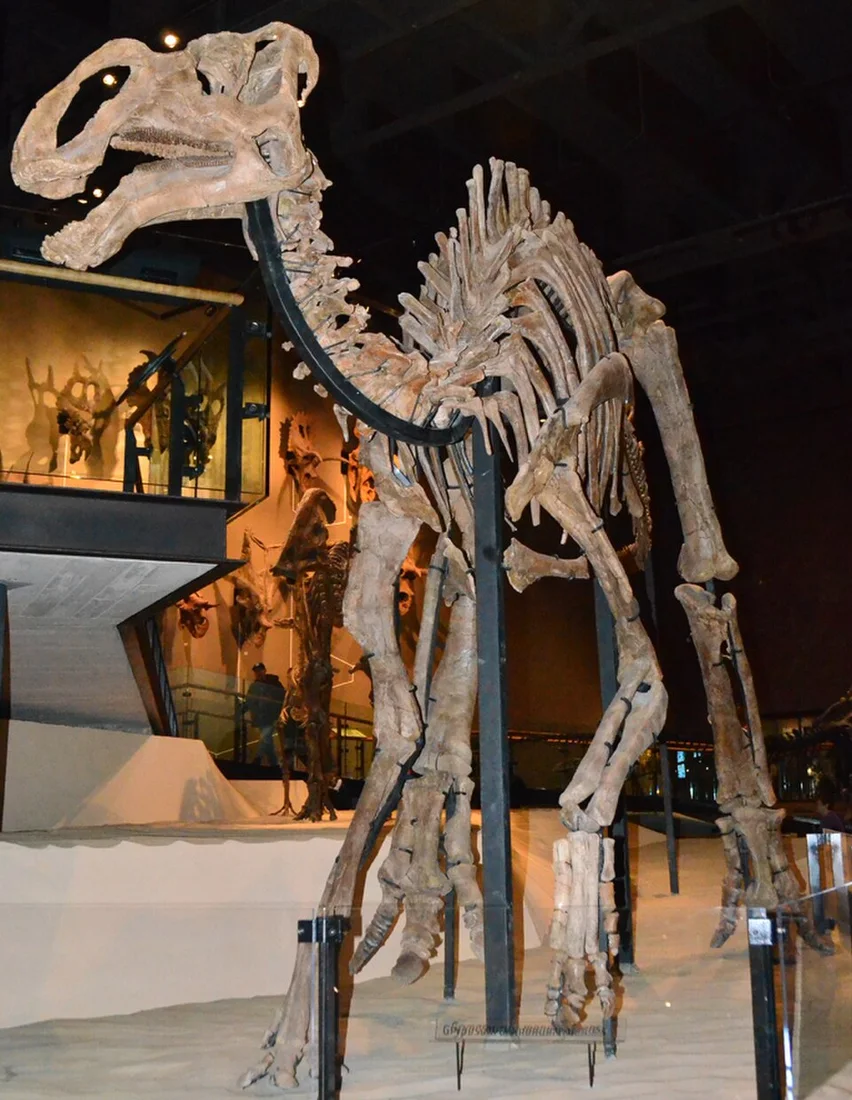
Leonardo, a Brachylophosaurus specimen, preserves an unusually complete body outline and associated skeletal material. A displayed specimen or skeletal mount can include restored parts. Its appearance should be read alongside the original specimen description.
Compare Gryposaurus, Edmontosaurus, Augustynolophus. Find more names in the B index and explore ornithischian field notes. The glossary explains unfamiliar fossil terms.
Quick answers
- Where have Brachylophosaurus fossils been found?
- The discoveries discussed here come from Canada and United States. Modern place names describe discovery locations, not a complete ancient geographic range.
- When did Brachylophosaurus live?
- It is placed in the Cretaceous period. See the discovery discussion for qualifications about the particular rock layers and dating.
- Where can I compare Brachylophosaurus with related dinosaurs?
- Follow the related field notes below. Comparisons explain shared anatomy; they do not imply that all the animals lived together.