Jurassic Dinos editorial · Updated · Source-based review
What was Augustynolophus?
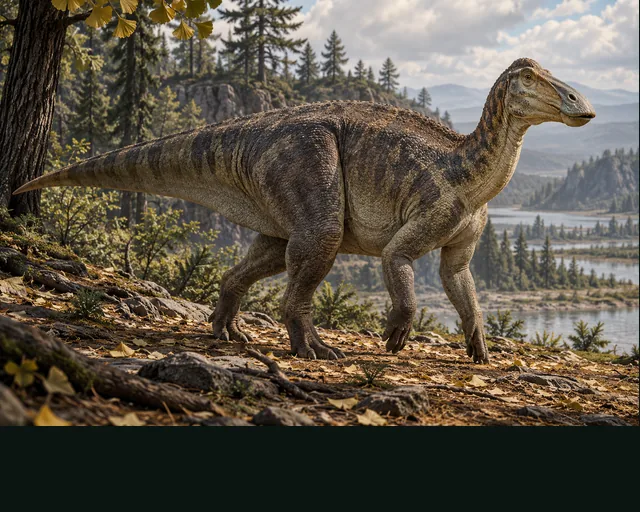
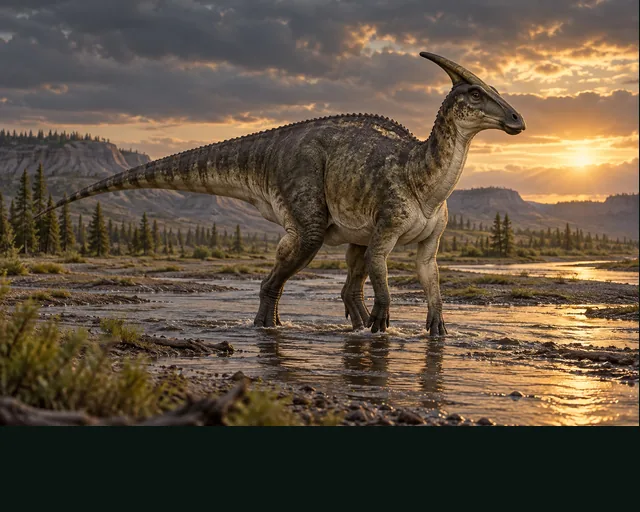
Augustynolophus was a duck-billed dinosaur from Late Cretaceous California. It was a large plant eater belonging to the saurolophine branch of hadrosaurs. Unlike the hollow-crested lambeosaurines, this branch includes animals with different kinds of solid crest or no elaborate crest.
What makes the fossil distinctive?
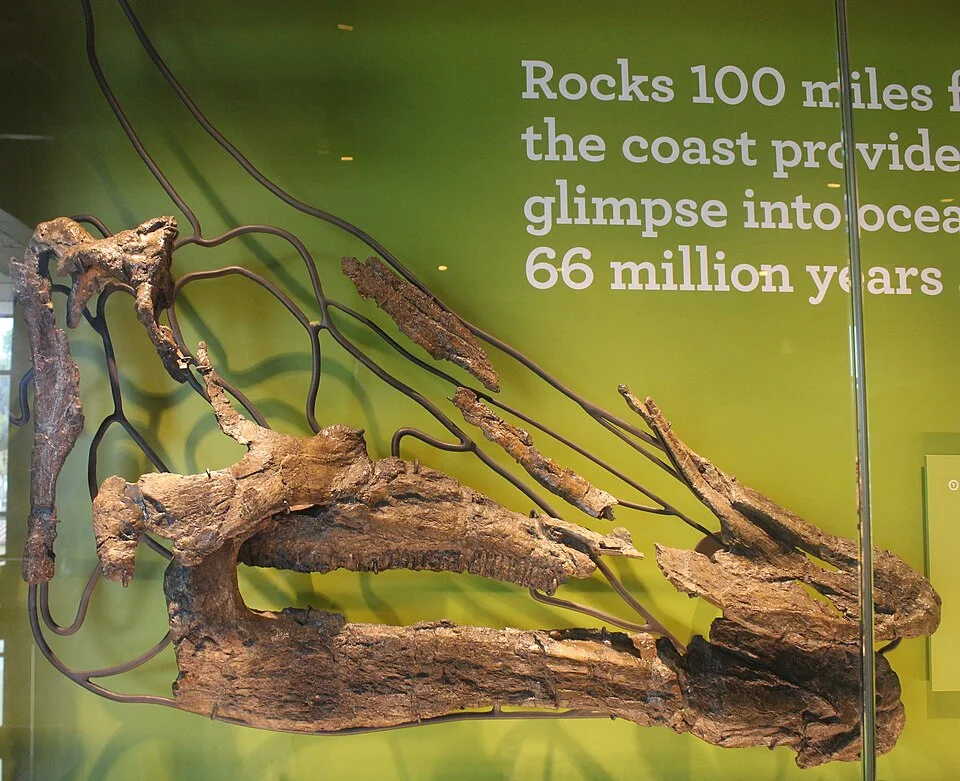
The skull is particularly important in recognising Augustynolophus. Its crest anatomy initially led researchers to place the species in Saurolophus. Later comparison supported giving it a separate genus. A changed genus name does not make the older fossil disappear; it changes the interpretation of its relationships.
Where was it found and how was it named?
The known specimens were discovered in the Moreno Formation in 1939 and 1943. Those rocks were deposited in a marine setting. A land animal can enter marine sediments when a carcass or bones are transported into the sea, so the place of burial must be distinguished from the place where it normally lived.
What can we infer, and what remains uncertain?
The fossils help document western North American dinosaurs near the end of the Cretaceous. Comparing Augustynolophus with inland hadrosaurs can raise questions about geography and changing coastlines. It does not establish that all of those animals lived together. Shared continental names cover enormous areas and substantial stretches of geological time.
Did Augustynolophus live in the ocean?
It was a land-dwelling dinosaur. Marine burial can result from transport and does not demonstrate an ocean-going lifestyle.
How can you check the evidence?
The Paleobiology Database record catalogues Augustynolophus under Saurolophini. Its linked bibliography identifies this research starting point: A. Prieto-Márquez, J. R. Wagner, and P. R. Bell, L. M. Chiappe. 2015. The late-surviving ‘duck-billed’ dinosaur Augustynolophus from the upper Maastrichtian of western North America and crest evolution in Saurolophini. Geological Magazine 152:225-241. Open the bibliographic record. A catalogue entry establishes the source trail; it does not independently verify every later illustration or behavioural claim.
Use the dated genus overview to follow the references behind the discovery and anatomy discussed above. When sources disagree, compare which specimen and rock layer each author studied. A reconstructed whole animal can combine original bones with comparisons to relatives; those two kinds of evidence should not be confused. The account above explains the particular limits that matter for Augustynolophus, rather than supplying unsupported size, speed or lifespan figures.
Read the image and keep exploring
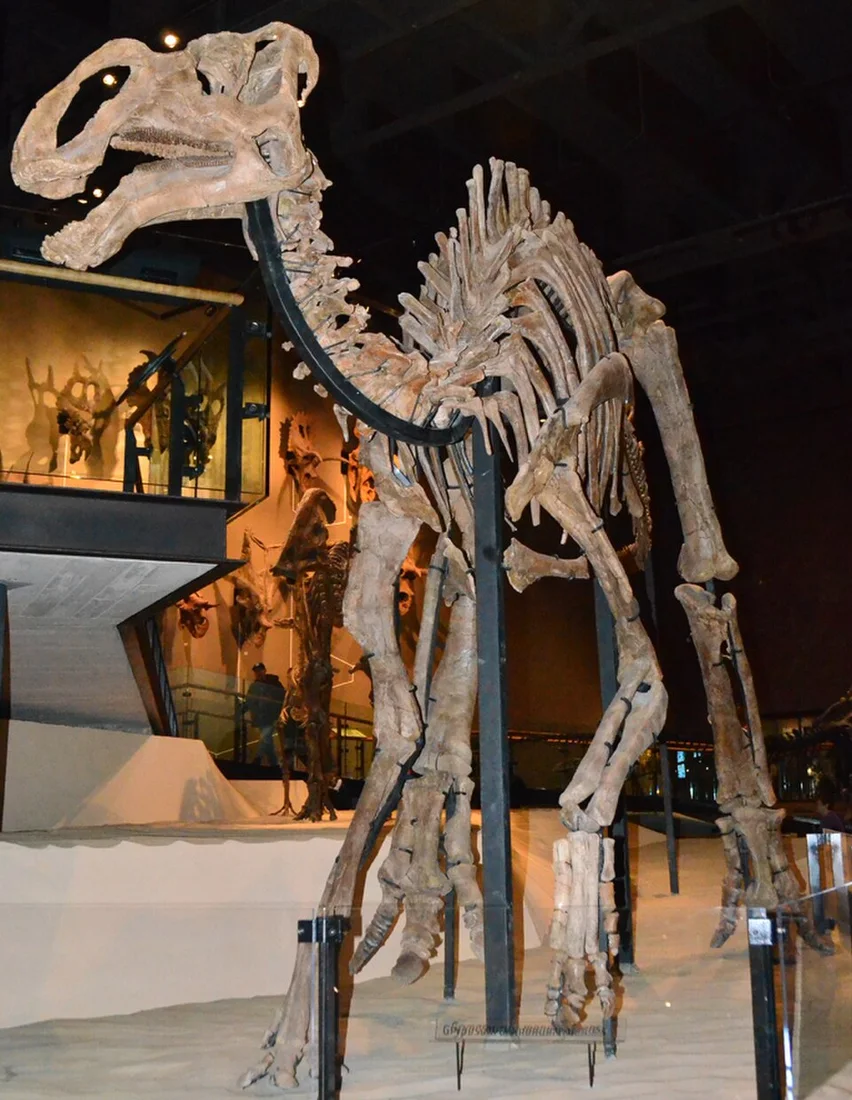
Augustynolophus skull material is displayed with separate bones visible, rather than as an undamaged complete living head. A displayed specimen or skeletal mount can include restored parts. Its appearance should be read alongside the original specimen description.
Compare Saurolophus, Edmontosaurus, Gryposaurus. Find more names in the A index and explore ornithischian field notes. The glossary explains unfamiliar fossil terms.
Quick answers
- Where have Augustynolophus fossils been found?
- The discoveries discussed here come from United States. Modern place names describe discovery locations, not a complete ancient geographic range.
- When did Augustynolophus live?
- It is placed in the Cretaceous period. See the discovery discussion for qualifications about the particular rock layers and dating.
- Where can I compare Augustynolophus with related dinosaurs?
- Follow the related field notes below. Comparisons explain shared anatomy; they do not imply that all the animals lived together.