Jurassic Dinos editorial · Updated · Source-based review
What was Bonatitan?
Bonatitan was a long-necked, plant-eating sauropod from Late Cretaceous Argentina. It belonged to Titanosauria, a successful group of sauropods that included many different body sizes. Its species is Bonatitan reigi. Despite the word titan in the name, a name alone cannot tell us the dimensions of a dinosaur.
Where were its remains found?
The original 2004 study described vertebrates from Bajo de Santa Rosa in Río Negro Province. The fossils came from the Allen Formation. Alongside dinosaurs, the reported assemblage included many land and freshwater animals, with some marine elements as well.
An assemblage is a collection of fossils from a geological setting. It can help reveal an ancient environment, but it is not automatically a snapshot of every animal standing together at the same moment. Remains can arrive through different events and be preserved under different conditions.
Why were the bones sorted again?
A redescription published online in 2014 revisited Bonatitan’s material. Instead of the two individuals originally recognised, its authors distinguished five. The bones originally grouped as the type also represented more than one individual; a braincase became the revised name-bearing reference.
This matters because a dinosaur account should not combine a young animal’s limb with another individual’s skull and present the result as one measured body. Museum catalogue numbers, relative proportions and careful comparisons help researchers spot such mixtures.
What can a braincase reveal?
A braincase is the part of the skull surrounding the brain. Its ridges, surfaces and openings can help distinguish animals even when a complete face is missing. Identifying a dinosaur does not always require its most eye-catching part.
The later study also changed the diagnosis and evolutionary analysis. Bonatitan was originally described as a saltasaurine, but the redescription did not recover it inside that subgroup. We therefore use the broader titanosaur label rather than presenting a disputed narrow relationship as settled.
How much of the living animal is artistic?
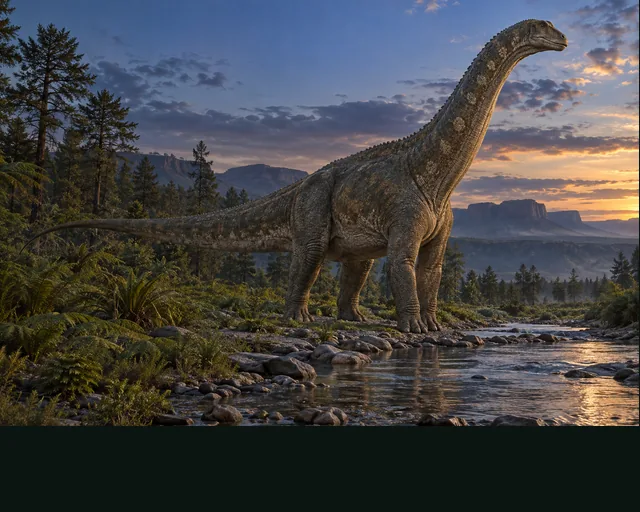
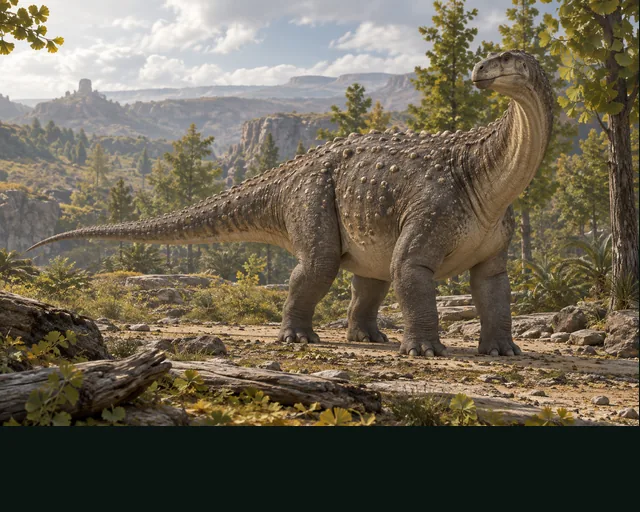
The complete reference artwork gives our illustration its small head, long neck, weight-bearing limbs and tapering tail. Its dorsal scutes, proportions and colours remain restoration choices. We do not treat them as discoveries from a complete Bonatitan skeleton, or use unrelated bones to invent a replacement shape.
Compare Saltasaurus with Alamosaurus for other titanosaurs, and find more names in the B directory.
Quick answers
- Was Bonatitan a sauropod?
- Yes. It was a titanosaurian sauropod from Late Cretaceous Argentina.
- Did all the original bones belong together?
- The redescription separated material into five individuals rather than the two originally recognised.
- What is a braincase?
- It is the bony part of the skull surrounding the brain, which can preserve useful identification features.
- Is it definitely a saltasaurine?
- The original description used that placement, but the later redescription recovered a different relationship. Broad titanosaur identity is safer here.