Jurassic Dinos editorial · Updated · Source-based review
Bannykus wulatensis was an Early Cretaceous alvarezsaurian dinosaur from China. Alvarezsaurs include animals with highly specialised short arms and enlarged hand claws. Bannykus helps researchers investigate how those unusual forelimbs developed, rather than treating the most specialised later form as the starting point.
Two discoveries, two names
Xu and colleagues described Bannykus and Xiyunykus in a 2018 paper. The university announcement identifies them as separate new species in separate genera. A result reported for one should not automatically become a fact about the other.
Bannykus is therefore not a second spelling of Xiyunykus. Keeping the names and specimens separate is essential when explaining changes in the arm, hand or body size.
What is an intermediate feature?
The original study described anatomical conditions between earlier alvarezsaurian forms and the strongly specialised forelimbs of later members. Intermediate means useful for comparing a sequence of character changes. It does not mean that the animal was incomplete, inferior or necessarily the direct ancestor of a later species.
A hand contains several structures that can change separately. Researchers can compare their proportions and connections, then test whether changes occurred together or at different rates. That is a more informative question than asking whether one animal looks simply “more evolved.”
Is the evolutionary pattern settled?
The 2018 paper proposed slow, mosaic changes in the forelimb. Later research by Meso and colleagues favours a more incremental acquisition pattern for the body regions it analysed. These different results show why the original proposal should be identified with its source rather than presented as the only possible model.
Neither analysis supplies a preserved daily menu for Bannykus. Ideas about digging or specialised feeding in later relatives cannot be copied automatically into this animal’s account. We leave the exact diet open rather than advertising a demonstrated termite specialist.
Reading the feathered artwork
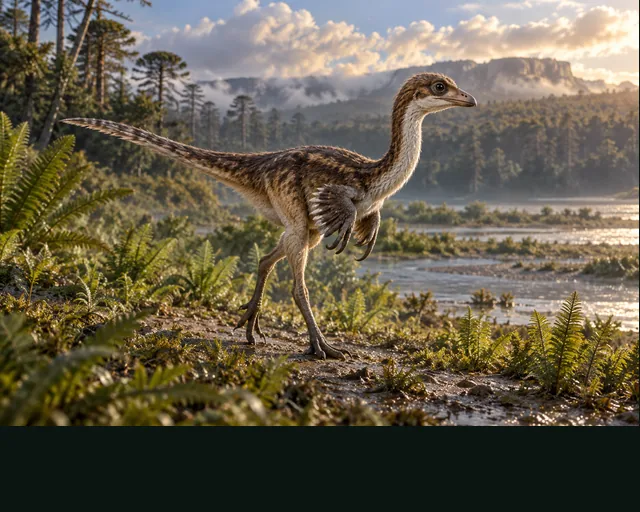
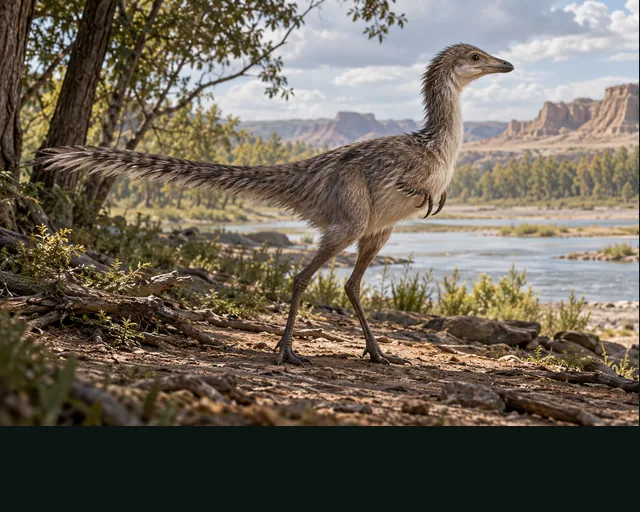
Tom Parker’s complete named restoration supplies our image reference: a small narrow head, slender neck, short feathered forelimbs, long hind legs and a long feathered tapering tail. The depicted plumage extent, colour and restored proportions remain interpretations. The reference’s human silhouette is omitted and is not used as an anatomical measurement.
Our independent cinematic scene follows that complete animal rather than constructing a body from hand bones or substituting a later relative. Compare Alvarezsaurus and Mononykus, then browse the A–Z directory. Related dinosaurs can illuminate an evolutionary question while still requiring their own evidence.
Quick answers
- Is Bannykus another name for Xiyunykus?
- No. The 2018 paper describes two separate genera, including Bannykus wulatensis and Xiyunykus pengi.
- Why is Bannykus important?
- Its intermediate forelimb anatomy helps investigate how alvarezsaurian arms and hands changed.
- Does it prove a termite diet?
- No. Specialised feeding proposals for later relatives do not establish Bannykus’s precise menu.
- Are the feathers directly documented here?
- The illustration follows Tom Parker’s complete feathered restoration; plumage extent and colours are artistic interpretations.