Jurassic Dinos editorial · Updated · Source-based review
Asilisaurus kongwe was a slender, four-legged silesaurid from Tanzania. Silesaurids sit close to the origin of dinosaurs, but precisely where they belong remains debated. This is an animal to explore when the question “Is it a dinosaur?” needs more than a confident label.
What did the original studies find?
The 2010 Nature description interpreted Asilisaurus as part of a group outside Dinosauria, close to the dinosaur branch. It described features including leaf-shaped teeth and a beak-like jaw. A later anatomical study, published online in 2019 and in a 2020 volume, examined additional material from the Lifua Member of the Manda Beds.
That later work includes an associated skeleton and other, disarticulated remains. Associated bones can help connect body regions, while disarticulated means that bones are no longer joined in their original positions. Neither word guarantees that every body part is present or that all loose bones belonged to one individual.
Why is its classification qualified?
A phylogenetic analysis compares anatomical characters to test possible family trees. The original studies placed silesaurids near dinosaurs but outside the group. Some subsequent analyses, including Cau’s 2024 study, instead recover silesaurids along the early ornithischian branch.
Those alternatives change how one draws the dinosaur boundary. We therefore label Asilisaurus as having uncertain dinosaur affinity and conservatively leave it out of dinosaur-only totals and comparisons. This is an editorial counting decision, not a claim that the scientific debate is over. Nor does closeness on a tree prove that Asilisaurus was a direct ancestor of a particular dinosaur.
What can we say about its life?
The cited original studies traditionally assign the Manda material to the Middle Triassic. Age assessments of these beds have been discussed, so this page avoids an exact date or an unqualified “oldest dinosaur relative” record. Tooth and jaw form help researchers consider feeding, but cannot produce a complete menu by themselves.
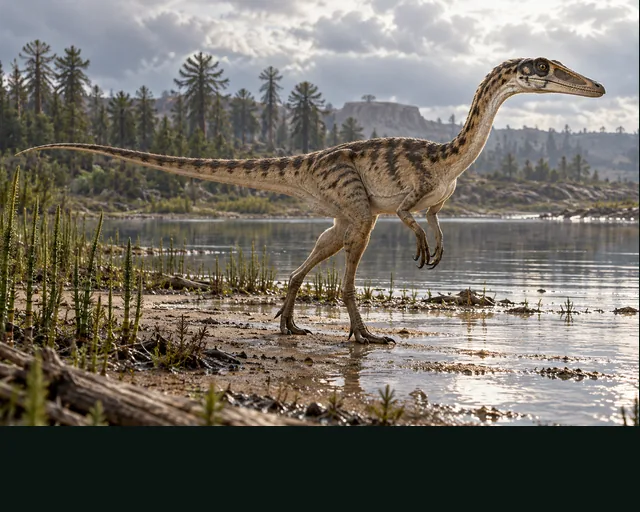
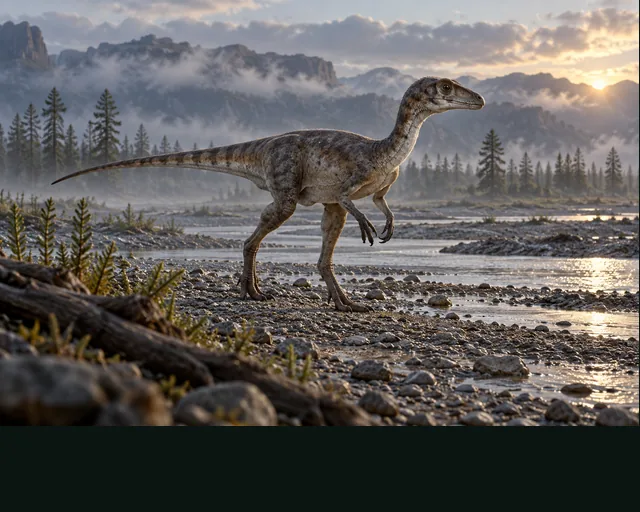
Our illustration follows Smokeybjb’s complete, named restoration: a small low head, slender rising neck, four long thin limbs and a long tapering tail. Colour, skin and the particular stance remain artistic interpretations. Fossil figures are used for reading the research, never as instructions to invent a missing whole-body reference.
Keep exploring the family-tree question
Compare Eoraptor and Coelophysis as dinosaur examples, without treating either as Asilisaurus’s descendant. The A–Z directory includes prehistoric animals whose relationships need just this sort of careful explanation.
Quick answers
- Is Asilisaurus definitely a dinosaur?
- Its position is debated. Original studies treat it as a close relative outside Dinosauria; some later analyses place silesaurids on the ornithischian branch.
- Where was it found?
- In the Lifua Member of the Manda Beds in Tanzania.
- Was it a direct dinosaur ancestor?
- The reviewed research does not establish it as the direct ancestor of any particular dinosaur.
- Do its teeth prove a complete menu?
- No. Tooth and jaw form inform feeding hypotheses but do not identify every food it ate.