Jurassic Dinos editorial · Updated · Source-based review
Arizonasaurus was a sail-backed reptile from Middle Triassic Arizona. Despite its dinosaur-sounding name, it was not a dinosaur. It belonged to Pseudosuchia, the crocodile side of the archosaur family tree. That distinction makes it a useful comparison with other animals that independently evolved striking back profiles.
A crocodile-line archosaur
Archosaurs include the lineage leading to crocodilians and the lineage containing dinosaurs and their bird descendants. Arizonasaurus belongs on the crocodile side. This does not mean that it looked exactly like a modern crocodile or lived in precisely the same way.
Sterling Nesbitt’s research used a better-preserved partial skeleton from the Moenkopi Formation of northern Arizona to reassess the animal. The work connected anatomical information that had previously been scattered among isolated remains and clarified its place among early archosaurs.
The osteological description identifies a Middle Triassic context. Some artwork descriptions give a different broad age label; the studied fossil provenance takes precedence over an illustration’s caption. This page therefore does not place Arizonasaurus in the Late Triassic just to match that caption.
What is osteology?
Osteology is the study of bones. Researchers compare the skull, vertebrae and pelvis to identify combinations of features and test relationships. Nesbitt’s work discussed links with sail-backed ctenosauriscids and poposaur relatives. Such detailed anatomy is more informative for classification than simply spotting a sail.
A complete-looking restoration is not a substitute for these comparisons. Two unrelated animals can evolve outwardly similar structures while their skull and limb anatomy records very different histories.
A sail is not a family label
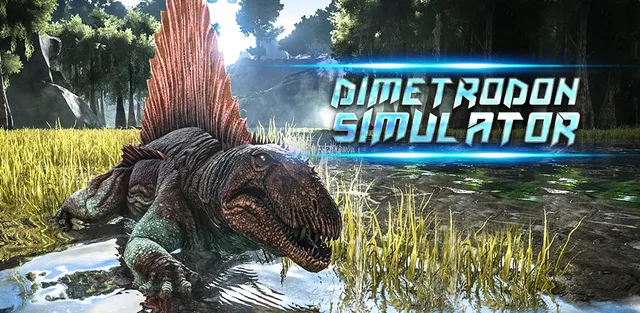
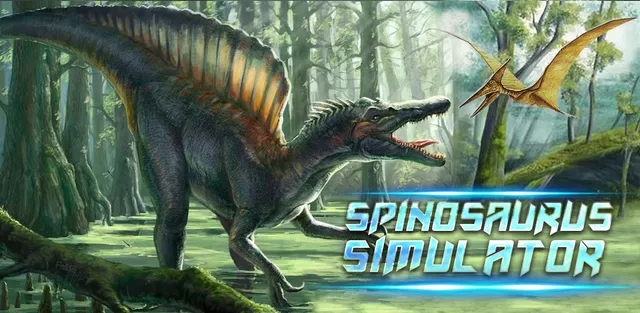
Dimetrodon, Spinosaurus and Arizonasaurus all have conspicuous back profiles, but they do not form one dinosaur family. Dimetrodon is a synapsid, Spinosaurus is a theropod dinosaur, and Arizonasaurus is a pseudosuchian archosaur.
The sail’s exact living outline, colour and function require separate evidence. A dramatic shape does not automatically prove temperature control, a mating display or a particular sex. Our page avoids choosing one function as an established fact.
Reading the restoration
The illustration follows Nobu Tamura’s complete Arizonasaurus artwork: a long low head, tall rounded sail, four supporting limbs and a long tapering tail. Soft tissues and colour remain artistic interpretations. The project does not invent the body by extrapolating from a skeletal image.
Compare Dimetrodon and Spinosaurus to explore similar outlines with different relationships, or browse A–Z under A.
Quick answers
- Was Arizonasaurus a dinosaur?
- No. It was a pseudosuchian archosaur on the crocodile side of the archosaur family tree.
- When and where did it live?
- In Middle Triassic northern Arizona, represented by the Moenkopi Formation.
- Does its sail make it a spinosaur?
- No. Similar external structures can occur in distantly related animals.
- Is the sail’s exact function known?
- The reviewed sources do not establish a single function or its living colour.