Jurassic Dinos editorial · Updated · Source-based review
Analong was a long-necked sauropod from Middle Jurassic China. Its most interesting discovery happened partly in the study room: researchers re-examined a skeleton already known to science and concluded that it deserved a different name. Finding a dinosaur does not always mean digging up something nobody has seen before.
Two specimens, two identities
The fossils come from the Chuanjie Formation in Yunnan. One skeleton, identified as LFGT LCD9701-1, had previously been referred to Chuanjiesaurus anaensis. “Referred” means that researchers assigned it to a species defined by another specimen. It does not mean that both skeletons permanently share one identity.
Xin-Xin Ren and colleagues compared the material again. Their study appeared online in 2020 and in a journal volume dated 2021, which explains the two years you may encounter in references. They named the reassessed skeleton Analong chuanjieensis. Chuanjiesaurus retained its own defining specimen; it was not simply renamed across the board.
Small details change a large animal’s name
The study compared features in tail vertebrae and limb bones. For example, the sideways projections along the tail persisted for a different number of vertebrae in the compared specimens. The researchers also examined joint shapes and proportions rather than relying on the overall impression of a long neck.
These differences work like a carefully recorded combination of clues. One unusual-looking bone is not automatically enough for a new genus, especially when age, damage or individual variation might affect it. A diagnosis explains which character combination supports the distinction so other researchers can test it.
Where does Analong fit?
Analong is a mamenchisaurid sauropod. Mamenchisaurids form a branch of the long-necked, four-legged plant eaters. The original analysis placed Analong near the early branching part of that group. The exact arrangement of relatives is a research result, not a fixed ladder in which one living animal must be the direct ancestor of another.
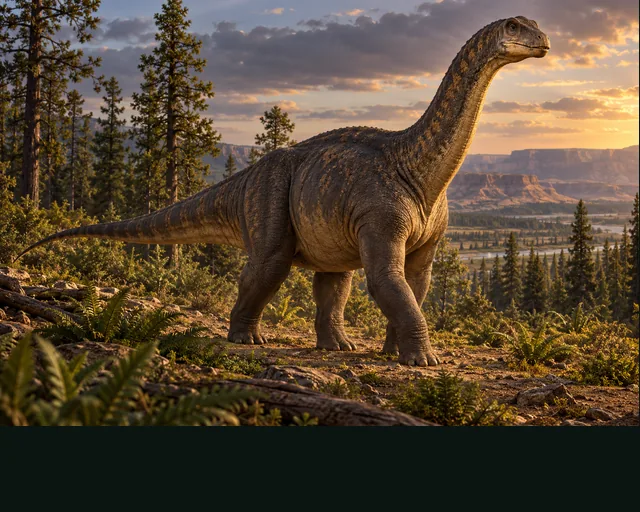
The published skeleton provides anatomical information, but our whole-animal image follows a separately reviewed complete restoration by Atlantis536. It shows a tall rising neck, small head, deep torso, column-like limbs and tapering tail. The neck posture, skin and colour are interpretive. The scene illustrates the animal without claiming to recover its exact appearance or daily behaviour.
Compare the evidence
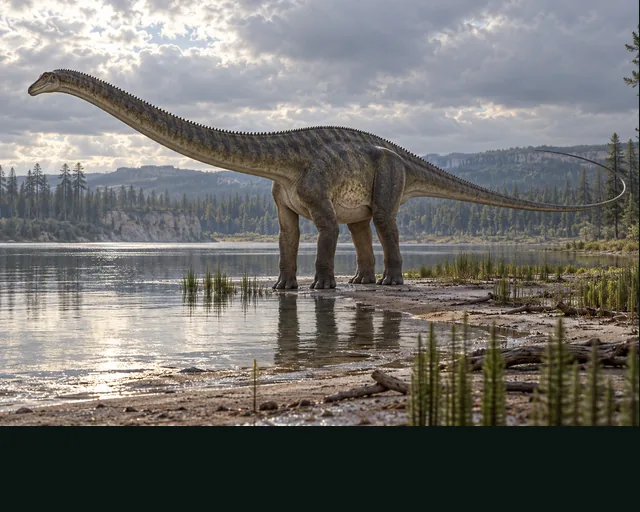
Explore Diplodocus and Camarasaurus for other sauropod body plans and discovery histories. Neither supplies a substitute portrait of Analong. The A–Z directory provides a route to more dinosaur names and their separate stories.
Quick answers
- Was Analong originally called Chuanjiesaurus?
- Its defining skeleton was previously referred to that genus; the Chuanjiesaurus defining specimen was not renamed.
- Where are its fossils from?
- The Middle Jurassic Chuanjie Formation of Yunnan, China.
- What sort of dinosaur was it?
- A mamenchisaurid sauropod, part of the long-necked plant-eating radiation.
- Why do records show 2020 and 2021?
- The study appeared online in 2020 and in a 2021 journal volume.