Jurassic Dinos editorial · Updated · Source-based review
Can a theropod be a plant eater?
Alxasaurus was an Early Cretaceous therizinosauroid from Inner Mongolia, China. It belongs within Theropoda, the broad dinosaur group that also includes many famous predators and living birds. Its unusual proportions helped researchers understand that this branch contained animals very different from a typical large meat eater.
Inner Mongolia is an autonomous region of China, not the independent country of Mongolia. Keeping those places distinct helps readers connect the fossils with the correct geography and research history.
Why did its discovery help solve a family-tree puzzle?
Russell and Dong’s description appeared in the 1993 volume of the Canadian Journal of Earth Sciences. The fossils combined features that linked the strange therizinosauroids with other theropods. Their comparisons helped resolve uncertainty about animals previously discussed under the name segnosaurs.
The Natural History Museum explains that discoveries of relatives such as Alxasaurus, Erlikosaurus and Beipiaosaurus helped establish the theropod relationships of Therizinosaurus. A long neck and heavy body can resemble features of unrelated plant eaters; detailed anatomy provides a stronger test than overall shape.
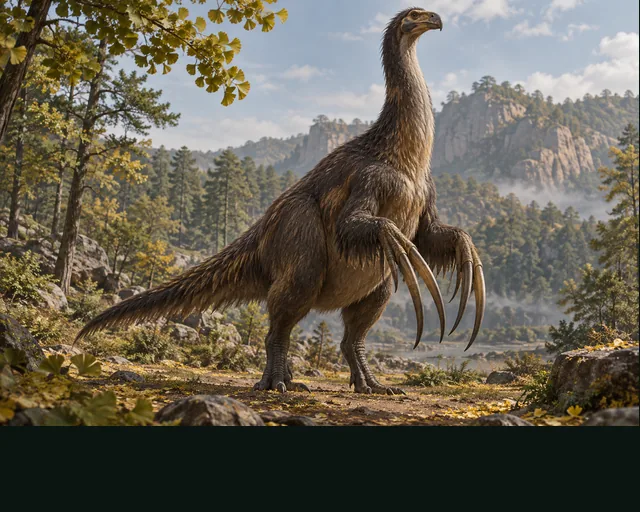
Did large claws prove a hunting lifestyle?
No. Claw shape alone does not establish the entire diet or behaviour of an animal. Therizinosauroids are generally interpreted as plant eaters, and the specialised feeding and body features of the group should be considered together.
We do not stage Alxasaurus attacking prey or claim that its claws served one demonstrated purpose. Feeding, defence and display are different possible functions that require their own evidence. A dramatic-looking claw is not a fossil recording of a fight.
What can the known material tell us about size?
More than one specimen contributed to the original research, which is useful for anatomical comparison. It does not make every commonly repeated maximum-size figure equally well supported. This account leaves precise adult length and mass out of the comparison fields until the relevant numerical evidence has been independently checked.
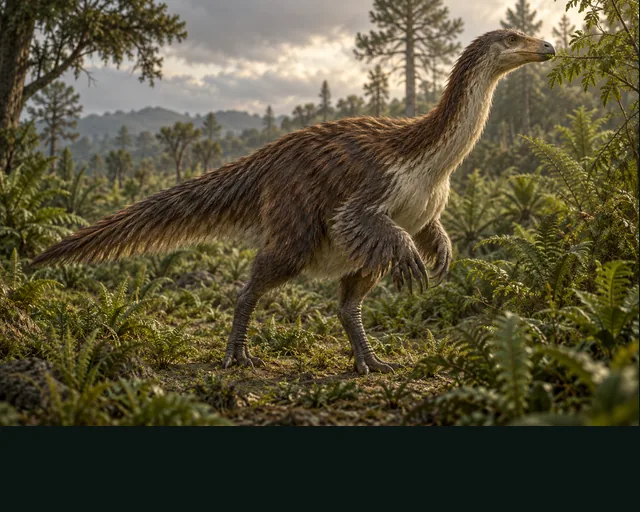
An illustration also cannot provide those measurements. Its scale on a screen changes with the browser window, and the completed soft-tissue outline is partly interpretive.
Why does the image have feathers?
Our artwork follows TotalDino’s complete restoration specifically named Alxasaurus. It preserves that reference’s beaked head, long upright neck, deep body, clawed forelimbs and relatively short feathered tail. Feather arrangement, colours and missing soft tissues are artistic choices, not a claim that this exact coat was preserved with the Alxasaurus specimens.
Compare Therizinosaurus and Beipiaosaurus, or browse the A–Z directory under A.
Quick answers
- Where was Alxasaurus found?
- Inner Mongolia, which is a region of China.
- Does theropod always mean meat eater?
- No. Theropoda includes plant-eating therizinosauroids as well as many predators and living birds.
- Do its claws prove a hunting lifestyle?
- No. Claws alone do not establish a complete diet or a specific behaviour.
- Are its illustrated feathers directly preserved?
- The exact covering follows the named artistic restoration and is not claimed as preserved plumage on the specimens.