Jurassic Dinos editorial · Updated · Source-based review
What was Ajnabia?
Ajnabia was a small duck-billed dinosaur from the very end of the Cretaceous in Morocco. Its discovery was surprising because Africa was separated from the northern continents by water. The animal adds an important piece to the question of how dinosaur groups spread between landmasses.
What makes the fossil distinctive?
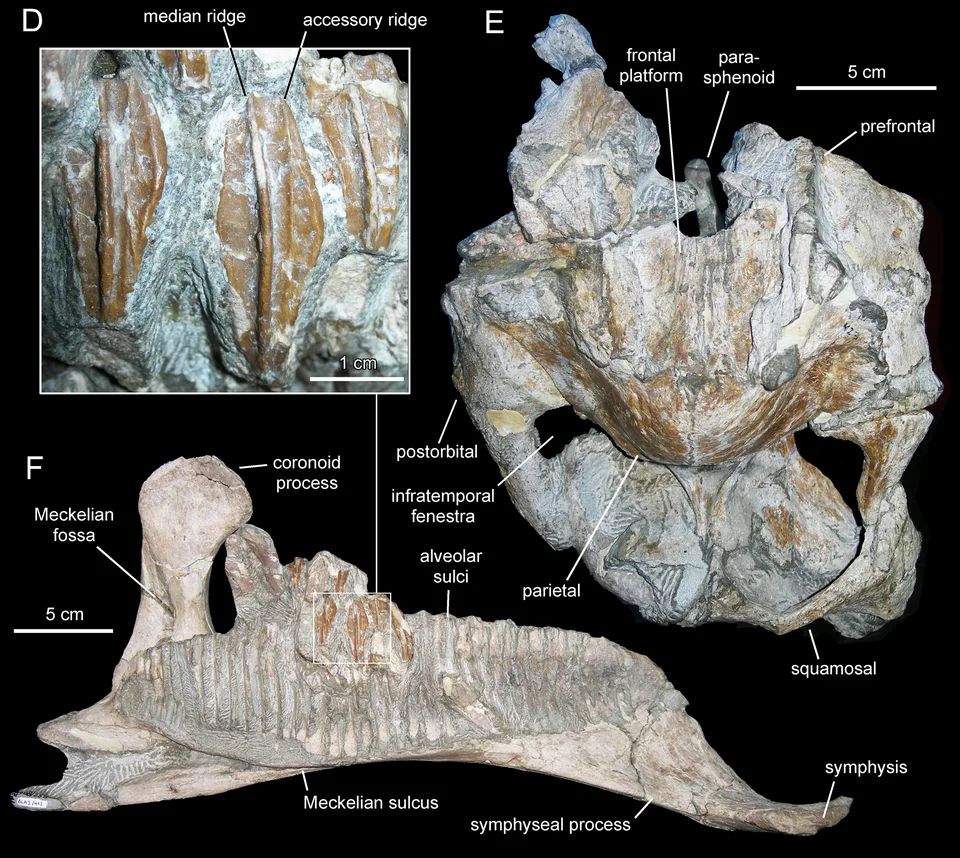
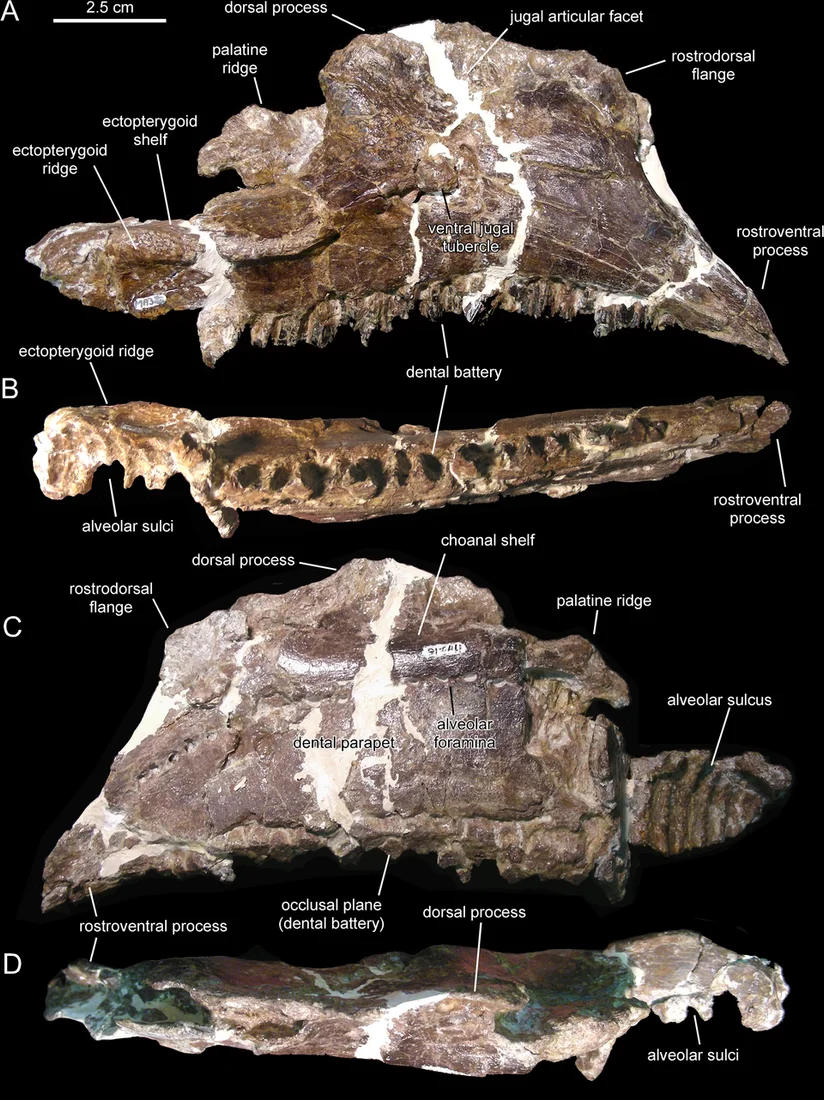
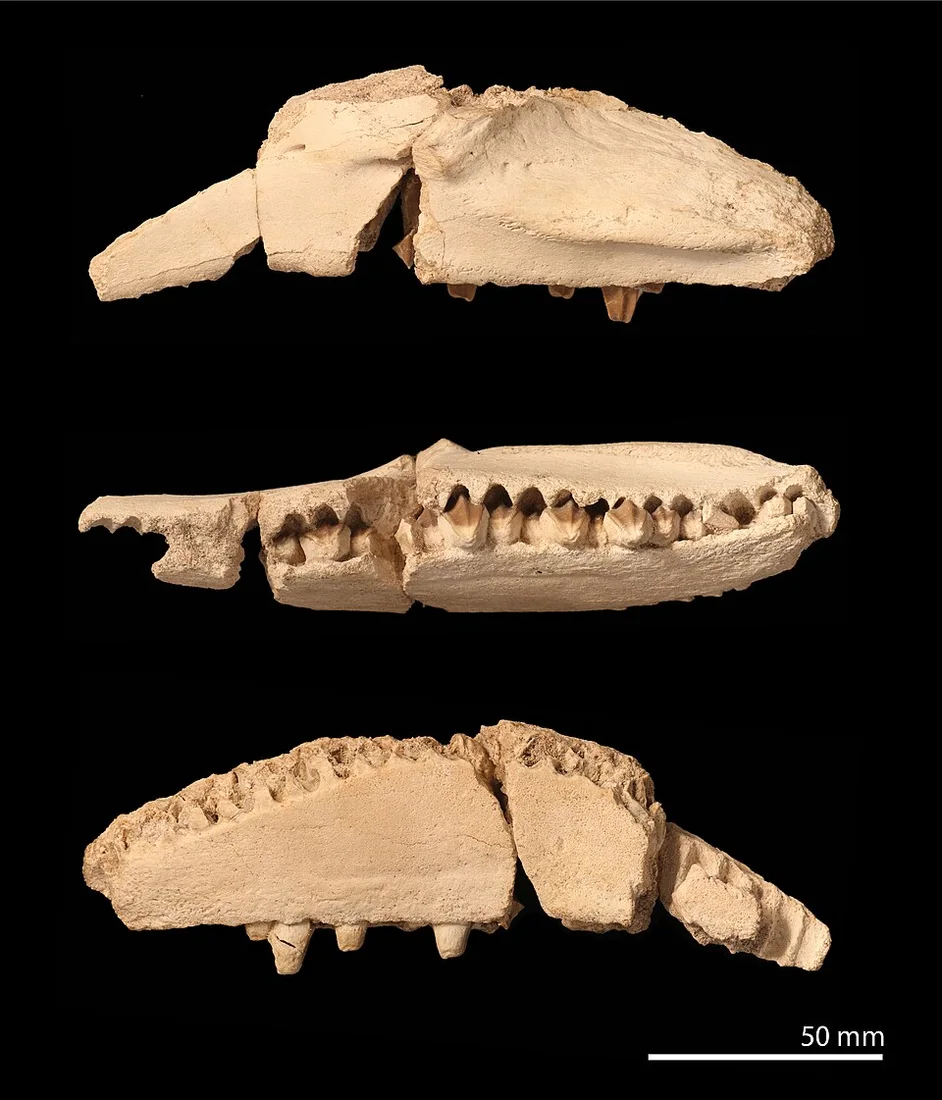
The fossils include parts of the upper and lower jaws. Rows of tooth positions identify a hadrosaur, a plant-eater with a specialised chewing apparatus. A complete crest and body are not preserved in the named specimen, so familiar full-body pictures use comparisons with relatives. Small jaw bones can still be informative when their distinctive details are compared systematically.
Where was it found and how was it named?
The material came from phosphate deposits in the Ouled Abdoun Basin. These deposits preserve many marine animals, but Ajnabia was a terrestrial dinosaur. Its bones could reach marine sediments after death. The genus name means stranger or foreigner, while the species name odysseus refers to the legendary traveller Odysseus.
What can we infer, and what remains uncertain?
Crossing water, perhaps through swimming or rafting, has been proposed to explain the African occurrence. That is a biogeographical hypothesis, not a directly observed voyage. Different family-tree analyses also disagree about its closest European relatives. The secure starting point is the presence of a hadrosaur in late Cretaceous Morocco. Comparing Ajnabia with European forms such as Arenysaurus helps explain why this small jaw fossil changed a much larger geographical story.
Was Ajnabia a marine dinosaur?
No. Being buried in marine deposits does not establish a marine lifestyle. Its jaw anatomy identifies a land-dwelling hadrosaur, while transport after death can explain the burial setting.
How can you check the evidence?
The Paleobiology Database record catalogues Ajnabia under Arenysaurini. Its linked bibliography identifies this research starting point: N. R. Longrich, X. Pereda Suberbiola, and R. A. Pyron, N.-E. Jalil. 2021. The first duckbill dinosaur (Hadrosauridae: Lambeosaurinae) from Africa and the role of oceanic dispersal in dinosaur biogeography. Cretaceous Research 120:104678. Open the bibliographic record. A catalogue entry establishes the source trail; it does not independently verify every later illustration or behavioural claim.
Use the dated genus overview to follow the references behind the discovery and anatomy discussed above. When sources disagree, compare which specimen and rock layer each author studied. A reconstructed whole animal can combine original bones with comparisons to relatives; those two kinds of evidence should not be confused. The account above explains the particular limits that matter for Ajnabia, rather than supplying unsupported size, speed or lifespan figures.
Read the image and keep exploring
Several views of Ajnabia jaw material reveal the tooth-bearing bones used to identify this African hadrosaur. A displayed specimen or skeletal mount can include restored parts. Its appearance should be read alongside the original specimen description.
Compare Arenysaurus, Canardia, Parasaurolophus. Find more names in the A index and explore ornithischian field notes. The glossary explains unfamiliar fossil terms.
Quick answers
- Where have Ajnabia fossils been found?
- The discoveries discussed here come from Morocco. Modern place names describe discovery locations, not a complete ancient geographic range.
- When did Ajnabia live?
- It is placed in the Cretaceous period. See the discovery discussion for qualifications about the particular rock layers and dating.
- Where can I compare Ajnabia with related dinosaurs?
- Follow the related field notes below. Comparisons explain shared anatomy; they do not imply that all the animals lived together.