Jurassic Dinos editorial · Updated · Source-based review
A predator with evidence of air inside its bones
Aerosteon was a meat-eating theropod dinosaur from Late Cretaceous Argentina. Its name refers to air and bone, reflecting the unusual internal spaces that made its fossils especially informative. Paul Sereno and colleagues described Aerosteon riocoloradensis in 2008.
The study found extensive pneumatic features: spaces and openings associated with air entering bones. These included features in the furcula, or wishbone, and the ilium, a major part of the hip. The researchers interpreted the pattern as evidence for an air-sac system with similarities to that of birds.
Did scientists find fossil lungs?
No complete lungs are described by that evidence. The argument comes from the bones and comparisons with living anatomy. An air sac and a lung are also different structures. In living birds, air sacs help move air through a system that includes the lungs; a cavity inside a bone is not itself a lung.
Think of finding the routes for wiring in an old building. They can help explain how a system was arranged even when the wires are absent. Similarly, the location and connections of bone cavities can inform a reconstruction without preserving every soft part.
What kind of predator was Aerosteon?
Later research discusses Aerosteon among megaraptoran theropods. However, details once associated with a dinosaur may need checking as new comparisons become available. One example is a detached tooth originally associated with its skeleton.
A reassessment by Christophe Hendrickx and colleagues supported an abelisaurid identity for that tooth instead. Abelisaurids are a different theropod group. This means the tooth should not simply be used to draw Aerosteon’s dentition or explain its feeding specialisations.
Why can a nearby tooth belong to another animal?
Objects found together need not come from one body. Water can move remains, animals can shed teeth, and a fossil deposit may record more than one event. These are possible explanations for mixed material, not proof of what happened at this particular site.
The important step is to compare the object itself. Its shape and detailed structure may support a different identification from the one suggested by its location.
What does the full-body image add?
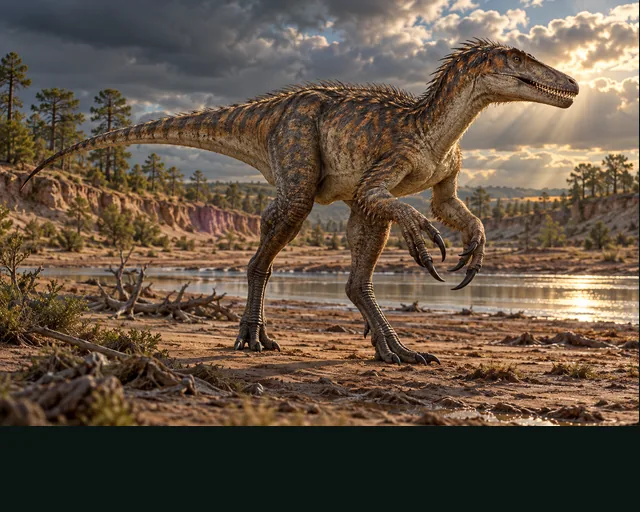
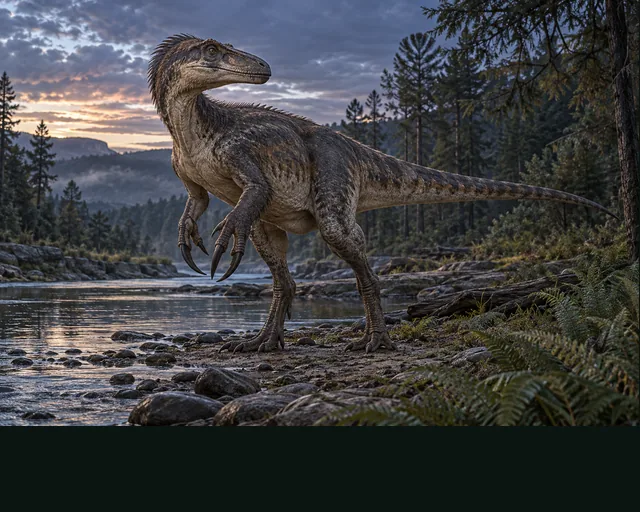
Our artwork follows Nobu Tamura’s complete Aerosteon restoration. It provides a possible outer appearance, while the breathing-system evidence concerns internal anatomy. The source image has limited fine detail, so we avoid treating its skin pattern, precise hand anatomy or reconstructed head outline as newly confirmed facts.
This account does not assign an exact adult mass or identify a favourite prey. Explore Megaraptor, Australovenator, and the A–Z directory under A for further comparisons.
Quick answers
- What was Aerosteon?
- A Late Cretaceous predatory theropod from Argentina, discussed in later research as a megaraptoran.
- Were fossil lungs found?
- The air-sac interpretation comes from pneumatic features in bones, not a complete preserved lung.
- What does its name refer to?
- Air and bone, reflecting the pneumatic spaces studied in its skeleton.
- Was the nearby tooth definitely its own?
- No. A later reassessment supported an abelisaurid identity for that isolated tooth.