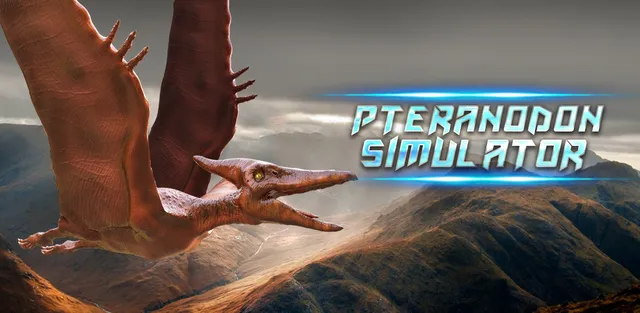
Is it a dinosaur?
No. Pteranodon belongs to the pterosaur category. Prehistoric life includes many lineages outside Dinosauria. A game can feature these creatures together while scientific classification keeps their ancestry distinct.
Overview
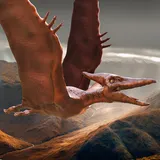
Pteranodon was a flying reptile with a prominent skull crest and toothless jaws. A membrane supported by an elongated finger formed its wings. Pterosaurs are related to dinosaurs, but belong to a separate evolutionary branch. The source overview places this animal in the Cretaceous period. Fossil catalogue records were checked for overlap with that period; their broad occurrence ranges are not treated as a precise lifespan for the genus.
Appearance & size
Pterosaurs were flying reptiles on a separate branch from dinosaurs. Their wings were membranes supported by an elongated finger, rather than the feathered wings of birds. Fossil bones can preserve information about wing proportions, skull shape and growth. Flight style and body mass are reconstructed from anatomy and physical models, with assumptions that should remain visible in scientific discussion. Scientists distinguish directly preserved anatomy from reconstructed soft tissues. Fossil bones do not provide a complete photograph of the animal. An illustration can help you imagine the body, but details such as color, exact muscle shape and sounds need separate evidence. No body-length or body-mass figure is shown here unless independent sources support a compatible estimate. Missing measurements are left out rather than replaced with a dramatic guess.
Discovery
The naming year 1876 appears in both the source overview and the fossil catalogue. Naming is different from first discovery: material may be found years before it receives a formal scientific description. Later studies can change a genus’s membership without changing the original history of the name.
Behavior, diet & habitat
Both the overview and a sample of fossil catalogue occurrences support records from United States. These are modern place names: they help you find a fossil locality on a map, while its ancient environment must be reconstructed from the rocks and associated fossils.
A single diet label is omitted when the overview and fossil database ecology records do not provide clear agreement.
Rocks around a fossil preserve clues about the environment in which it was buried. Sediment, associated plants and other animals can help researchers reconstruct ancient landscapes. A fossil’s modern location is not the same as an ancient continent, and one locality cannot establish the entire range of a genus. Our illustrated scenery is an imaginative setting rather than a surveyed fossil site. Feeding interpretations depend on several kinds of evidence, including tooth wear, jaw structure and, more rarely, preserved stomach contents or bite marks. Anatomy can narrow the possibilities, but it does not document an animal’s daily routine. A game’s hunting system, speed boost or special ability is a design choice. Those mechanics are not scientific evidence of how Pteranodon lived.
How do we know?
A scientific reconstruction starts with particular specimens. Researchers record which parts are preserved, compare them with relatives and test alternative interpretations. New fossils can change an earlier picture. Body mass is especially sensitive to estimates of missing soft tissues; a length reconstructed from partial bones also carries uncertainty. That is why this page avoids unsupported rankings and exact figures.
A helpful question is “Which fossil supports this claim?” The sources below point toward published work and catalogue records, allowing you to investigate the evidence for yourself. Differences between sources can be useful signs of changing research, rather than something to hide.
Questions for curious explorers
Try comparing the skull, limbs and overall body plan with a close relative. Which features are actually preserved, and which parts have been filled in by comparison? Notice whether a source discusses one specimen, a species or the entire genus. These are different scales of evidence. A claim about one fossil should not automatically become a rule for every individual. Keeping those distinctions in mind makes the source links more useful and turns a memorable creature into a starting point for investigation.
Meet it in the games
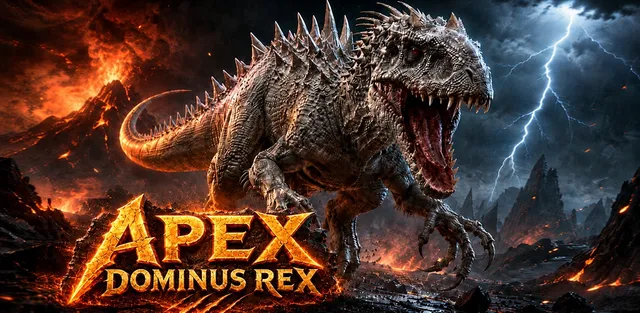
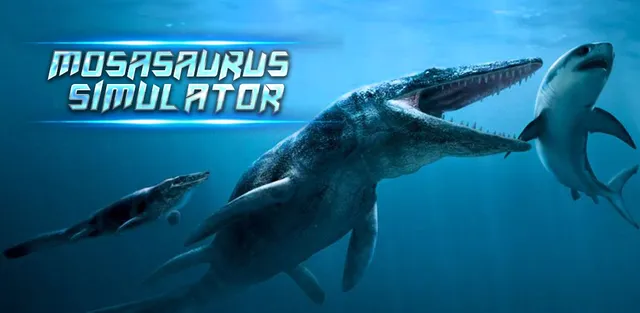
Apex Dominus Rex, Mosasaurus Dino Simulator, Pteranodon:Flying Dinosaur Sim, Sarcosuchus Dinosaur Simulator, Dilophosaurus Dino Simulator, Carnotaurus Dinosaur Simulator, T-Rex: Dino Simulator, Brachiosaurus: Jurassic Giant, Spinosaurus Dinosaur Simulator, Dunkleeosteus Simulator, Triceratops Dinosaur Simulator, Dimetrodon Simulator, Argentinosaurus Simulator, Plesiosaurus Simulator, Pachycephalosaurus Simulator, Dimorphodon Simulator, Giganotosaurus Dino Simulator, Iguanodon: Dinosaur Survival, Ouranosaurus: Dino Simulator features this creature or names it in the official store description. The games combine imaginative worlds and gameplay with prehistoric inspiration. Enjoy the adventure, then compare its artistic interpretation with the fossil-based account here.