Jurassic Dinos editorial · Updated · Source-based review
What was Orodromeus?
Orodromeus makelai was a small plant-eating dinosaur from the Late Cretaceous of the region now called the United States. The Natural History Museum describes it as a small ornithopod and translates its name as mountain runner. It was a very different kind of dinosaur from a giant long-necked sauropod or heavily armoured ankylosaur.
How did its mouth handle plants?
The museum account identifies a horny beak and grinding cheek teeth. A beak is the firm covering at the front of the mouth, while cheek teeth occupy positions farther back along the jaws. These are different parts of a feeding system rather than interchangeable names for the same structure.
The account associates the teeth with processing tough plant material. That broad interpretation does not provide an exact list of plant species eaten at every meal. Nor does the presence of plants in our illustration turn them into identified stomach contents. A reconstructed habitat can introduce a setting without proving a particular menu.
Was it a two-legged dinosaur?
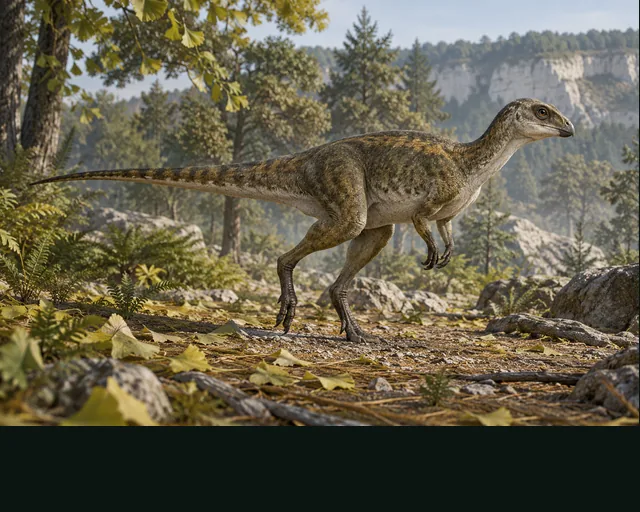
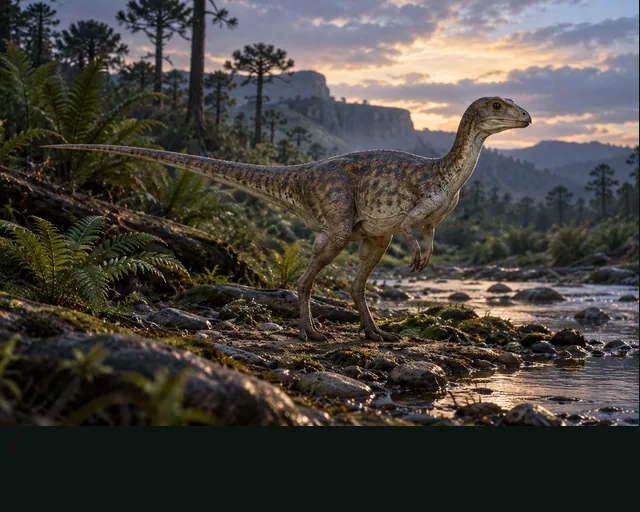
The museum describes Orodromeus as moving on two legs. The reviewed whole-body source shows strong hindlegs, shorter forelimbs and a long tail. Our image uses a bipedal pose while retaining those proportions rather than making the arms into weight-bearing pillar legs.
The name runner does not establish a measured top speed. Calculating speed requires evidence and assumptions beyond the wording of a scientific name. Short arms also do not mean that the hands were useless; an illustration alone cannot demonstrate their complete range of uses.
Why are there no eggs in the new picture?
The approved reference includes a nesting scene, but that background is not itself evidence that the eggs belong to Orodromeus. We use the complete named animal as a shape reference while leaving the eggs and nest out of our independent composition. It avoids presenting an illustrated association as a demonstrated behaviour.
Do not confuse Orodromeus with the similarly named Oryctodromeus and transfer another animal’s burrow discovery to it. Names that sound alike can refer to different fossils and scientific stories. Compare Hypsilophodon and Lesothosaurus as separate plant-eater accounts, then explore the O directory. Our colour pattern, soft tissues and setting remain artistic interpretations.
Quick answers
- What does Orodromeus mean?
- Mountain runner.
- What did it eat?
- The museum describes it as a plant-eater with grinding cheek teeth.
- How did it move?
- The museum identifies it as bipedal, moving on two legs.
- Does a nest in a restoration prove egg ownership?
- No. The scene is an illustration, not direct specimen evidence.