Jurassic Dinos editorial · Updated · Source-based review
What was Nanuqsaurus?
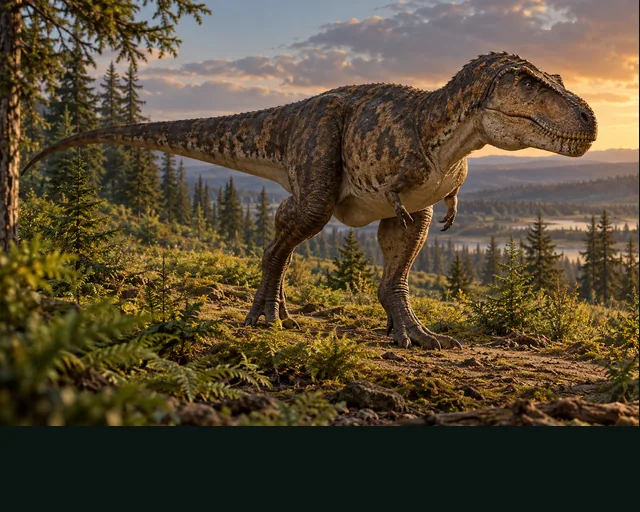
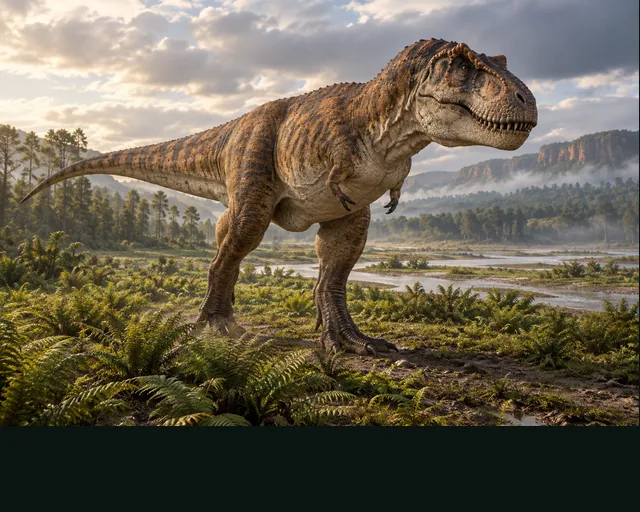
Nanuqsaurus was a tyrannosaurine dinosaur from the Late Cretaceous of Alaska. Its fossils raise questions about large predators living at high northern latitudes. The original named specimen consists of skull fragments, so familiar full-body illustrations necessarily extend beyond the bones preserved in that specimen.
What makes the fossil distinctive?
The skull pieces came from the Prince Creek Formation on Alaska’s North Slope. Even incomplete bones can preserve distinctive shapes at their joints and surfaces, allowing comparison with other tyrannosaurids. Naming a genus from partial material does not mean that every loose tyrannosaur tooth found nearby can automatically be assigned to it. Geological context and anatomical compatibility remain important.
Where was it found and how was it named?
Nanuqsaurus hoglundi was described in 2014 after preparation and study of material collected at the Kikak-Tegoseak Quarry. Its genus name combines a word for polar bear with the Greek-derived ending meaning lizard. The name describes the northern association, not a relationship with bears or evidence that it had a white coat.
What can we infer, and what remains uncertain?
Early reconstructions presented Nanuqsaurus as unusually small. Later discussions of additional material have challenged the certainty of that picture, so an exact adult body length should not be treated as settled. Alaska’s Cretaceous environment also differed from modern Arctic conditions, although seasonal light changes were still important at high latitude. The useful question is how anatomy, age and environment can be combined without turning an appealing “polar dinosaur” story into a claim that the fossil cannot support.
Do we know that Nanuqsaurus was a dwarf tyrannosaur?
No. Initial small-size estimates have been questioned as further material has been considered. Its adult size and the attribution of additional fossils require careful evaluation.
How can you check the evidence?
The Paleobiology Database record catalogues Nanuqsaurus under Tyrannosaurinae. Its linked bibliography identifies this research starting point: A. R. Fiorillo and R. S. Tykoski. 2014. A diminutive new tyrannosaur from the top of the world. PLoS ONE 9(3):e91287. Open the bibliographic record. A catalogue entry establishes the source trail; it does not independently verify every later illustration or behavioural claim.
Use the dated genus overview to follow the references behind the discovery and anatomy discussed above. When sources disagree, compare which specimen and rock layer each author studied. A reconstructed whole animal can combine original bones with comparisons to relatives; those two kinds of evidence should not be confused. The account above explains the particular limits that matter for Nanuqsaurus, rather than supplying unsupported size, speed or lifespan figures.
Read the image and keep exploring
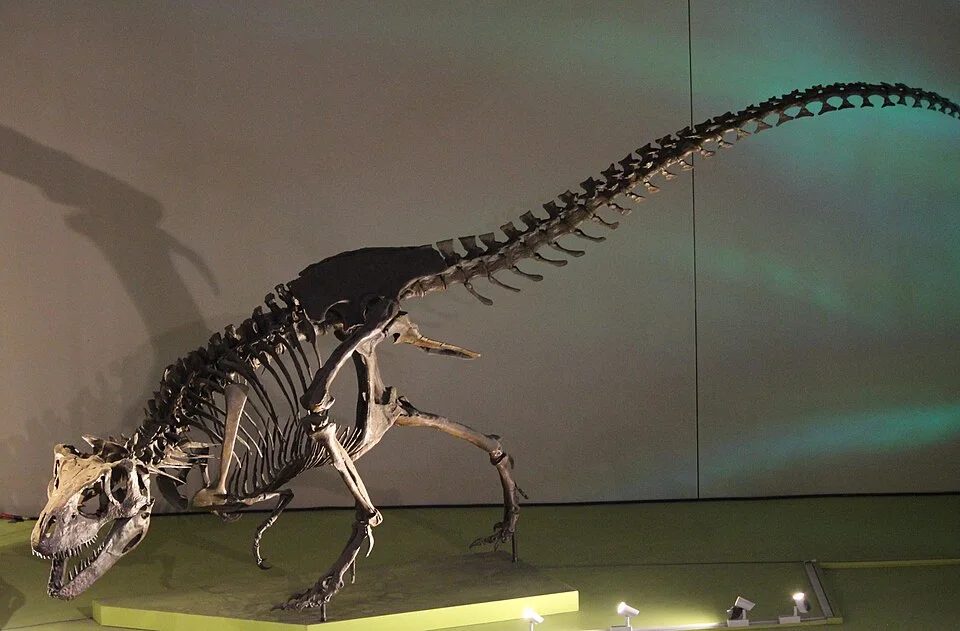
A Nanuqsaurus mount supplies a whole-body interpretation from limited fossil material and comparisons with other tyrannosaurs. A displayed specimen or skeletal mount can include restored parts. Its appearance should be read alongside the original specimen description.
Compare Tyrannosaurus, Albertosaurus, Tarbosaurus. Find more names in the N index and explore theropod field notes. The glossary explains unfamiliar fossil terms.
Quick answers
- Where have Nanuqsaurus fossils been found?
- The discoveries discussed here come from United States. Modern place names describe discovery locations, not a complete ancient geographic range.
- When did Nanuqsaurus live?
- It is placed in the Cretaceous period. See the discovery discussion for qualifications about the particular rock layers and dating.
- Where can I compare Nanuqsaurus with related dinosaurs?
- Follow the related field notes below. Comparisons explain shared anatomy; they do not imply that all the animals lived together.