Jurassic Dinos editorial · Updated · Source-based review
What was Magnosaurus?
Magnosaurus nethercombensis was a predatory theropod dinosaur from the early Bajocian of the Middle Jurassic in Dorset, United Kingdom. Its fragmentary remains have received careful reassessment, making it a good example of how a seemingly modest fossil can contribute to a much larger evolutionary question.
What distinguishes the lower jaw?
Roger Benson’s 2010 redescription regarded the species as valid and identified a distinctive arrangement of small openings in the dentary. The dentary is a tooth-bearing bone of the lower jaw. The openings are elongated, angled and positioned low on its outer surface.
An opening in a bone is often called a foramen. Recognising its shape and position can help comparisons, but those observations alone do not establish a special sensory power or a unique hunting technique. Here the important point is that a particular anatomical feature contributes to distinguishing the fossil, rather than the entire animal looking unlike every other theropod.
Why did the study discuss early tetanurans?
Tetanurae is a major theropod branch that includes many familiar predatory dinosaurs and the lineage leading to birds. The same study reassessed several proposed older records and argued that Magnosaurus represented the oldest definite tetanuran then recognised. That conclusion belongs to the evidence and comparisons available in 2010, rather than an unchanging world-record label.
There is also a difference between the oldest known fossil and the actual origin of a lineage. The earliest member we can recognise in a collection need not have been the first member to exist. Older rocks may be poorly sampled, and fragmentary discoveries may not preserve the features required for a secure identification.
What does a realistic picture establish?
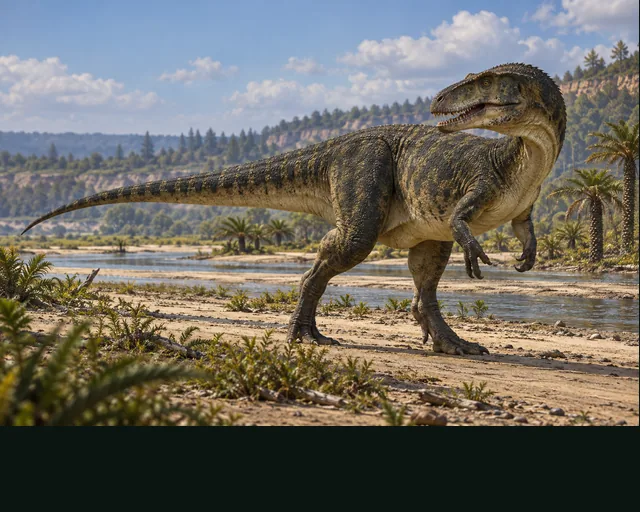
Our illustration follows an approved complete living restoration specifically labelled Magnosaurus. Notice the low head, grasping hands, strong hindlegs and long tapering tail. The new skin pattern, coastal background and precise proportions of missing external parts retain artistic uncertainty. They are not additional discoveries extracted from the jaw openings.
Compare Megalosaurus and Allosaurus as separately documented theropods, then browse the M directory. Try separating the evidence for identifying a specimen, the analysis of its relationships and the choices needed to depict it alive.
Quick answers
- Where was Magnosaurus found?
- Dorset in the United Kingdom.
- When did it live?
- The early Bajocian of the Middle Jurassic.
- What is a dentary?
- A tooth-bearing bone in the lower jaw.
- Does an oldest-known fossil mark the exact origin of a group?
- No. Earlier members may remain undiscovered or unrecognised.