Jurassic Dinos editorial · Updated · Source-based review
What does Dubreuillosaurus refer to?
Dubreuillosaurus is a name used for a Jurassic theropod from Normandy, France. The species is Dubreuillosaurus valesdunensis. Its history includes both a proposal to recognise a separate genus and a later argument for combining it with Poekilopleuron.
This page explains that disagreement rather than counting the name as another unquestionably distinct animal. A change in naming interpretation does not erase the fossil or the anatomical information it preserves.
Why was it separated originally?
The species was initially described under Poekilopleuron. In 2005, Ronan Allain described its postcranial anatomy and established Dubreuillosaurus as a separate genus. The study used features of the tail and thigh region, together with earlier comparisons, to argue for that distinction.
The fossil comes from the Bathonian Calcaires de Caen Formation, in the Middle Jurassic. Keeping that setting clear avoids copying a narrower age label that conflicts with the original geological description.
What did the later proposal say?
In 2024, Andrea Cau treated Dubreuillosaurus as a junior synonym of Poekilopleuron in a broader analysis. A junior synonym is a later name interpreted as referring to an animal already represented by an earlier name.
The proposal considered whether some differences could reflect growth stage or the position of bones rather than a separate genus. This is a hypothesis to evaluate against the specimens and other research, not evidence that every scientist has adopted an identical interpretation.
Why can growth complicate classification?
Animals change as they mature. A juvenile and an adult of one species can differ in proportions and the development of anatomical structures. Conversely, two related species may share many features at equivalent stages.
Researchers therefore need to ask whether a character distinguishes lineages, growth stages or individual variation. Limited overlap between incomplete fossils can make that question difficult. A new comparison may improve the interpretation without implying that the earlier work lacked value.
What does this page avoid?
We do not give the disputed name an independent body-size entry or silently merge every observation about Poekilopleuron into its description. In particular, suggested feeding behaviour associated with another specimen should not automatically become a documented Dubreuillosaurus meal.
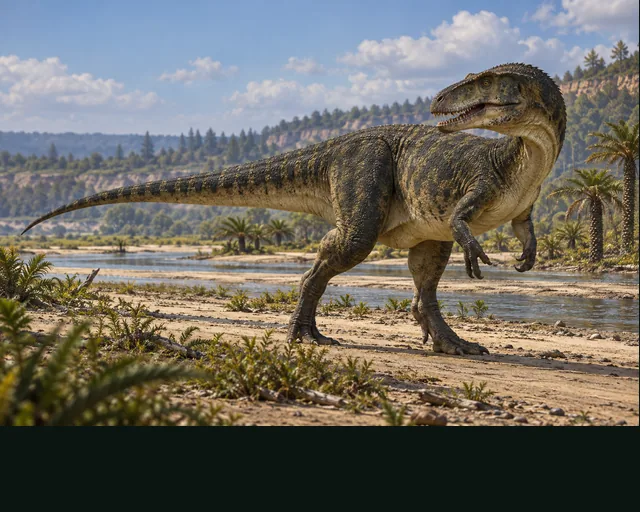
The illustration follows a complete reference specifically labelled Dubreuillosaurus. Its low toothed head, clawed forelimbs and long tail are the reference artist’s reconstruction, not a visual test of synonymy. Skin colours, soft tissues and posture remain artistic. The image can introduce the name while the text explains why the relationship between names remains a separate scientific question.
Compare Megalosaurus and Allosaurus, then browse the D directory.
Quick answers
- Where do the fossils come from?
- The Middle Jurassic Calcaires de Caen Formation of Normandy, France.
- Why was the name Dubreuillosaurus established?
- The 2005 study argued that its anatomical differences warranted separation from Poekilopleuron.
- Why is this a name explanation?
- A later study proposed synonymy, so this page does not add an unquestioned separate animal to counts or comparisons.
- Does the image settle the debate?
- No. It is a named artistic reconstruction; synonymy must be assessed from specimens and research.