Jurassic Dinos editorial · Updated · Source-based review
What was Confuciusornis?
Confuciusornis was an early bird from China. Its best-known species is Confuciusornis sanctus, named in 1995. It lived during the Early Cretaceous and belongs to the remarkable fossil record of feathered animals from northeastern Asia.
Why include a bird in a dinosaur encyclopedia? Birds are part of the theropod dinosaur evolutionary branch. The words bird and dinosaur describe nested groups, rather than two completely separate alternatives. Confuciusornis helps make that connection visible.
What made it look birdlike?
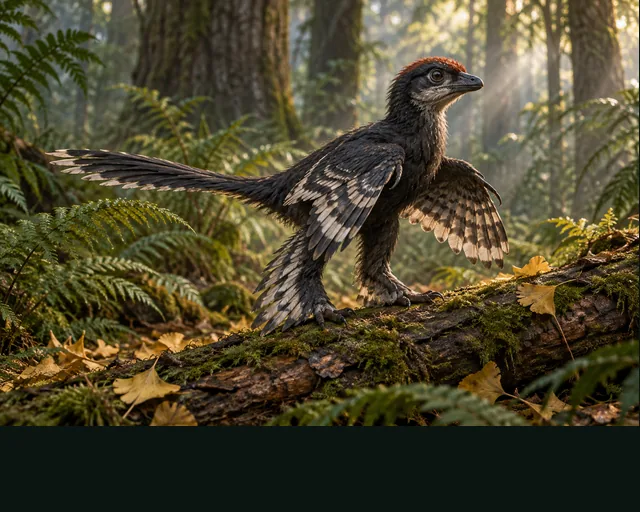
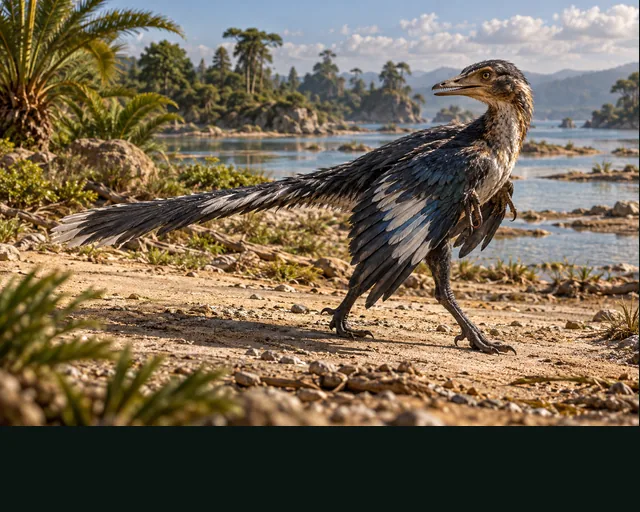
Its restoration shows a feathered body, wings and a short beak. Unlike the long bony tail of many earlier theropods, its tail region could support spectacular elongated feathers in some individuals. Those structures should not be confused with a long chain of tail vertebrae.
The fossil record includes many specimens with unusually informative preservation. Feathers are therefore part of the evidence for this animal, rather than merely a decision to make a dinosaur look fashionable. However, recognising fossil feathers does not establish every colour or soft-tissue detail in a completed illustration.
Did every individual have long tail feathers?
No. Some Confuciusornis specimens have a pair of long streamers, while others lack them. This variation gives researchers a chance to investigate differences within an extinct population rather than relying on a single isolated skeleton.
One interpretation links the long feathers with males and display. The museum discussion presents that connection as a scientific interpretation. A pictured individual should not automatically receive a definite sex label simply because an artist has given it long feathers.
What did it eat?
A beak is a useful feeding structure, but its presence alone does not reveal a complete menu. This account does not assign a definite exclusive diet. Our approved reference includes an insect at the beak, and the new illustration preserves that artistic idea without treating it as a documented Confuciusornis meal.
The same distinction applies to perching and display. A convincing scene can help a reader imagine an animal, but it cannot replace evidence about its usual movements, food or social interactions.
Reading this reconstruction
The image follows a complete reference specifically identified as Confuciusornis. Both folded wings, two perching feet and the full pair of streamers are retained. Portions of the hands are concealed beneath the folded feathers, so the picture should not be read as proof that the animal lacked manual claws.
The colours and landscape are artistic. Enjoy the whole-animal view while comparing it with the accompanying sources and their limits.
Compare Archaeopteryx and Anchiornis, then browse the C directory.
Quick answers
- Was Confuciusornis a bird or a dinosaur?
- Both: birds belong within the theropod dinosaur evolutionary branch.
- When and where did it live?
- It is known from Early Cretaceous China.
- Did every individual have long streamers?
- No. Fossils differ in the presence of the long paired tail feathers.
- Does the insect in the picture establish its diet?
- No. It follows the reference scene and is an artistic feeding interpretation.